


Type:
Gas
Facility:
Production
Water Depth:
46
Installed:
1996
meters
Block:
5504/7
Design:
Fixed steel
Sub Structure:
950
Topsides Wgt:
550
tonnes
tonnes
Intro
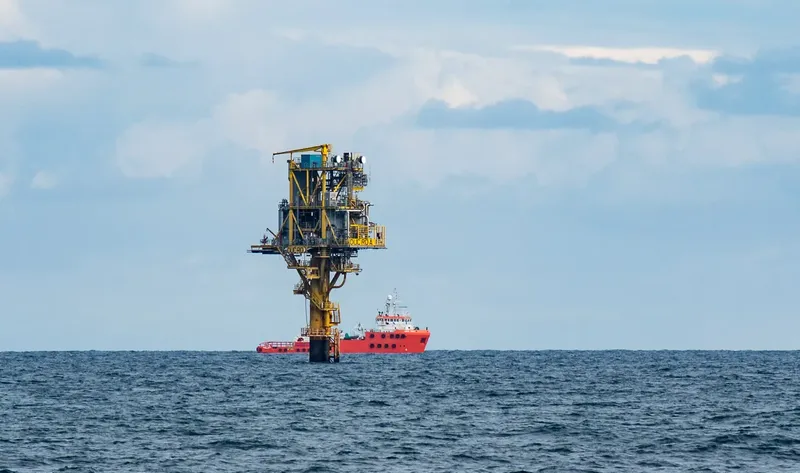
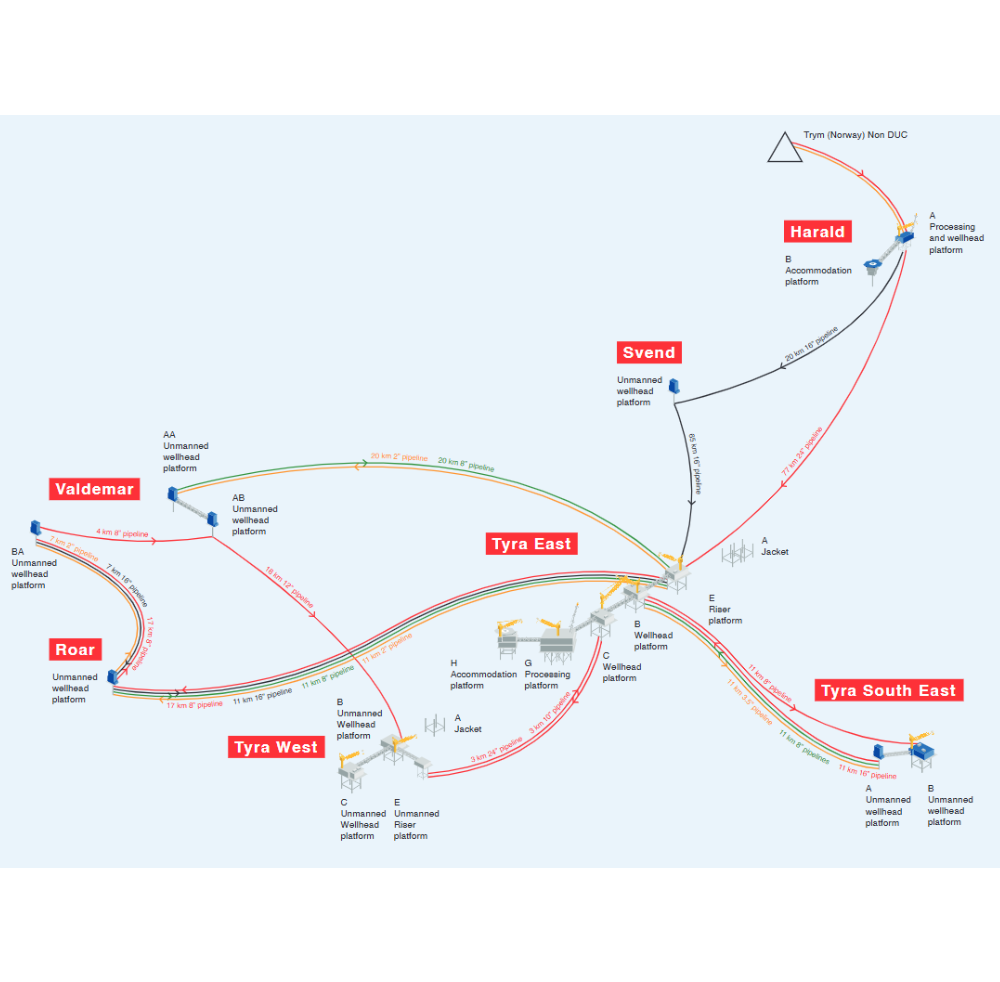
Roar is an unmanned satellite wellhead platform on the Roar gas field in the Danish North Sea, producing gas with condensate. Commissioned in the mid-1990s, its production is routed via pipeline to the central Tyra processing complex rather than being processed locally.
Field
The Roar field is a conventional gas reservoir with minor condensate, discovered in 1968 and brought on production in 1996. It lies near the Tyra gas condensate field and is developed to supplement Tyra’s output.
Facilities
The Roar platform consists of wellhead slots on a small fixed structure of STAR or similar type designed for unmanned operation. It exports gas and condensate via subsea pipeline infrastructure to Tyra East’s central processing complex. There is no significant topside processing on Roar itself; separation, conditioning, and export duties are handled at Tyra. The platform has remote control systems, emergency power, and basic power distribution for wellhead equipment and safety monitoring. Subsea pipelines carry multiphase fluids, with umbilicals for control and injection functions. Fire and gas detection systems ensure safety in the unmanned environment. Utility support is limited to safety and communication systems, reflecting its role as a satellite to Tyra.
Similar Platforms




SUBMIT YOUR STORIES AND PHOTOS
RigOil is built on the stories of the people who lived and worked offshore. If you have photos or memories from life on a North Sea platform, we’d love to include them in the archive.
Upload your photos and help preserve this shared history.*
*By submitting content, you confirm you have the right to share it and grant RigOil a non-exclusive, royalty-free licence to use the material for editorial, promotional, and commercial purposes. Copyright remains with the contributor.