Zuluf
Zuluf is a shallow-water fixed-platform oil-and-gas development in the northern Saudi Arabian Gulf. Discovered in 1965, it began production in 1973 and lies in water depths of roughly 36–40 metres. A distributed network of wellhead, tie-in and injection platforms gathers fluids through subsea flowlines and trunklines for pipeline transfer toward the Tanajib and Ju’aymah processing and export corridor.
Operator: Saudi Aramco
Status: Operational
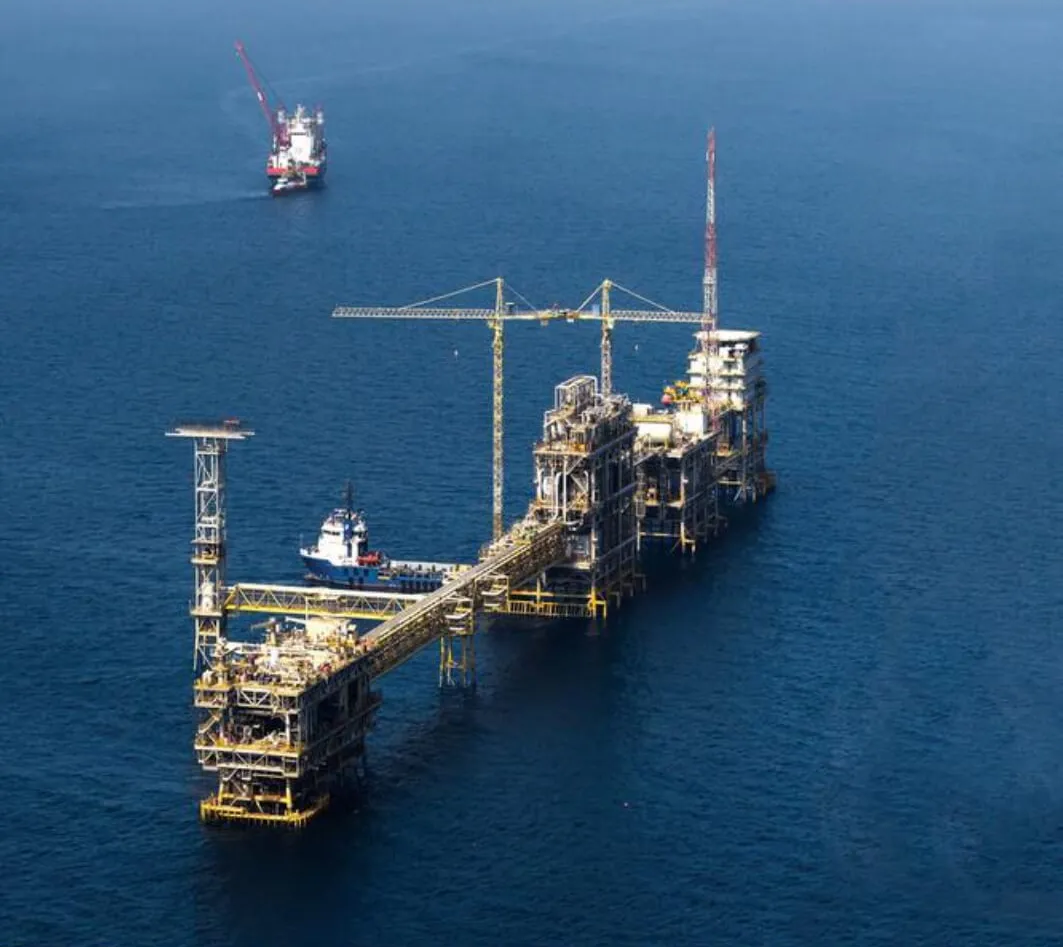
Image Source: www.offshore-technology.com. (All rights belong to the original owner.)
Production: Oil & Gas
Operations start: 1973
Water depth: 36 m
Country: Saudi Arabia
Block: Zuluf Field
Type: Fixed steel jacket
Field
Zuluf is a supergiant conventional accumulation on the Arabian Platform. It contains several productive intervals rather than one homogeneous reservoir. Technical studies identify the Cretaceous Khafji Member of the Wasia Formation as an important siliciclastic reservoir, comprising a lower Main Sand and an upper Stringer Sand. The mature field is developed with platform wells, horizontal completions and extensive water injection.
Facilities
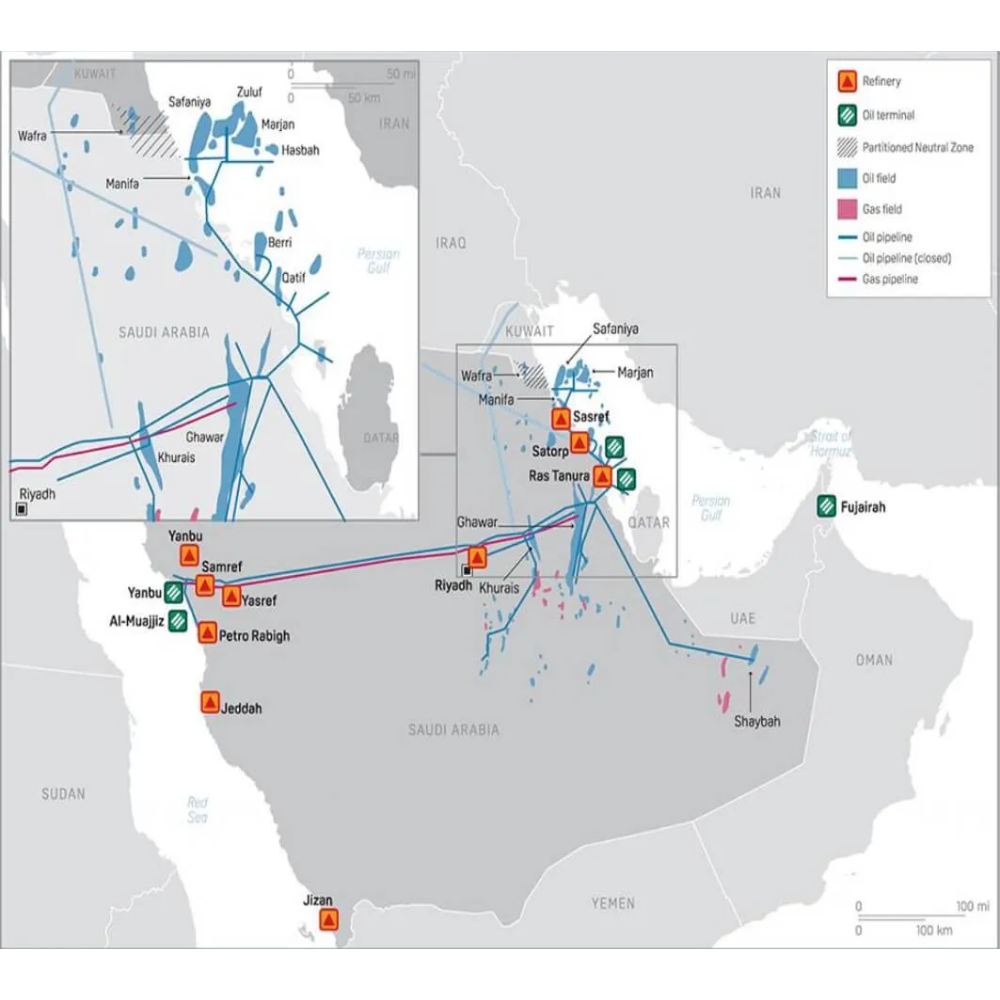
Zuluf is developed through numerous fixed steel wellhead, tie-in and water-injection platforms distributed across the shallow-water field. Platform wells use surface trees and production or injection manifolds. Multiphase flowlines carry wellstream from individual structures to gathering and separation facilities, while larger trunklines transport oil, gas and injection water between the field and shore. Subsea cables provide power, telecommunications and control links between offshore structures. The field system includes production and test manifolding, gas-oil separation, crude-transfer pumping, associated-gas gathering, produced-water handling and water-injection distribution. Dedicated injection platforms and wells support the mature reservoir. Offshore gas-gathering infrastructure collects Zuluf gas and routes it by pipeline toward the Safaniya–Tanajib processing system. Crude is transported through the established pipeline corridor toward the Ju’aymah terminal system; gas and condensate are directed toward Tanajib-area facilities for further treatment. Platform support systems include electrical generation or imported power, metering, chemical injection, pig-launching and receiving equipment, flare and pressure relief, firewater, fire-and-gas detection, emergency shutdown, telecommunications and marine-access facilities. Major utilities are concentrated on central structures, while satellite wellhead platforms carry principally well and gathering equipment. Zuluf has no FPSO or permanent offshore crude-storage vessel; its normal hydrocarbon-export architecture is pipeline based rather than dependent on shuttle tankers.
Similar Assets
News