Kelvin WHP
Kelvin WHP is a fixed wellhead platform in the Southern UK North Sea, part of the Caister-Murdoch System (CMS) development. Commissioned in 2007, it produces natural gas from the Kelvin gas field in Blocks 44/18b and 44/23b. The platform's primary role is to host wellheads and initial flowphones, tying back via subsea pipeline to the Murdoch complex for processing and onward export.
Operator: Chrysaor
Status: Decommissioned
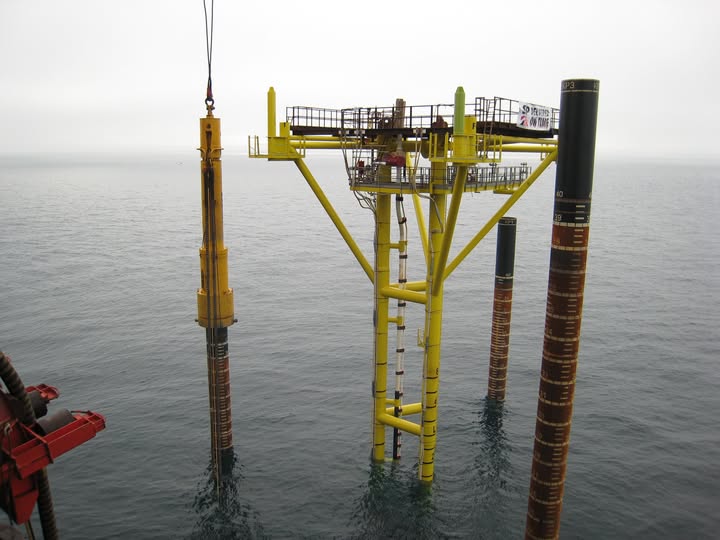
Image Source: Chrysaor. (All rights belong to the original owner.)
Production: Gas
Operations start: 2007
Water depth: 32 m
Country: UK
Block: 44/18b
Type: Fixed steel jacket
Field
The Kelvin field is a conventional offshore gas accumulation discovered in 2005 in the Southern North Sea. Gas is sourced from Triassic and Carboniferous sandstone reservoirs, with production beginning in 2007 through a subsea tie-back to the Murdoch complex. It is managed within the CMS gas system, which historically gathered and exported production to the Theddlethorpe terminal onshore.
Facilities
Kelvin WHP's infrastructure comprises a minimal-facilities wellhead platform with support for one primary production well and associated Christmas tree equipment. Structurally it consists of a three-leg piled steel jacket and topsides designed to support subsea well completions and flow metering facilities. The platform gathers gas at reservoir pressure and routes it into a dedicated subsea pipeline (~12 km) connected to the nearby Murdoch complex, where further aggregation, metering and processing occurred. Kilometric export pipelines from Murdoch historically carried gas to the onshore Theddlethorpe Gas Terminal via the Caister-Murdoch export trunkline. Utility systems on Kelvin WHP are minimal due to its role as a wellhead host; power generation (small diesel or generator sets) supports lighting, control instrumentation, SCADA monitoring and emergency shutdown systems, while safety infrastructure comprises fire and gas detection, emergency blowdown, and basic offshore evacuation provisions. The platform design focused on robust support for remote operations and subsea tie-backs, with corrosion protection, periodic inspection provisions, and interfaces for intervention vessels to access wellheads and manifolds as needed over field life. Decommissioning programmes have been proposed as part of CMS removal, reflecting the system's mature status while ensuring safe cessation protocols.
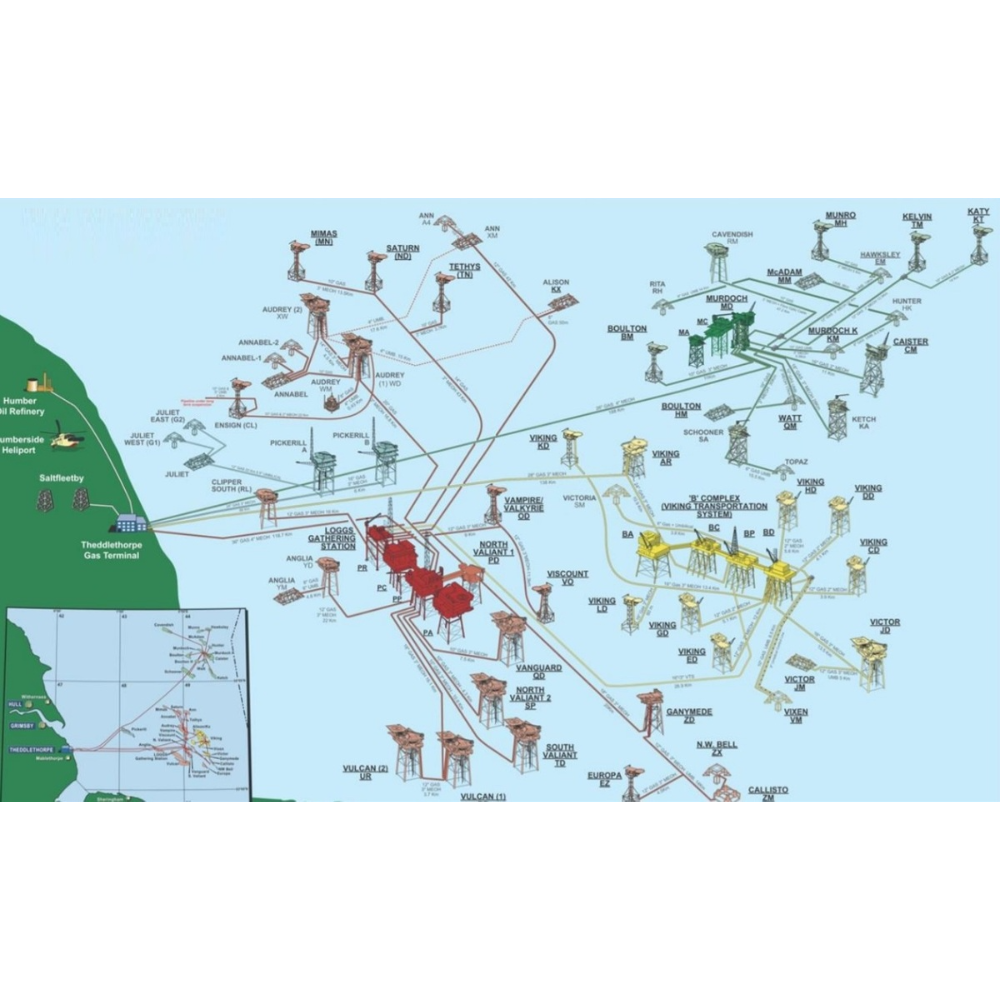
Similar Assets
News