Clyde
The Clyde platform is a fixed steel jacket drilling, production and accommodation facility on the Clyde oilfield in Block-30/17b of the UK Central North Sea, commissioned in 1987. It produces crude oil with associated gas and serves as a hub for topsides wells and subsea tie-ins, exporting hydrocarbons to regional infrastructure.
Operator: Repsol-Sinopec
Status: Operational
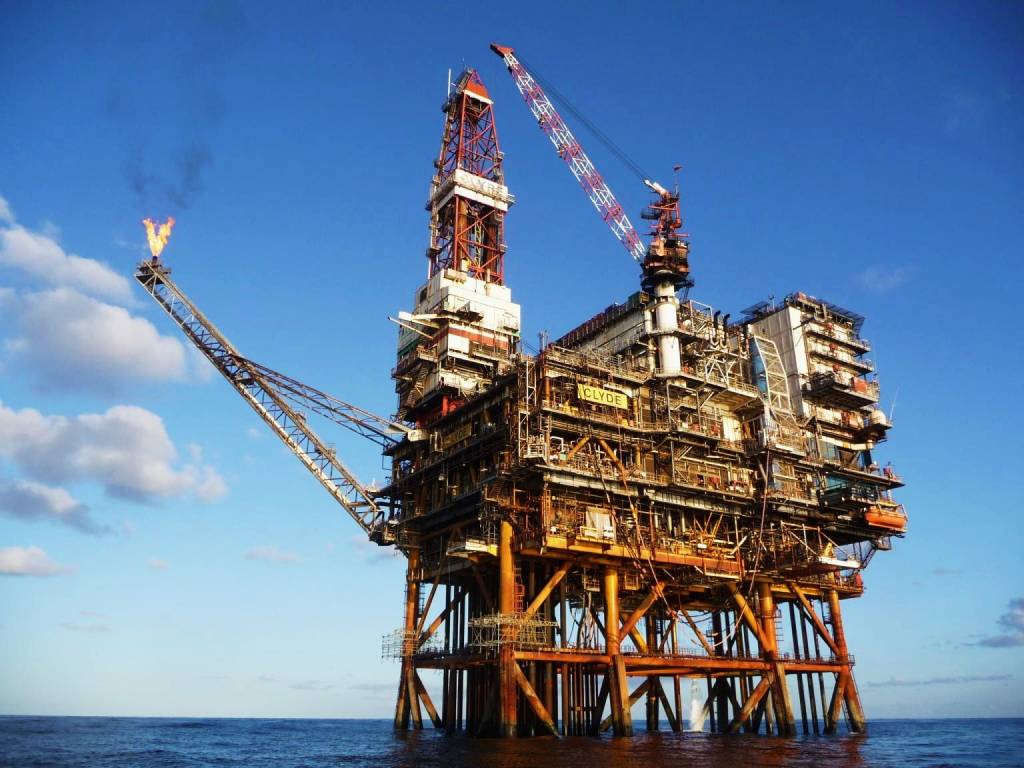
Image Source: Repsol-Sinopec. (All rights belong to the original owner.)
Production: Oil
Operations start: 1987
Water depth: 81 m
Country: UK
Block: 30/17b
Type: Fixed steel jacket
Field
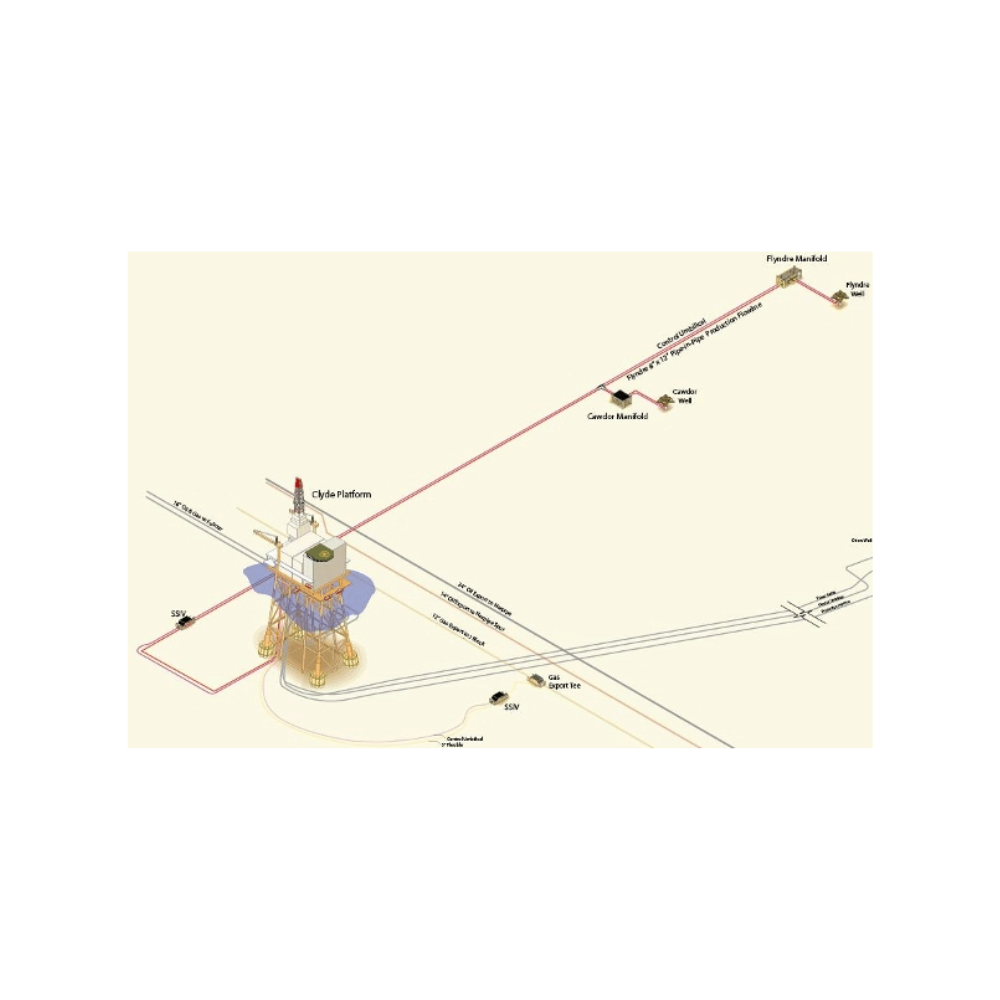
The Clyde oilfield, discovered in 1978, produces crude oil from Upper Jurassic sandstone reservoirs located about 290-km east-south-east of Aberdeen. Developed around a single integrated platform, the field's oil and associated gas are gathered for processing and export via nearby facilities. Subsea developments like Flyndre/Cawdor tie back to Clyde for processing.
Facilities
Clyde's jacket supports multiple well slots drilled into the field's reservoir and host subsea tie-backs. Topside facilities include multiphase separators to segregate oil, gas and water, crude stabilisation and metering systems. Produced oil is exported to the Fulmar platform and onward through the Norpipe system to Teesside; associated gas is used for fuel or exported via SEGAL and other networks. Utilities include onboard power generation, HVAC, instrument air, chemical injection for corrosion/dewpoint control, produced water treatment and firewater systems. Accommodation and control rooms support rotation crews and coordinate operations. Subsea control umbilicals and flowlines link satellite accumulations, consolidating fluids for processing. Safety systems include emergency shutdown, gas detection and lifeboats. Clyde's infrastructure stabilises field output and integrates with broader North Sea export routes.
Similar Assets
News