Andrew
A fixed steel jacket production/drilling platform in Block 16/28 of the UK Central North Sea. Installed in 1996, it is the central hub for the Andrew oilfield and related subsea developments (Cyrus, Farragon, Arundel, Kinnoull). It contains production, processing, drilling and quarters on a single topside.
Operator: BP
Status: Operational
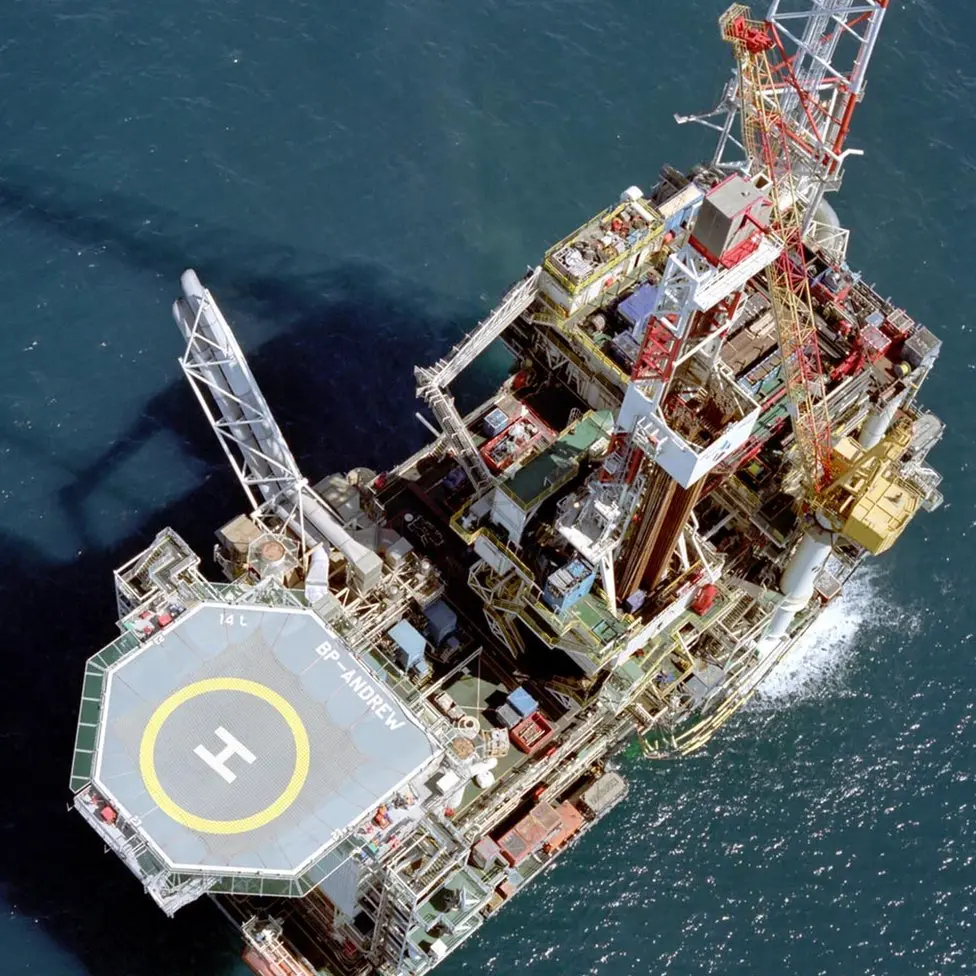
Image Source: BP. (All rights belong to the original owner.)
Production: Oil
Operations start: 1996
Water depth: 115 m
Country: UK
Block: 16/28
Type: Fixed steel jacket
Field
The Andrew oilfield is an offshore hydrocarbon accumulation discovered in 1974 in the Palaeocene and Cretaceous reservoir rocks. The platform produces predominantly oil and associated gas, and also receives fluids from satellite fields tied back subsea.
Facilities
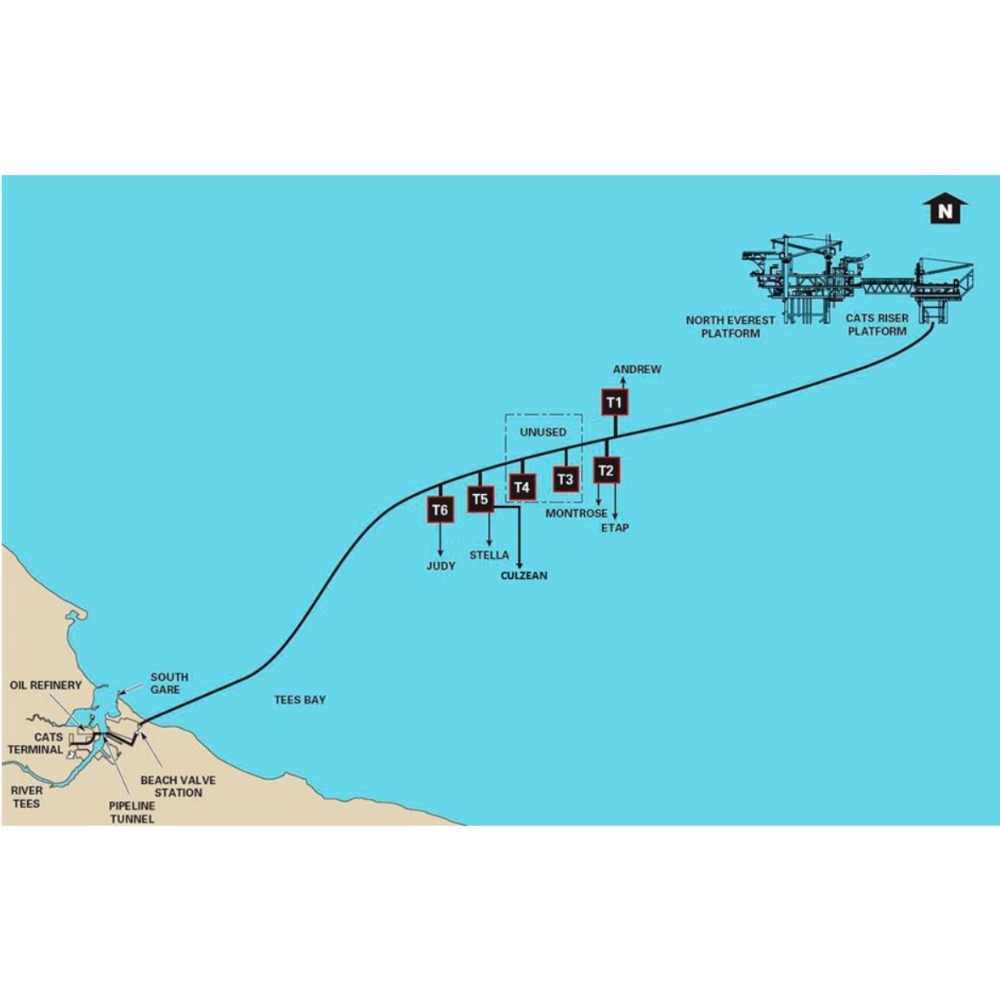
The Andrew platform comprises a four-leg steel jacket supporting a topside with integrated production facilities, including multiphasic separation (oil/gas/water), water treatment, gas compression, and export metering. It typically has about 17 operational wells (majority oil producers, along with gas lift and injection) with room for future drilling. Subsea tiebacks from Cyrus and Kinnoull extend field life and bring in additional hydrocarbons for processing. The facility handles oil export via the Forties pipeline system to Cruden Bay and onwards, and gas export via the Central Area Transmission System (CATS) to Teesside. Power generation is from gas turbines fed by produced gas, with backup power systems and utilities for firewater, HVAC, control systems and chemical injection. Water handling includes produced water treatment and discharge within regulatory limits. The platform's wellbay design accommodates drilling and future well tie-ins, while control systems integrate subsea control and surface processing.
Similar Assets
News