Tapis
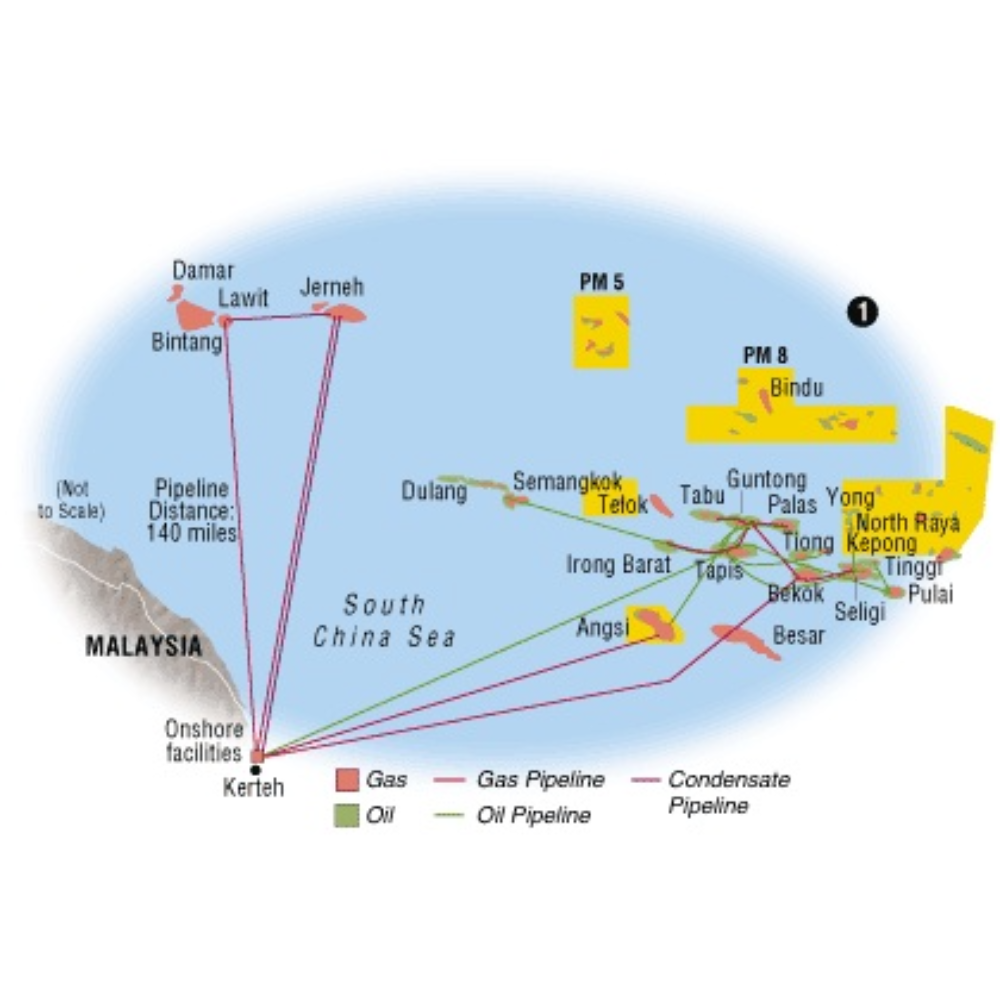
Tapis is a mature shallow-water fixed-platform oilfield complex about 210 kilometres offshore Terengganu, Malaysia. Production began from Tapis A in 1978. The field includes the Tapis A–F installations and the bridge-linked Tapis B, Q and R complex. Oil is processed centrally and exported through the 24-inch Tapis–Kerteh pipeline to the Terengganu Crude Oil Terminal.
Operator: ExxonMobil / Petronas
Status: Operational
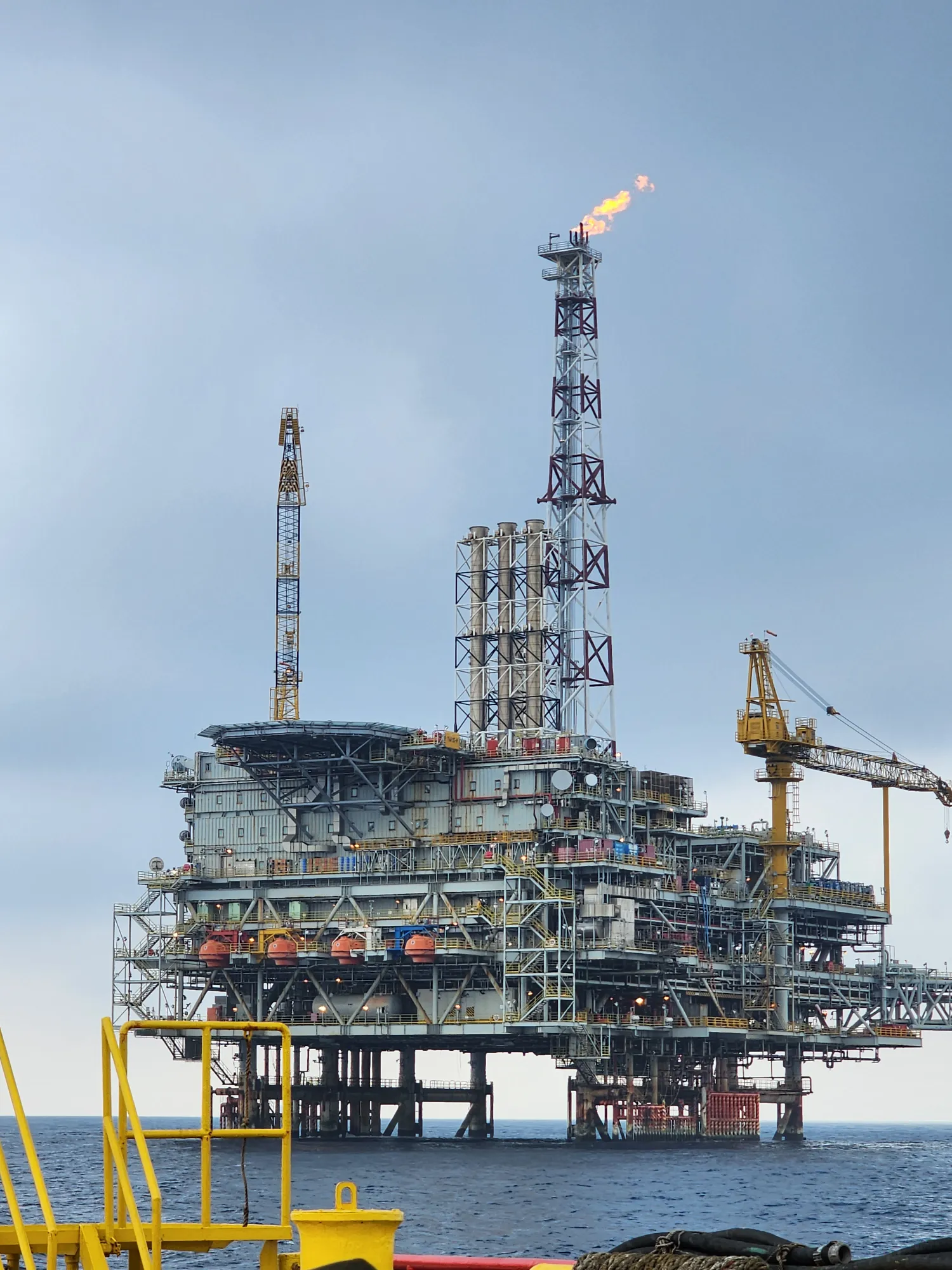
Image Source: Threads: zulhilmiazmie. (All rights belong to the original owner.)
Production: Oil
Operations start: 1978
Water depth: 64 m
Country: Malaysia
Block: PM 9, PM 309
Type: Fixed steel jacket
Field
The Tapis field lies in the Malay Basin and forms an east–west anticline approximately 16 kilometres long and seven kilometres wide. Its principal reservoirs are Lower Miocene Group J marginal-marine sandstones. The mature accumulation produces light, low-sulphur crude and has been developed through waterflooding followed by full-field immiscible water-alternating-gas injection using the existing platform well network.
Facilities
Tapis was developed progressively through fixed platforms A, B, C, D, E and F. Tapis F is a 12-well satellite connected by an approximately 4.5-kilometre pipeline to Tapis A. The field’s principal modern processing hub is Tapis R, a large integrated-deck central processing platform bridge-linked through the Tapis Q riser platform to the existing Tapis B installation. Tapis R contains production-processing equipment, gas compression, high-pressure water injection, utilities and living quarters for 145 people. Approximately 50 kilometres of in-field pipelines and subsea cables distribute injection water and gas from Tapis R and receive full wellstream from existing platforms. The field’s enhanced-recovery system alternates injected water and gas through selected wells; gas-compression and water-injection facilities were installed specifically for this service. Production separation, crude treatment, produced-water handling, metering, chemical injection and export pumping are concentrated at the central complex. Permanent support systems include electrical generation and distribution, integrated process control, emergency shutdown, fire-and-gas detection, firewater, flare and pressure relief, telecommunications, cranes and marine access. Stabilised crude enters the 24-inch, approximately 197-kilometre Tapis–Kerteh oil pipeline, which terminates at the Terengganu Crude Oil Terminal at Kerteh. Tapis has no field FSO or routine offshore tanker-loading system; normal oil export is pipeline based.
Similar Assets
News