SeaRose FPSO
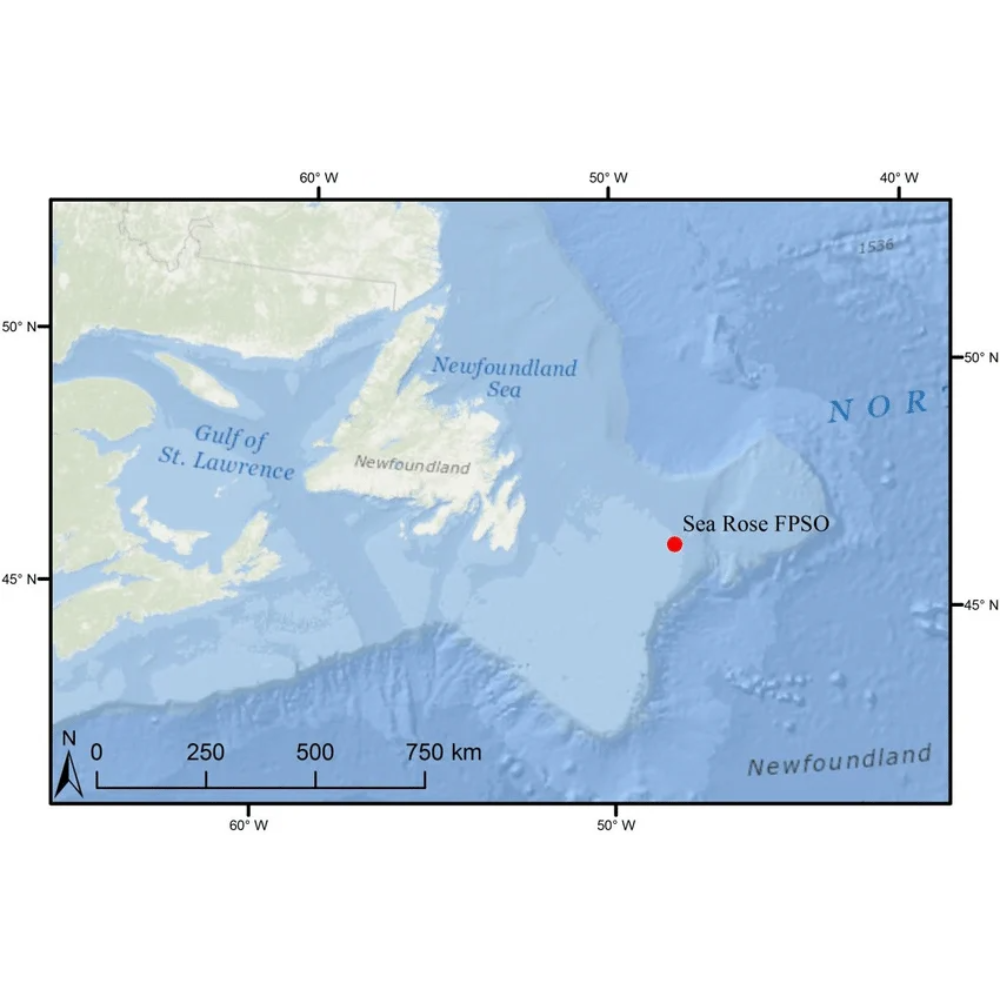
SeaRose is a purpose-built, ice-strengthened FPSO serving the White Rose oil field on Canada’s Grand Banks. First oil was produced on 12 November 2005. Moored in about 120 metres of water, approximately 350 kilometres east of Newfoundland, it receives production from subsea drill centres, processes and stores crude, reinjects associated gas, and exports oil by tandem offloading to shuttle tankers.
Operator: Cenovus / Husky
Status: Operational
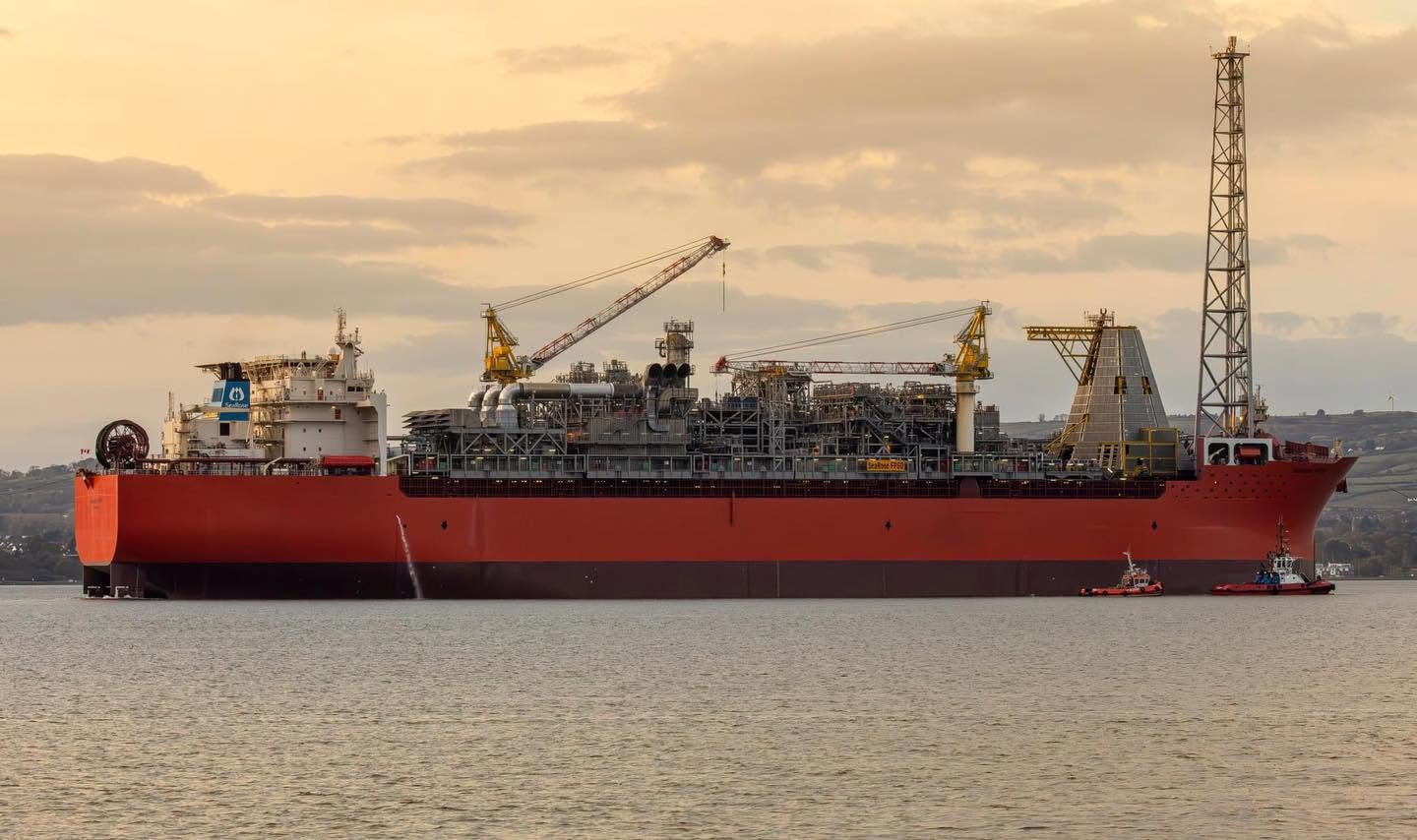
Image Source: Facebook: NL Maritime?. (All rights belong to the original owner.)
Production: Oil
Operations start: 2005
Water depth: 120 m
Country: Canada
Block: PL 1006, PL 1007, PL 1008
Type: FPSO
Field
White Rose lies in the Jeanne d’Arc Basin on the north-eastern Grand Banks. The principal reservoir is Cretaceous sandstone of the Ben Nevis–Avalon succession, within a faulted structure influenced by the Amethyst salt ridge and Voyager Fault. The large oil accumulation is developed through seabed drill centres containing producers, water injectors and gas-injection wells, tied back to the central SeaRose FPSO.
Facilities
White Rose initially produced through the Central and Southern subsea drill centres, with the Northern Drill Centre developed for gas injection and underground storage. The North Amethyst Drill Centre was tied back to SeaRose and entered production in 2010; the South White Rose Extension drill centre followed in 2015. Subsea trees, manifolds and associated equipment are installed in excavated seabed glory holes that protect them from iceberg scour. Flexible production, water-injection, gas-service and control lines connect the drill centres to the FPSO. SeaRose topsides include a three-stage oil-stabilisation train, a three-stage gas-compression train, produced-water treatment and seawater-injection facilities. Separated gas is compressed for reservoir reinjection and vessel fuel rather than exported through a sales-gas pipeline. Stabilised crude is routed to hull cargo tanks providing approximately 940,000 barrels of storage. Export uses tandem offloading: an ice-strengthened shuttle tanker positions astern and receives crude through the FPSO’s flexible loading hose. The 258-metre vessel is held through a disconnectable internal turret carrying the production, injection and control risers. The turret can be released when severe iceberg or sea-ice conditions require the FPSO to leave the field. Thrusters support heading control and station keeping. Permanent utilities include onboard electrical generation, chemical injection, metering, seawater lift, flare and pressure relief, firewater, emergency shutdown, fire-and-gas detection, process and subsea control, marine systems and living quarters. SeaRose has no fixed bridge connection or crude-export pipeline.
Similar Assets
News