Satu PFLNG
PFLNG Satu is a ship-shaped floating liquefaction facility that first produced LNG from the Kanowit field in December 2016. It relocated to the Kebabangan field offshore Sabah in 2019, where gas is supplied from the fixed Kebabangan production platform. The externally turret-moored vessel treats, liquefies, stores and loads LNG and condensate in water depths within its 70–200-metre design range.
Operator: PETRONAS
Status: Operational
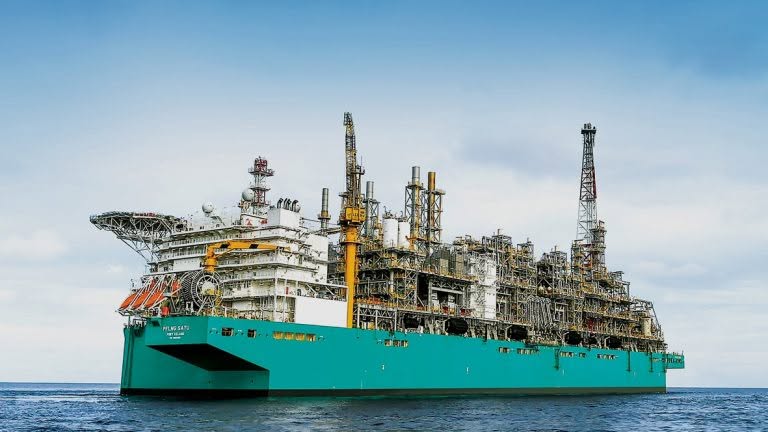
Image Source: Facebook: ASEAN World 24 - Southeast Asia Network, Ardly Lufias. (All rights belong to the original owner.)
Production: Gas
Operations start: 2016
Water depth: 70 m
Country: Malaysia
Block: Kebabangan Field
Type: FPSO
Field
The Kebabangan field lies roughly 130 kilometres offshore Sabah in the South China Sea, within the north-west Sabah offshore basin. Its gas-bearing intervals are Upper Miocene deep-water turbidite sandstones deposited in submarine-fan systems and contained within a structurally complex fold-and-thrust setting. The field is developed through the Kebabangan integrated drilling and production platform, with gas routed onward to PFLNG Satu for offshore liquefaction.
Facilities
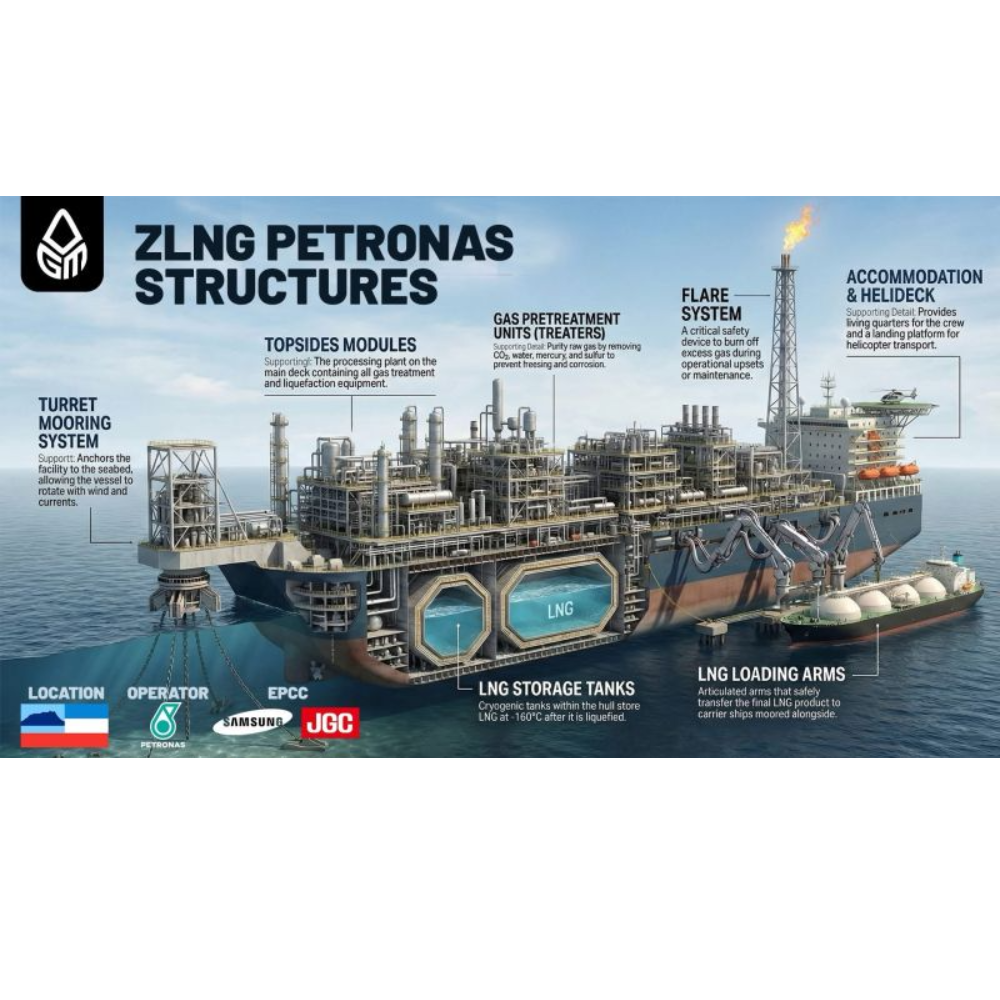
At Kebabangan, feed gas reaches PFLNG Satu from the fixed Kebabangan drilling and production platform through a flexible subsea pipeline connected to the vessel’s external turret. The turret permits weathervaning and transfers gas and control services while the vessel remains permanently moored. During its original Kanowit deployment, the same vessel received conditioned gas from the KAKG-A central processing platform, demonstrating the relocatable design for which it was built. Twenty-two topside modules provide gas reception, treatment, liquefaction, storage and offloading. The liquefaction plant uses a nitrogen-cycle process to cool treated gas to LNG conditions. The hull contains eight membrane LNG tanks arranged in two rows, providing approximately 177,000 cubic metres of LNG storage, together with two condensate tanks totalling approximately 20,000 cubic metres. LNG carriers berth alongside for direct cargo transfer, while condensate is handled through the vessel’s dedicated cargo system. PFLNG Satu is approximately 365 metres long and 60 metres wide. Its permanent systems include gas-turbine electrical generation, liquefaction compressors, transformers, switchboards, process and cargo metering, chemical injection, flare and pressure relief, firewater, fire-and-gas detection, emergency shutdown, marine control, communications and accommodation for about 145 personnel. The vessel incorporates roughly 1,600 kilometres of electrical and instrument cabling and was designed to remain on station for about 20 years without routine dry-docking.
Similar Assets
News