Dua PFLNG
PFLNG Dua is a purpose-built floating liquefied-natural-gas facility serving the Rotan gas field in Block H offshore Sabah. First gas reached the vessel in February 2021 and its first LNG cargo followed in March. Permanently turret-moored in about 1,300 metres of water, it receives gas from subsea wells, processes and liquefies it onboard, and loads LNG directly to carriers.
Operator: PETRONAS
Status: Operational
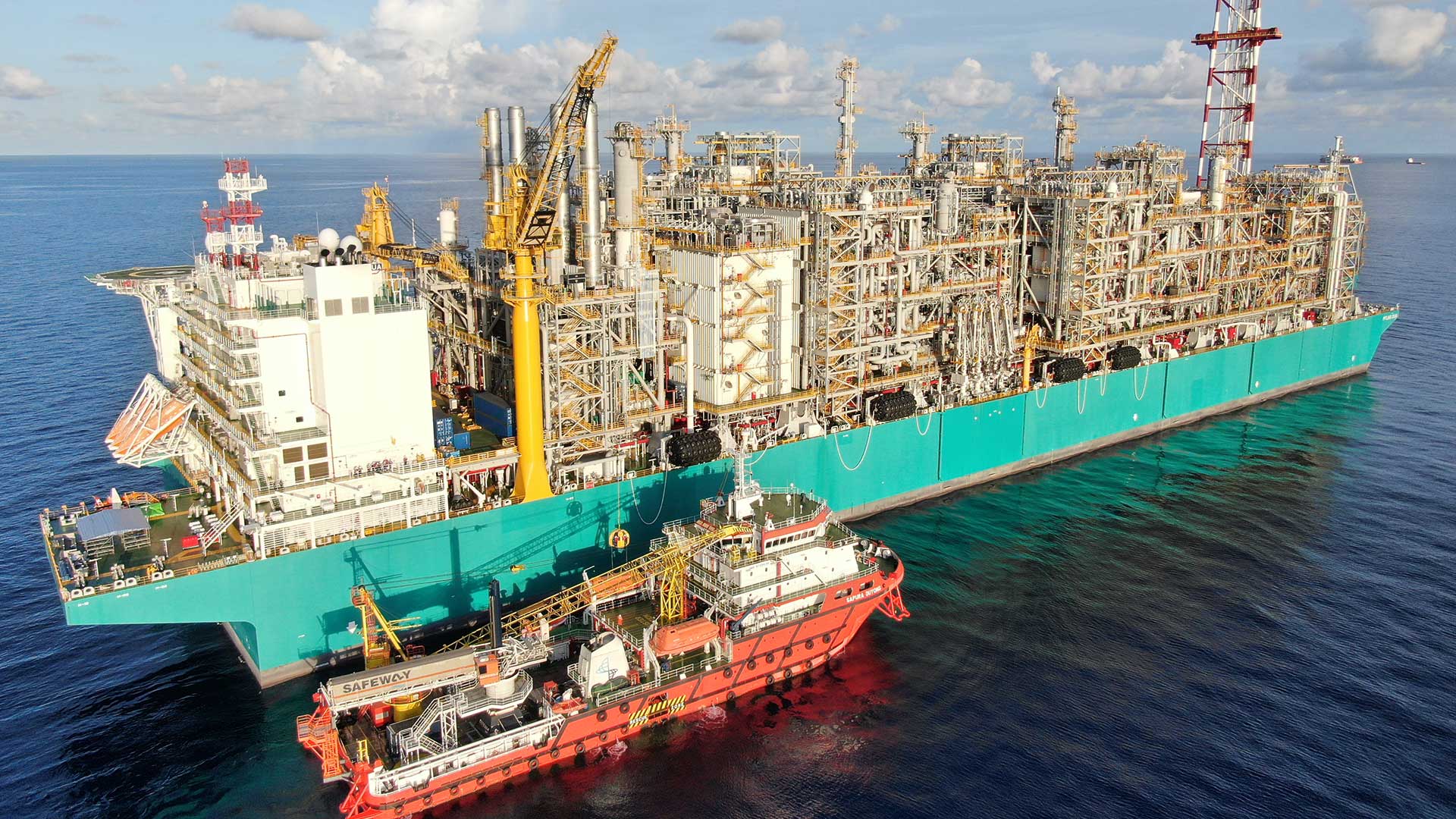
Image Source: https://www.jgc.com/en/projects/project-story/002.html. (All rights belong to the original owner.)
Production: Gas
Operations start: 2021
Water depth: 1300 m
Country: Malaysia
Block: Block H
Type: FPSO
Field
The Rotan field lies about 140 kilometres offshore Sabah in the deep-water North Sabah–Pagasa fold-and-thrust province. Its gas accumulations occur in Upper Miocene deep-marine turbidite sandstone reservoirs contained within structurally complex minibasins dominated by shale. Rotan and nearby Buluh form the Block H development, using subsea wells and a central floating liquefaction vessel rather than fixed production platforms.
Facilities
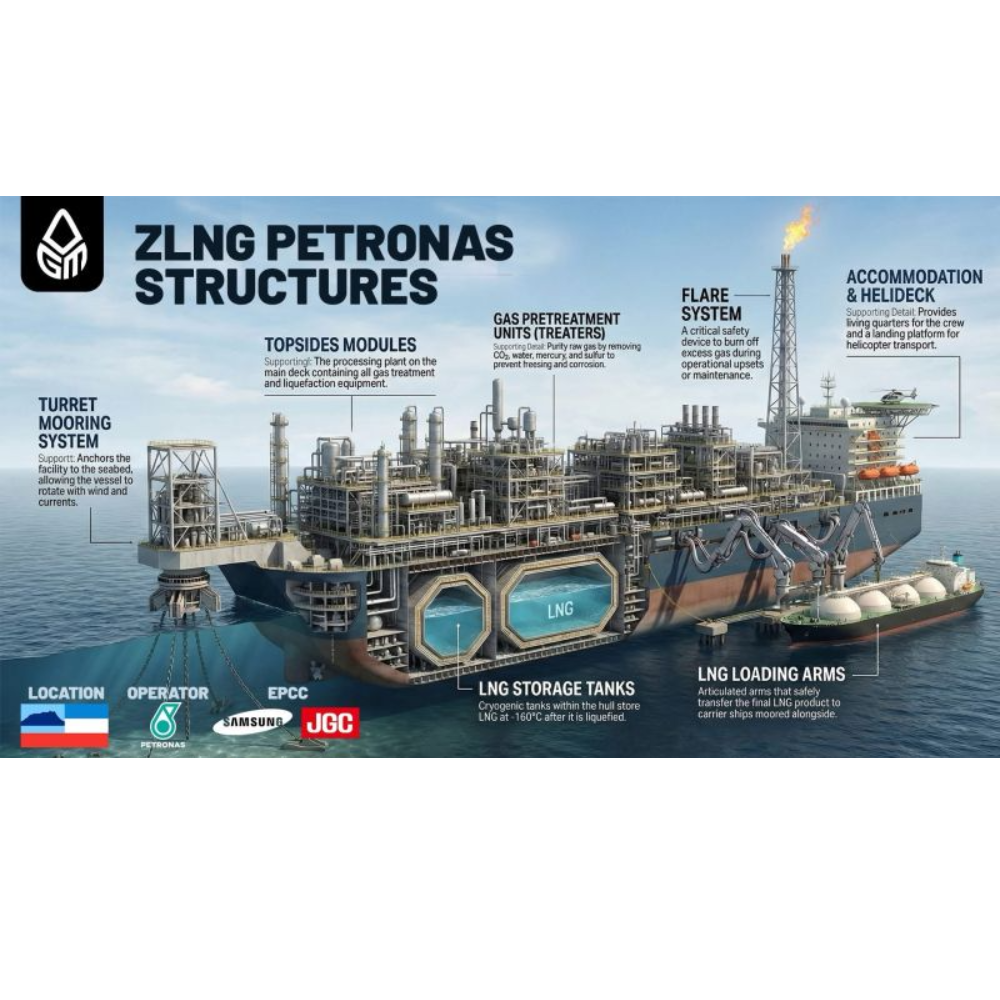
PFLNG Dua receives production through two approximately 12-kilometre, 10-inch flexible flowlines connected to a subsea manifold and the Rotan well system. Four 10-inch flexible risers and three control umbilicals enter the vessel through an external turret. The turret is secured by twelve chain-and-polyester mooring legs arranged in three groups and anchored by suction piles, allowing the hull to weathervane while maintaining continuous fluid and control connections. The topsides separate reservoir liquids and treat the feed gas before liquefaction. Documented treatment includes acid-gas removal for carbon dioxide and hydrogen sulphide, followed by gas conditioning and refrigeration. LNG is stored in purpose-built tanks with total capacity of approximately 177,000 cubic metres. The 393-metre-long, 64-metre-wide vessel loads LNG directly to carriers positioned alongside; it therefore requires neither an export pipeline nor a separate storage vessel. Permanent support systems include electrical transformers, high- and low-voltage switchboards, motor-control centres, power-management software and prefabricated electrical houses. The installation also incorporates condensate handling, metering, chemical injection, flare and pressure-relief equipment, fire-and-gas detection, emergency shutdown, firewater, marine systems, communications and accommodation. Its turret and riser arrangement was designed for deployment across water depths from approximately 500 to 1,500 metres, making Rotan the vessel’s first ultra-deep-water operating location.
Similar Assets
News