P-70 FPSO
A purpose-built, ship-shaped replicant FPSO serving the Atapu pre-salt development in the Santos Basin. It began production in June 2020. Installed about 200 kilometres offshore Rio de Janeiro in approximately 2,300 metres of water, the vessel receives fluids from subsea producers, separates and treats oil and gas, provides injection-water and gas-handling services, stores stabilised crude and offloads it to export tankers.
Operator: Petrobras
Status: Operational
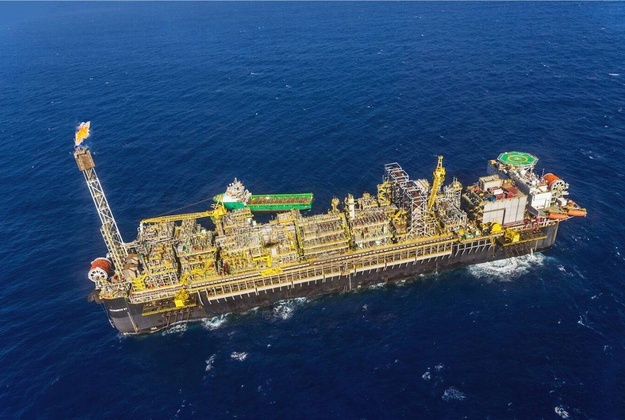
Image Source: Youtube: Boskalis - Heavy Marine Transport P70 FPSO - From China to Brazil. (All rights belong to the original owner.)
Production: Oil & Gas
Operations start: 2020
Water depth: 2300 m
Country: Brazil
Block: Atapu Field
Type: FPSO
Field
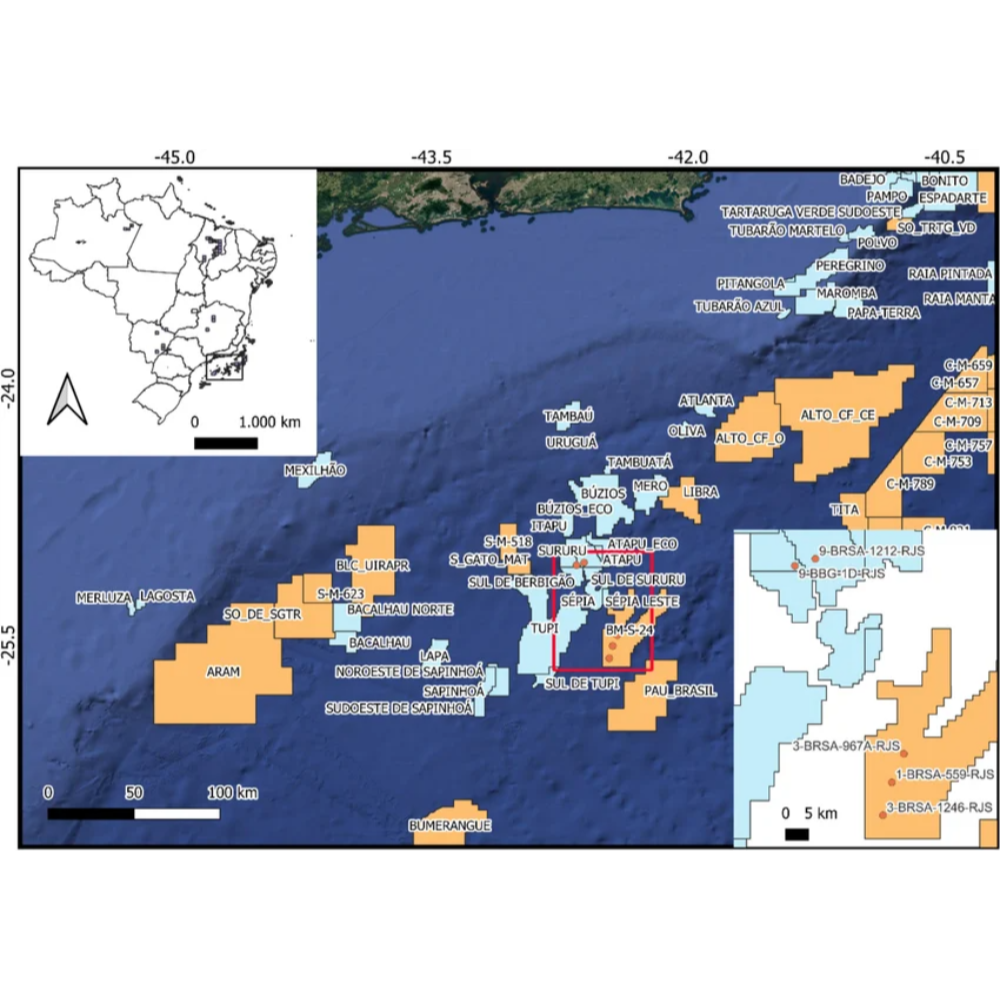
Atapu is a large pre-salt oil-and-gas field in the eastern Santos Basin, close to the Búzios area. Reservoirs occur in Aptian lacustrine carbonates of the Barra Velha Formation and coquina-rich intervals of the Itapema Formation, sealed by Ariri evaporites. The field is developed through subsea producer and injector wells tied to P-70, with the FPSO providing centralised processing, injection support, storage and export.
Facilities
P-70 was designed for connection to as many as eight subsea production wells and eight subsea injection wells. Subsea trees, production and injection flowlines, risers and control umbilicals terminate at the FPSO. Well fluids undergo three-phase separation, and the oil-treatment plant removes water and salts before stabilised crude is routed to cargo storage. P-70 uses the standardised replicant gas-processing arrangement: separator and vapour-recovery gas passes through main compression, dehydration, hydrocarbon-dew-point control and membrane carbon-dioxide removal. Treated gas can supply the vessel’s fuel system, enter export compression or be raised to injection pressure; a carbon-dioxide-rich stream can also be compressed for reservoir injection. Installed injection-water treatment and high-pressure pumping supply the subsea injector network. The standardised power system comprises four gas-turbine generator packages, normally arranged with three operating and one standby. P-70 is the fifth unit of the replicant series and uses a purpose-built, double-hull, box-shaped vessel approximately 288 metres long, 54 metres wide and 31.5 metres deep. Its cargo tanks store about 1.6 million barrels of crude. Fixed topsides modules and standardised subsea interfaces repeat the common replicant layout. P-70 remains permanently stationed in approximately 2,300 metres of water. Treated oil is transferred from storage to visiting shuttle tankers, while gas export, gas injection and water injection use dedicated risers and permanent subsea lines.
Similar Assets
News