North Rankin
North Rankin refers to the North Rankin A fixed drilling and production platform, now integrated with the bridge-linked North Rankin B compression platform. North Rankin A began operations in 1984. The complex handles gas and condensate in about 125 metres of water, receives platform and subsea production, and exports through trunklines 1TL and 2TL to the Karratha Gas Plant.
Operator: Woodside
Status: Operational
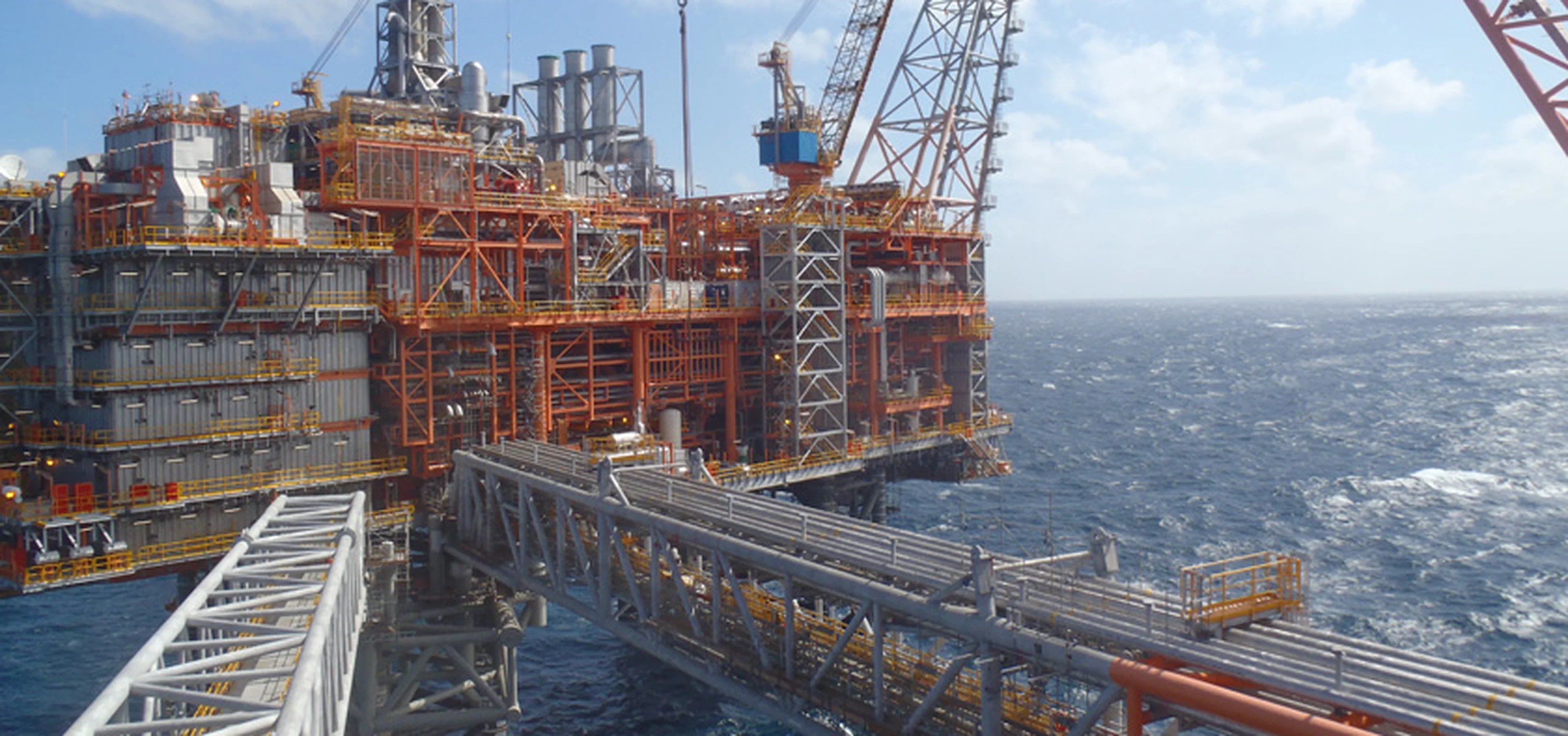
Image Source: https://alimak.com/cases/north-rankin-a-platform-north-west-shelf-indian-ocean-australia/. (All rights belong to the original owner.)
Production: Gas
Operations start: 1984
Water depth: 125 m
Country: Australia
Block: WA-1-L
Type: Fixed steel jacket
Field
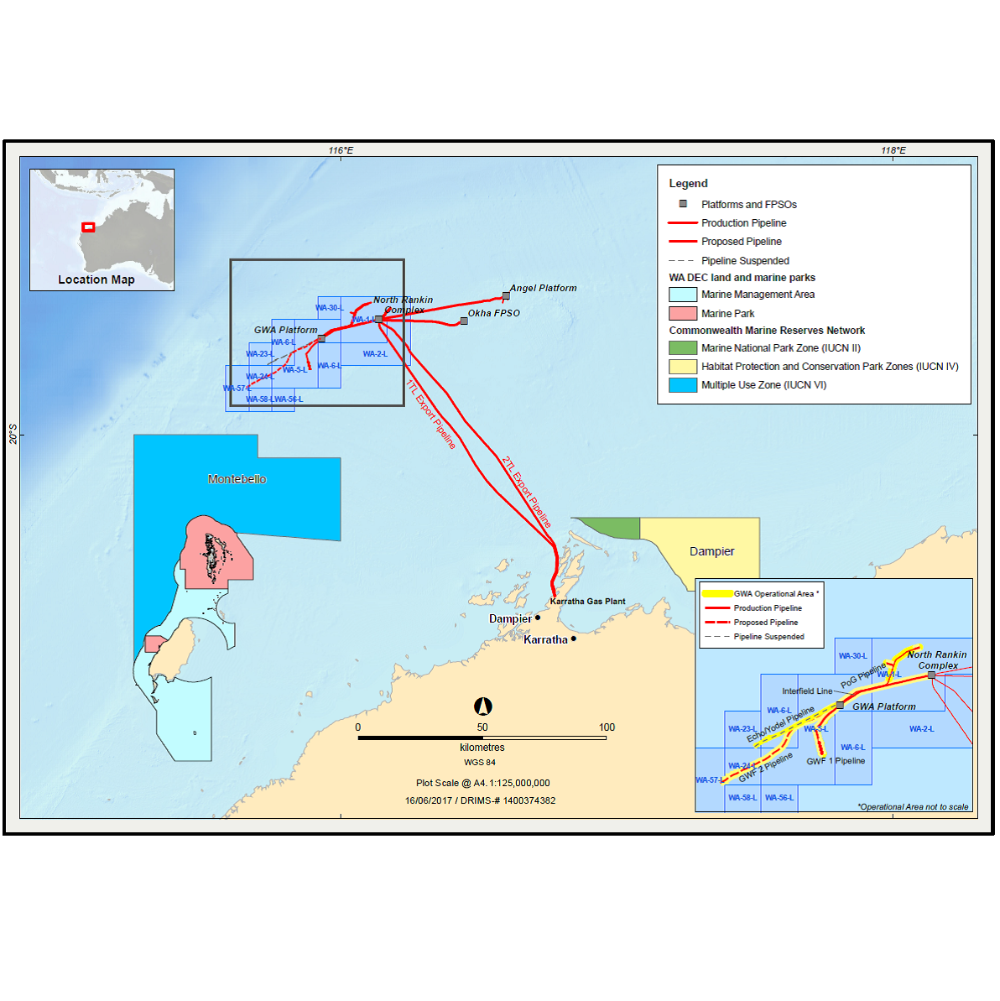
The North Rankin Complex lies approximately 135 kilometres north-west of Dampier on the Rankin Trend, within the Northern Carnarvon Basin’s Dampier Sub-basin. It develops the giant North Rankin gas-condensate field, adjacent Perseus reservoirs and the subsea Persephone field. The principal reservoirs are fluvial-deltaic sandstones of the Triassic Mungaroo Formation, contained within large fault-block structures beneath regional marine seals.
Facilities
North Rankin A provides the principal wellhead, drilling, processing and export functions, while North Rankin B, commissioned in 2013, supplies low-pressure separation, gas compression, condensate pumping, utilities and replacement accommodation. The two fixed steel platforms are connected by two bridges and operate as the North Rankin Complex. The regulated facility description identifies 32 production wells: 30 platform wells and two Persephone subsea wells. The Persephone wells connect through a subsea manifold and an approximately seven-kilometre tie-back pipeline; platform wells produce from the North Rankin and Perseus reservoirs. Incoming fluids undergo offshore separation into gas, condensate and produced water. North Rankin B compresses declining-pressure gas and pumps condensate into the export system, while North Rankin A retains drilling, well-control and trunkline-export equipment. Produced water is separated, treated and discharged through the offshore operating system. Permanent facilities include production and pigging manifolds, risers, metering, chemical injection, electrical generation and distribution, flare and relief equipment, firewater, process control, fire-and-gas detection, emergency shutdown, telecommunications and living quarters. Dry gas and condensate are exported through the two North West Shelf trunklines, 1TL and 2TL, which terminate at the onshore Karratha Gas Plant on the Burrup Peninsula. The trunkline network also receives other North West Shelf streams through subsea tie-ins. The complex has no hydrocarbon-storage or tanker-offloading function.
Similar Assets
News