Jotun A
Jotun-A is a floating production, storage and offloading (FPSO) vessel deployed on the Balder area of the Norwegian North Sea. Originally part of the Jotun field development from 1999, the FPSO was upgraded and repositioned at Balder in 2025 to continue long-term oil and gas production, storage and offloading functions.
Operator: Vår Energi ASA
Status: Under Construction
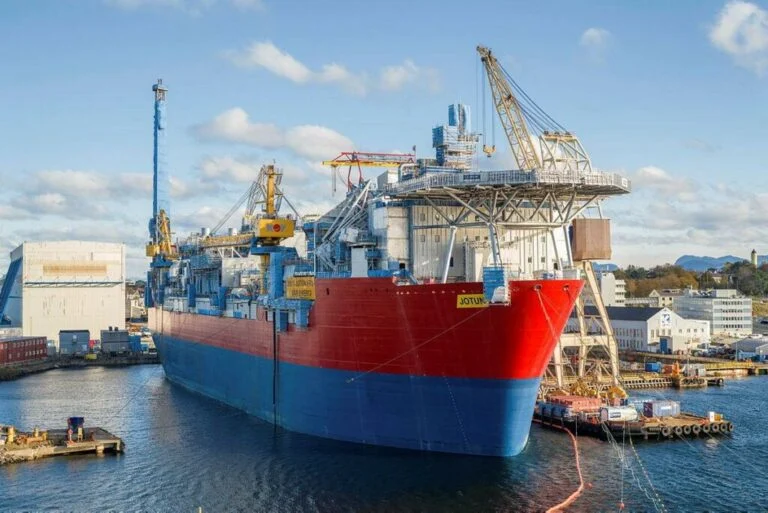
Image Source: Vår Energi ASA. (All rights belong to the original owner.)
Production: Oil
Operations start: 1999
Water depth: 126 m
Country: Norway
Block: 25/8
Type: FPSO
Field
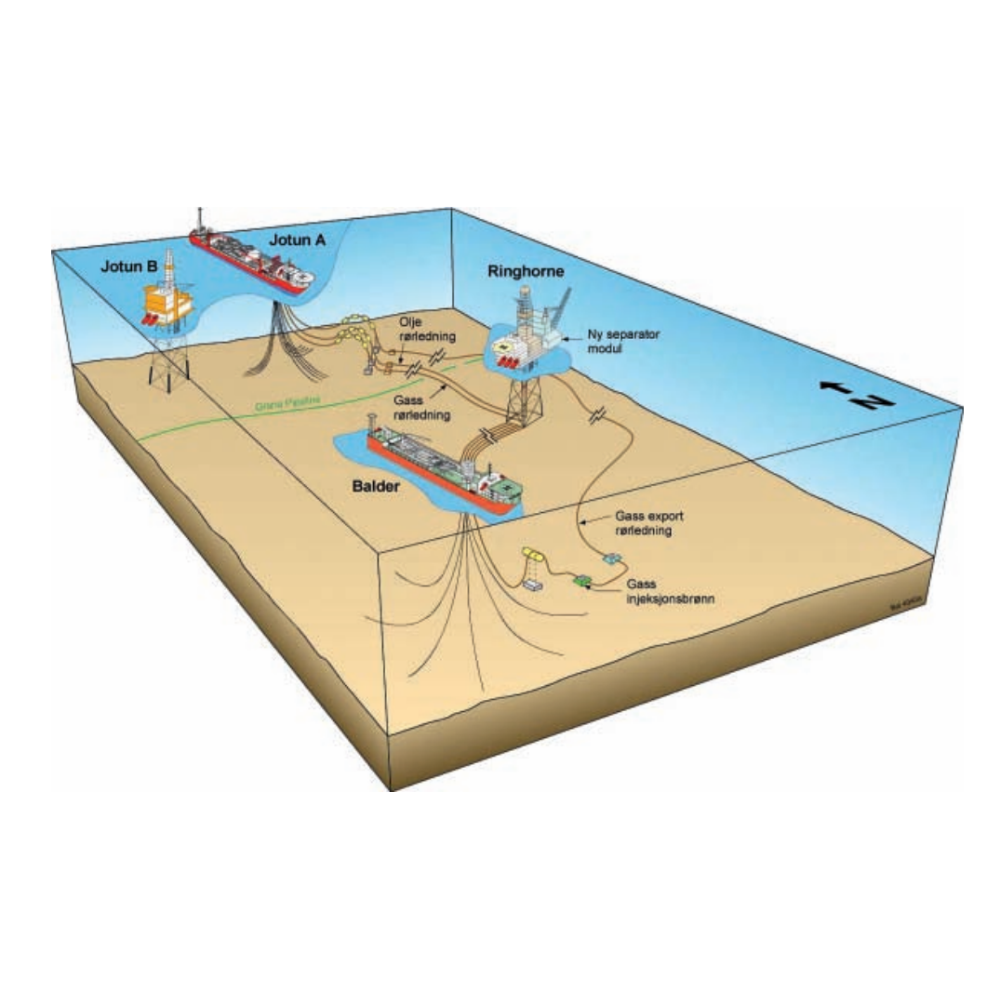
The Jotun field, discovered in 1994 and starting production in 1999, was developed with Jotun FPSO and a wellhead platform. It produced oil from Paleocene Heimdal Formation sandstones. Production at the original Jotun ceased in 2016; the FPSO was refurbished and redeployed in the Balder area for continued service.
Facilities
As an FPSO, Jotun-A integrates subsea well reception, topside processing (three-phase separation, gas handling, stabilisation) and large crude oil storage. Produced fluids from subsea wells are processed onboard; stabilized oil is stored in the hull and offloaded to shuttle tankers. Gas handling systems include compression and export via Statpipe to Kårstø for further processing, with excess gas routed into regional networks. Utilities comprise onboard power generation, ballast and stability systems, water injection support and advanced control systems. The vessel's turret allows catenary mooring enabling weathervaning. FPSO operations emphasise extended field tie-backs, long-term storage capability, and integration with regional export infrastructure.
Similar Assets
News