Embla
Embla is a normally unmanned wellhead platform in the southern Norwegian North Sea developed with subsea wells tied back to the Eldfisk S processing facility. Installed under the original PDO in the early 1990s, it has produced oil and associated gas since 1993 and exports via pipeline to Eldfisk and onward to Ekofisk export systems.
Operator: ConocoPhillips Skandinavia AS
Status: Operational
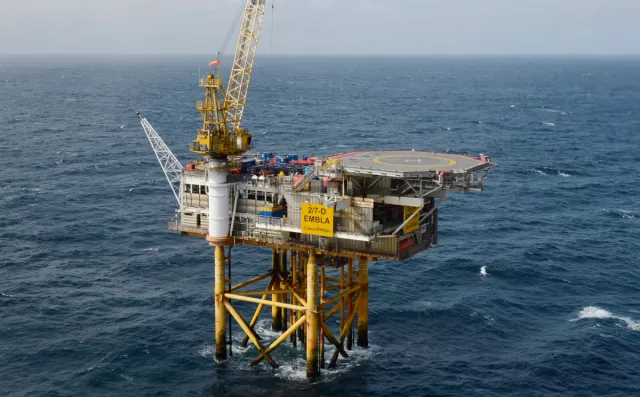
Image Source: ConocoPhillips Skandinavia AS. (All rights belong to the original owner.)
Production: Oil
Operations start: 1993
Water depth: 70 m
Country: Norway
Block: 2/7
Type: Fixed steel jacket
Field
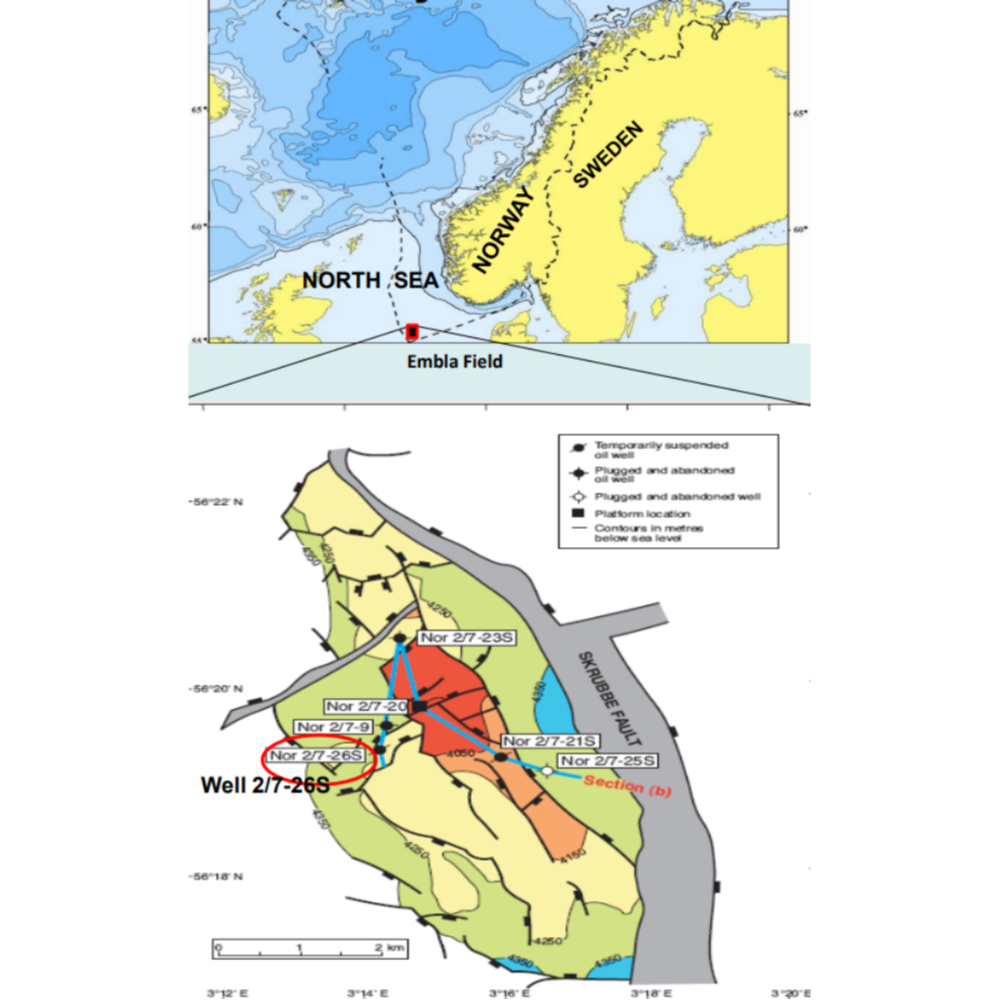
The Embla field lies south of Eldfisk in ~70-m water depth and was discovered in 1988. Its Devonian-Permian sandstone and conglomerate reservoir is high-pressure/high-temperature and heavily faulted. Production began in 1993 via subsea wells tied back to the Eldfisk complex. Hydrocarbons are routed for processing and export via the Ekofisk Centre.
Facilities
Embla's unmanned wellhead platform supports multiple production wells drilled into segmented sandstone and conglomerate intervals via high-pressure flowlines to Eldfisk S. There is no significant processing onboard; wellstreams are routed directly to Eldfisk S for oil/gas separation, dehydration and export handling. Export pipelines connect Eldfisk to the Ekofisk Centre and onward through Norpipe oil and gas trunk lines to Teesside (UK) and Emden (Germany). Infrastructure includes subsea flowlines and umbilicals with remote control from Eldfisk facilities, pressure/flow monitoring, emergency shutdown systems, and chemical injection for flow assurance. Being an unmanned installation, it relies on offshore control from the host complex and has basic utilities for power, communications, and safety systems strictly related to subsea well control and flowline integrity.
Similar Assets
News