K-13A
A fixed steel wellhead and production platform within the K13 gas fields in the Dutch Southern North Sea, originally installed in the mid-1970s as the field hub. K-13A facilitated drilling and wells for multiple satellites, serving as a central processing and transport node. In later years it transitioned to a riser/transport role.
Operator: Wintershall Noordzee B.V.
Status: Operational
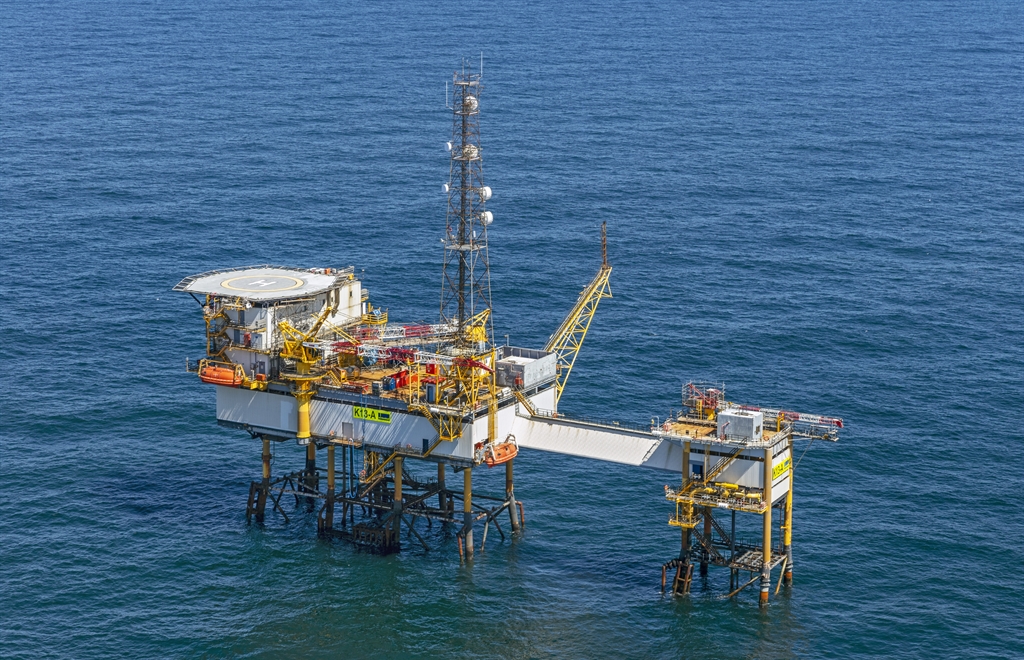
Image Source: Wintershall Noordzee B.V.. (All rights belong to the original owner.)
Production: Gas
Operations start: 1976
Water depth: 28 m
Country: Netherlands
Block: K-Block
Type: Fixed steel jacket
Field
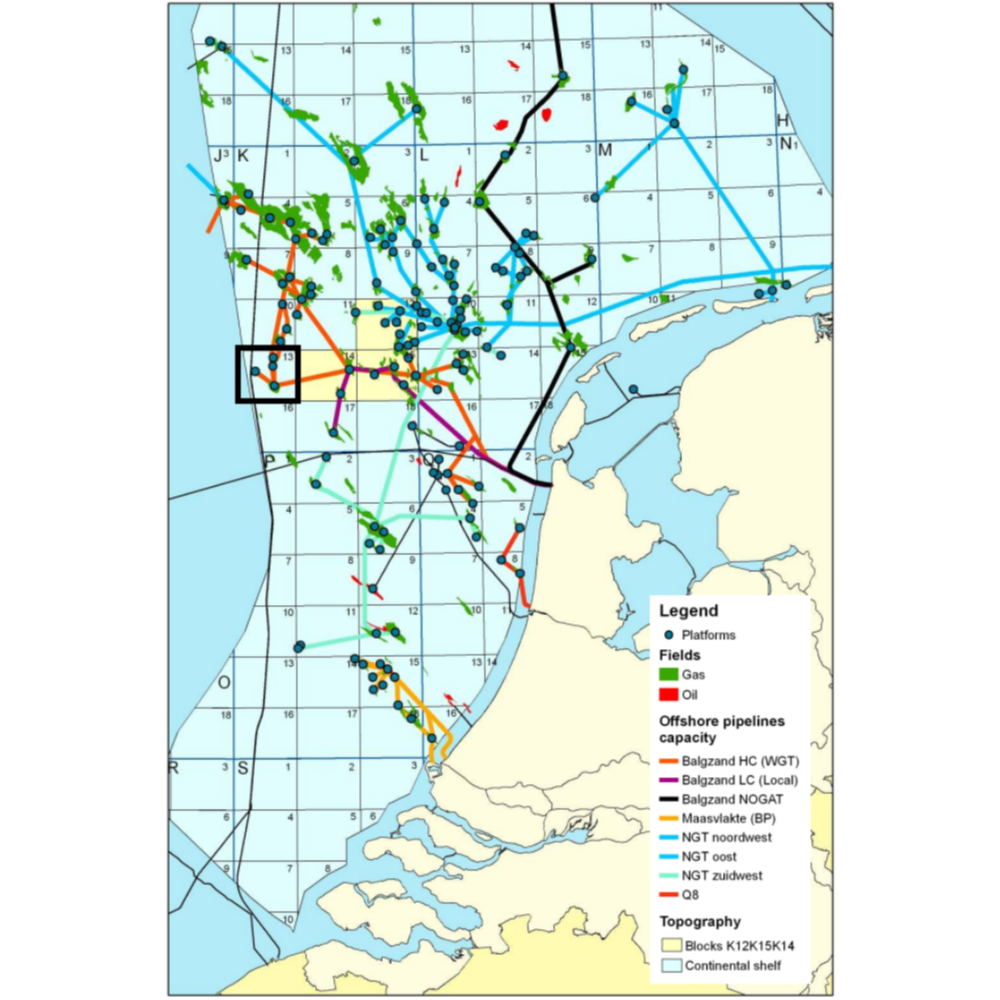
The K13 gas fields comprise several gas reservoirs in the Southern North Sea discovered in the early 1970s with production from 1975. Reservoirs are Middle Bunter and Rotliegendes sandstones typical of Permian-Triassic stratigraphy. K13A acted as the primary hub receiving gas from satellites. Production from original reserves has ceased, with installations repurposed for transport and compression.
Facilities
K-13A contained multiple well slots with platforms for drilling and production integrated with separation facilities in early life. Gas was conditioned (separation and compression) and exported via pipeline to onshore networks. Over time, wells were plugged and abandoned as reservoirs depleted, and the platform's role shifted to a bypass/riser for nearby field tie-ins. Facilities included compressor trains, gas dehydration equipment, and connection manifolds for satellite tie-backs. The design reflected typical 1970s fixed platform engineering with extensive topside host processing capacity and subsea infrastructure connecting to Dutch pipeline systems.
Similar Assets
News