Molikpaq
Molikpaq, formally Piltun-Astokhskoye-A, is a bottom-founded, ice-resistant drilling and production platform handling oil and associated gas. Commercial production began in 1999. Installed in approximately 30 metres of water, 16 kilometres off north-eastern Sakhalin, it develops the Astokh area and exports conditioned hydrocarbons by subsea pipeline to the Sakhalin-2 Onshore Processing Facility.
Operator: Sakhalin Energy / Gazprom
Status: Operational
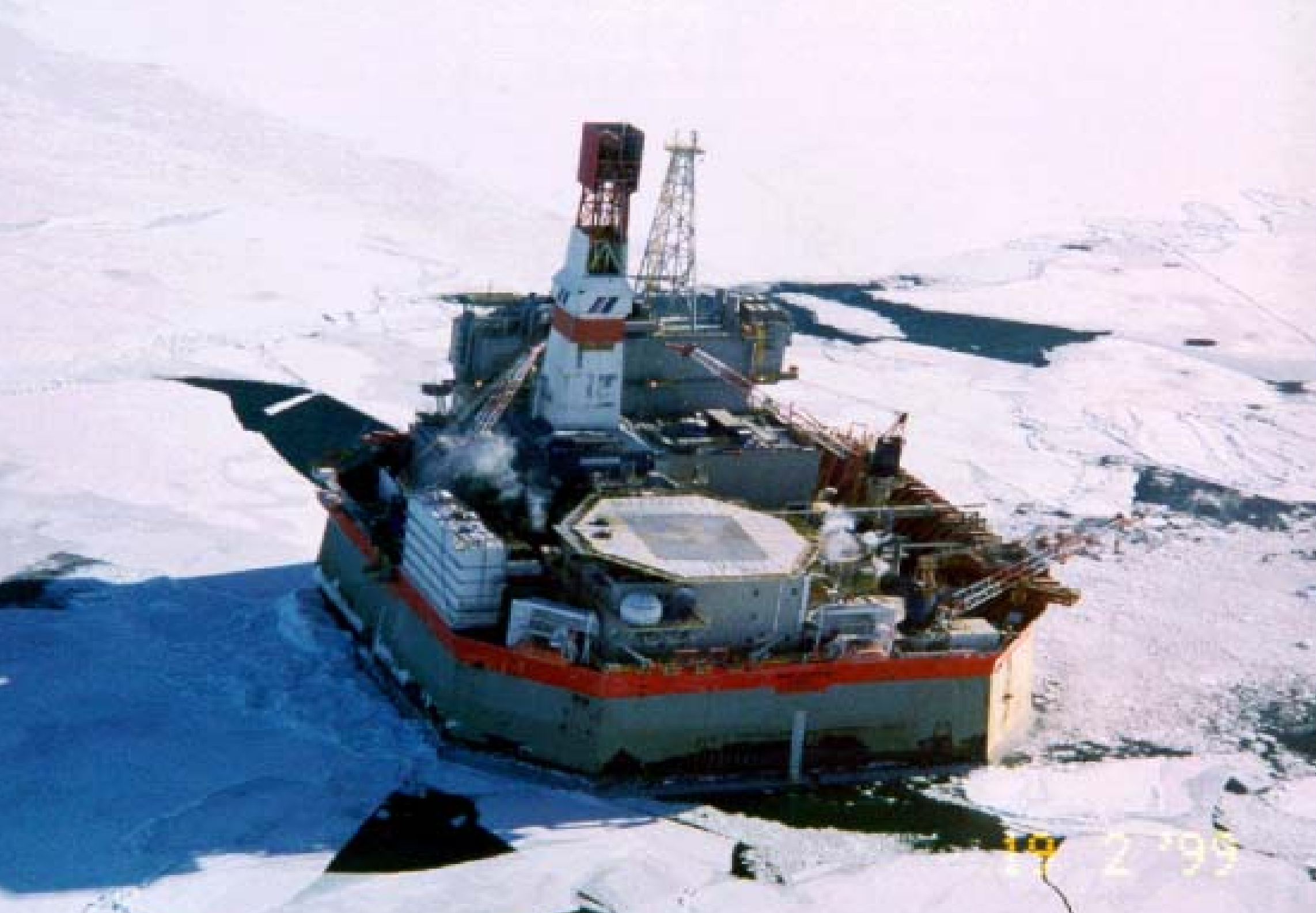
Image Source: IEEJ: November 2003 - Energy related projects in the north Energy related projects in the north-east Asia. (All rights belong to the original owner.)
Production: Oil & Gas
Operations start: 1999
Water depth: 30 m
Country: Russia
Block: Piltun-Astokhskoye Field
Type: Onshore
Field
The Piltun-Astokhskoye field lies in the Sea of Okhotsk within the North Sakhalin Basin. The large oil-and-gas accumulation contains stacked Neogene sandstone reservoirs, principally Miocene–Pliocene clastic intervals deposited in fluvial, deltaic and shallow-marine settings. Molikpaq develops the Astokh structure through platform wells, with water injection used to support reservoir pressure and improve areal sweep.
Facilities
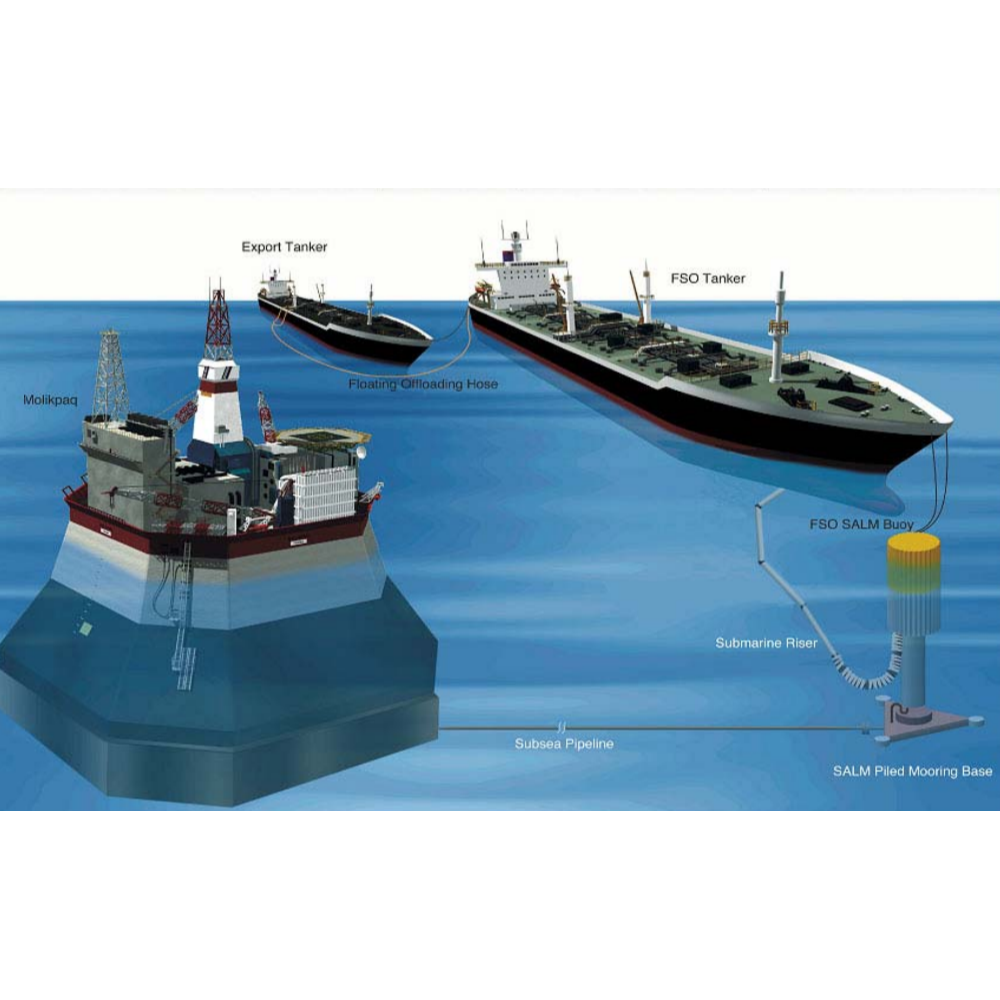
Molikpaq was converted from a Canadian Beaufort Sea mobile arctic caisson and enlarged with a 15-metre steel spacer for the deeper Sakhalin location. Its steel caisson rests on a prepared seabed foundation containing approximately 350,000 tonnes of sand ballast. The drilling template was expanded to 32 well conductors. A documented operating stock at the end of 2019 comprised 17 oil-production wells, seven water-injection wells and one drill-cuttings reinjection well. The platform contains drilling and well-intervention equipment, production and test manifolds, multiphase separation, oil conditioning, associated-gas handling, produced-water facilities and water-injection systems. Twelve seawater-supply wells installed within the sand core support platform water requirements. Year-round production became possible after additional power-generation and process modules were installed for Sakhalin-2 Phase 2. Permanent systems also include metering, chemical injection, process control, emergency shutdown, fire-and-gas detection, firewater, flare and relief equipment, telecommunications, cranes, helideck and heated accommodation. Processed oil and associated gas leave through two approximately 17.5-kilometre, 14-inch offshore pipelines to the Sakhalin coast and onward to the Onshore Processing Facility. From there, separated oil and gas enter the parallel Trans-Sakhalin pipeline system running south to Prigorodnoye. Crude is stored at the Prigorodnoye Oil Export Terminal and transferred through its offshore tanker-loading unit; gas continues to the Prigorodnoye LNG plant. Molikpaq itself has no permanent hydrocarbon storage or tanker-loading function under the year-round pipeline-export configuration.
Similar Assets
News