Leviathan
Leviathan is a deep-water subsea gas development connected to a fixed processing platform near Israel’s coast. Commercial production began on 31 December 2019. Four subsea wells in about 1,500–1,650 metres of water deliver gas and condensate through two 120-kilometre pipelines to the Leviathan Production Platform, installed 10 kilometres offshore Dor in 86 metres of water.
Operator: Chevron
Status: Operational
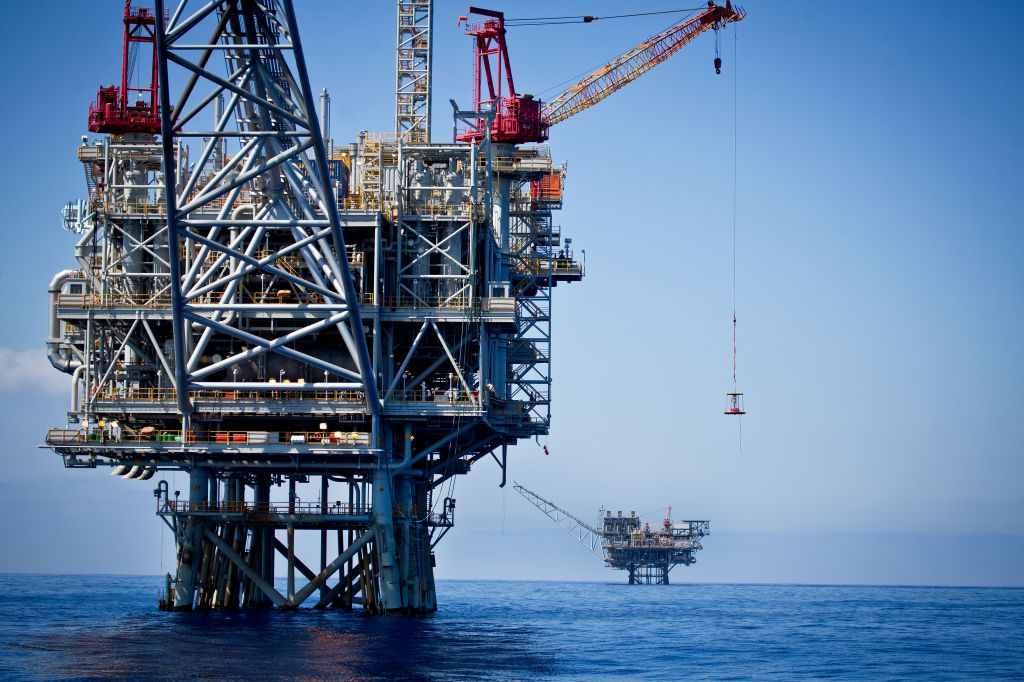
Image Source: https://egyptoil-gas.com/news/leviathan-partners-sign-3b-israeli-gas-supply-deal/. (All rights belong to the original owner.)
Production: Gas
Operations start: 2019
Water depth: 1500 m
Country: Israel
Block: I/14 South, I/15 North
Type: Fixed steel jacket
Field
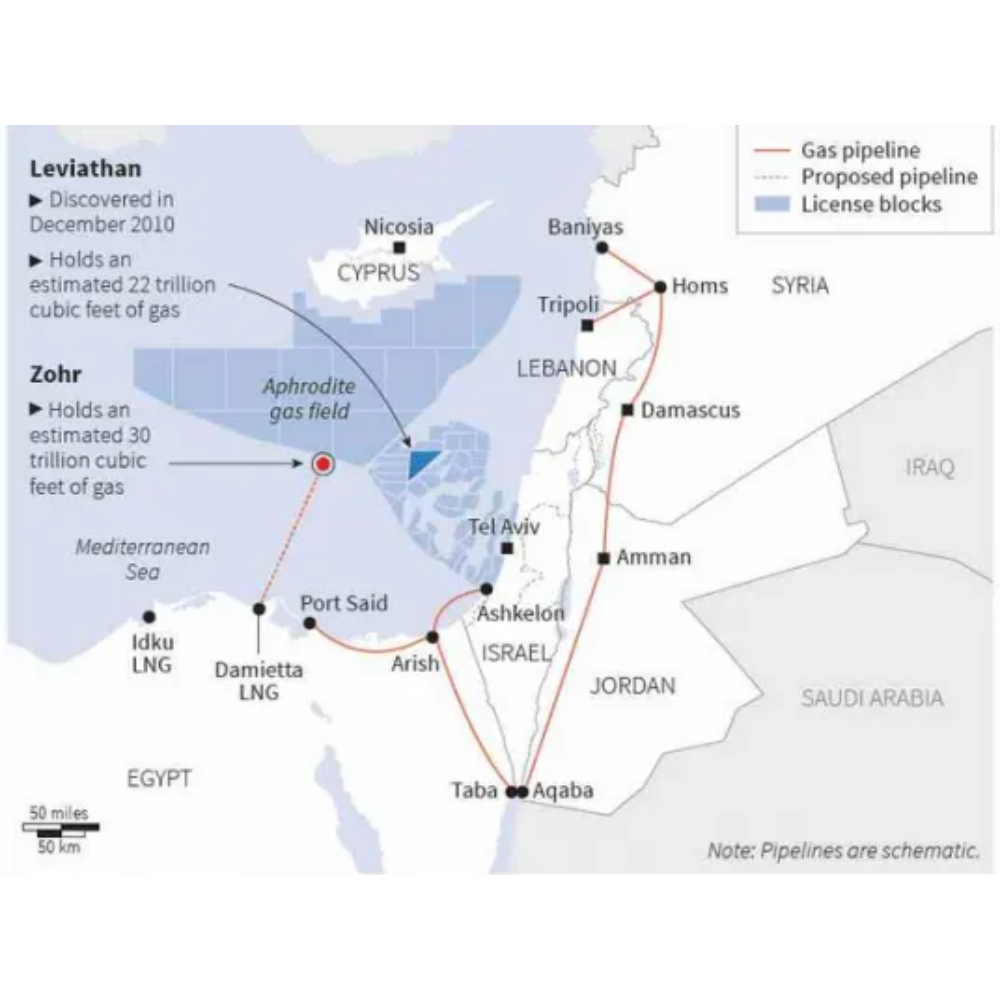
Leviathan lies approximately 130 kilometres west of Haifa in the Levant Basin and is a giant regional gas-condensate accumulation. Its hydrocarbons occur in the lower-Miocene Tamar Sands, comprising deep-marine turbidite sandstone reservoirs within a large faulted structure. Development separates the deep-water well system from coastal processing by using a long subsea tie-back to a shallow-water fixed platform.
Facilities
Phase 1A uses four deep-water subsea production wells connected to a common subsea manifold. Two parallel 18-inch production flowlines, each approximately 120 kilometres long, carry the untreated gas-condensate stream to the fixed Leviathan Production Platform. Long umbilicals provide hydraulic control, electrical power, communications and chemical injection to the wells and manifold. The initial system has no offshore injection wells or separate floating host. The Leviathan platform stands on a 16-pile steel jacket in approximately 86 metres of water. Two major topsides modules provide inlet separation, removal of produced liquids and water, gas dehydration and condensate stabilisation. Process equipment also includes fuel-gas treatment, compression, metering, chemical injection, flare and pressure-relief systems. Permanent platform utilities comprise electrical generation and distribution, instrument and service air, seawater and cooling services, firewater, fire-and-gas detection, emergency shutdown, telecommunications, helideck and living quarters. Treated natural gas and stabilised condensate leave the platform through separate pipelines to the Dor Onshore Reception Terminal. Gas enters the Israel Natural Gas Lines national transmission system, which provides the permanent route to domestic users and the interconnected export systems serving Jordan and Egypt. Condensate enters Israel’s liquid-fuels pipeline infrastructure. The platform has no gas or condensate storage and no tanker-offloading function.
Similar Assets
News