Kebabangan
Kebabangan is a manned, fixed integrated drilling, production, processing and accommodation platform handling gas, condensate and imported crude offshore Sabah. First gas was produced in November 2014. The eight-leg steel-jacket installation stands in about 140 metres of water, approximately 130 kilometres offshore, and exports processed field fluids through permanent pipelines to the Sabah Oil and Gas Terminal at Kimanis.
Operator: Kebabangan Petroleum Operating Company
Status: Operational
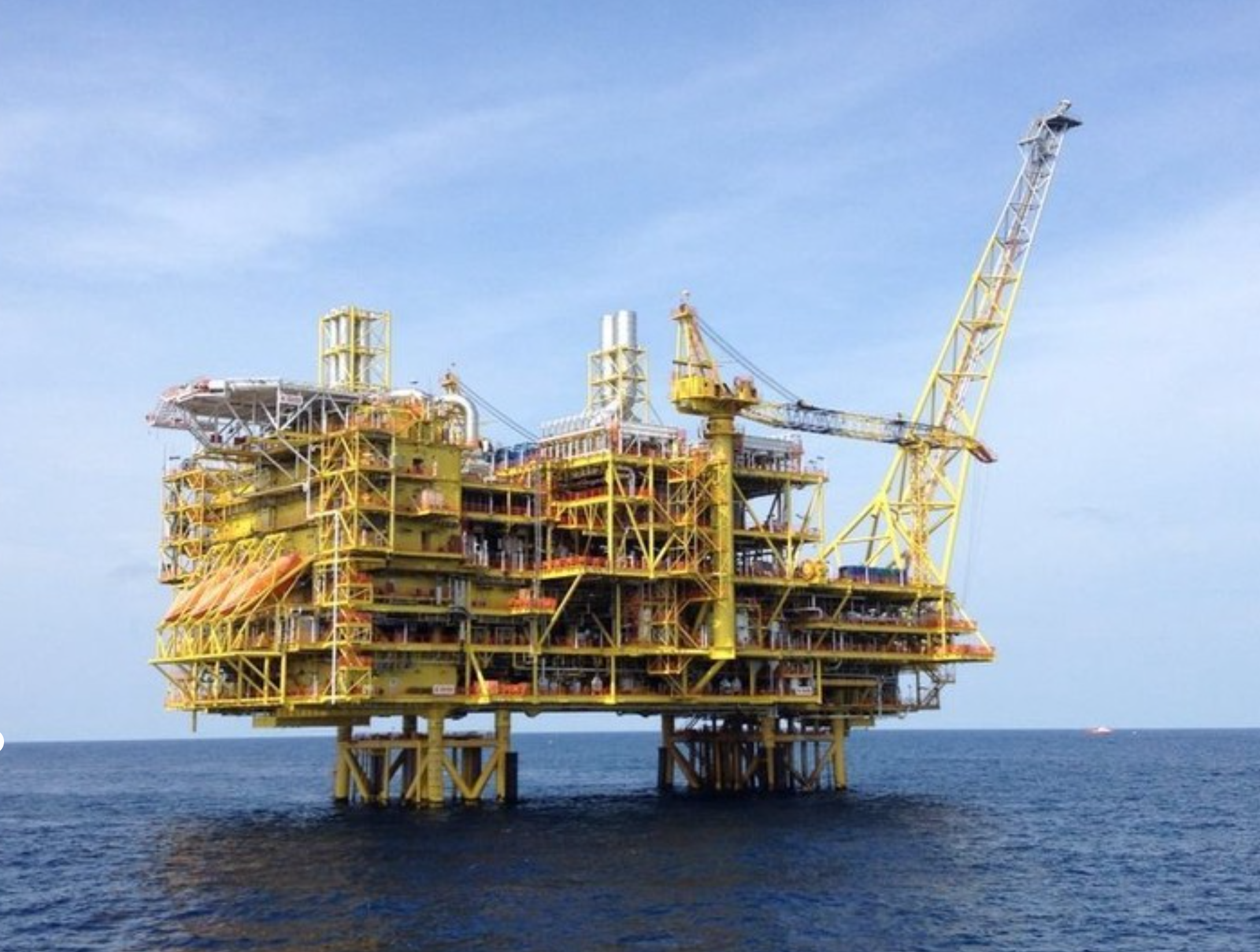
Image Source: Instagram: conocophillips. (All rights belong to the original owner.)
Production: Oil & Gas
Operations start: 2014
Water depth: 140 m
Country: Malaysia
Block: Kebabangan Cluster
Type: Fixed steel jacket
Field
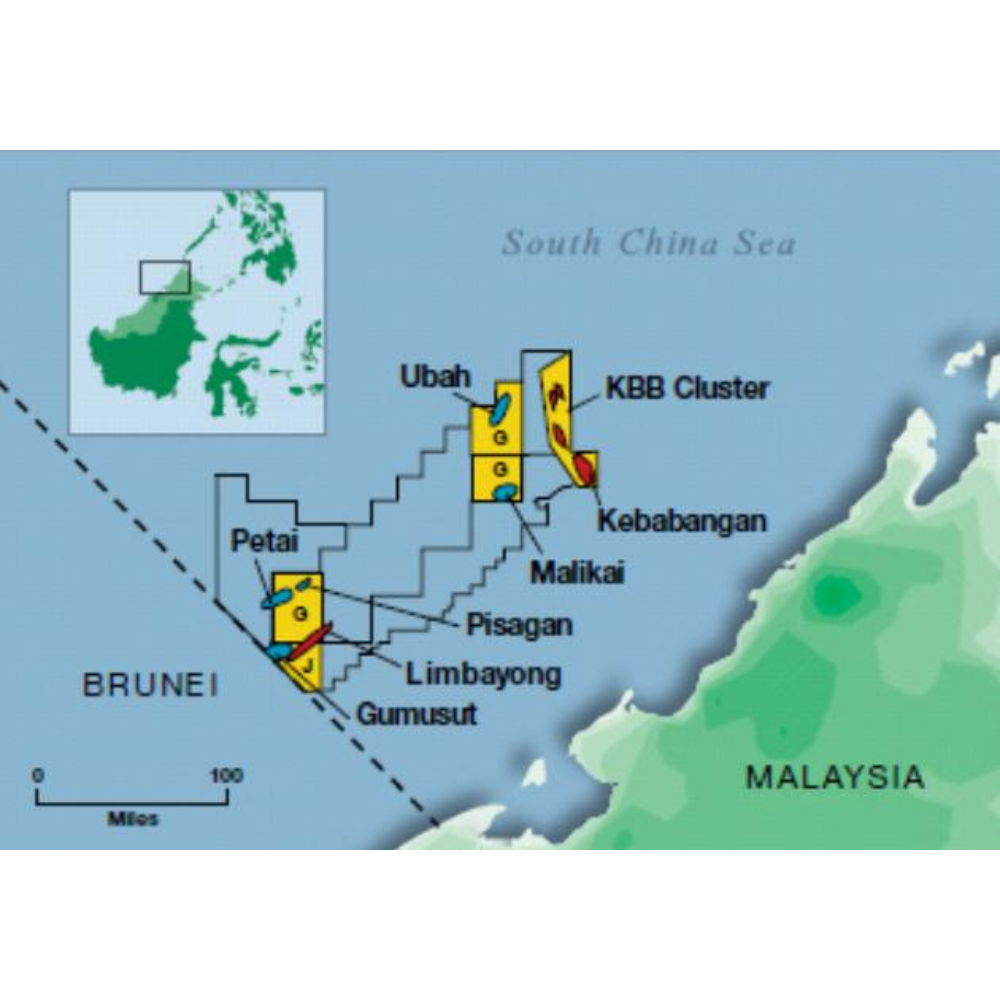
The Kebabangan gas-condensate field lies in the South China Sea within the north-west Sabah Basin’s deep-water fold-and-thrust province. Its hydrocarbons occur in Miocene deep-marine turbidite sandstone reservoirs held in structurally complex folded and faulted traps. Kebabangan is the principal field in a cluster that also includes Kamunsu East and Kamunsu East Upthrown Canyon and is developed as an offshore processing hub.
Facilities
Kebabangan was commissioned with six platform production wells and was designed as a hub for additional Kebabangan Cluster wells and third-party tie-ins. The integrated deck incorporates wellheads, drilling facilities suitable for a tender-assisted rig, production manifolds and test equipment. The topsides are supported by an eight-leg steel jacket weighing approximately 12,300 tonnes in about 140 metres of water; the integrated deck weighs roughly 17,000–18,000 tonnes. Installed processing separates gas, condensate, crude oil and produced water. Gas-treatment facilities condition the Kebabangan stream, while condensate stabilisation, oil handling, gas compression, produced-water treatment, chemical injection and metering support export. The platform also receives liquids from the Malikai tension-leg platform through dedicated deep-water pipelines, performs further processing and routes the treated liquids onward. Since 2019, Kebabangan gas has also supplied PFLNG Satu through a five-kilometre flexible pipeline connected to the vessel’s turret. Field gas is exported through a 24-inch, approximately 135-kilometre subsea pipeline to the Sabah Oil and Gas Terminal at Kimanis. A separate 14-inch liquids pipeline carries condensate and processed oil toward the same terminal, where crude is stored for tanker loading. Permanent platform utilities include electrical generation and distribution, instrument and service air, seawater and cooling systems, flare and pressure relief, firewater, fire-and-gas detection, emergency shutdown, process control, telecommunications, helideck and living quarters. Kebabangan itself has no hydrocarbon-storage or tanker-offloading system.
Similar Assets
News