Hibernia
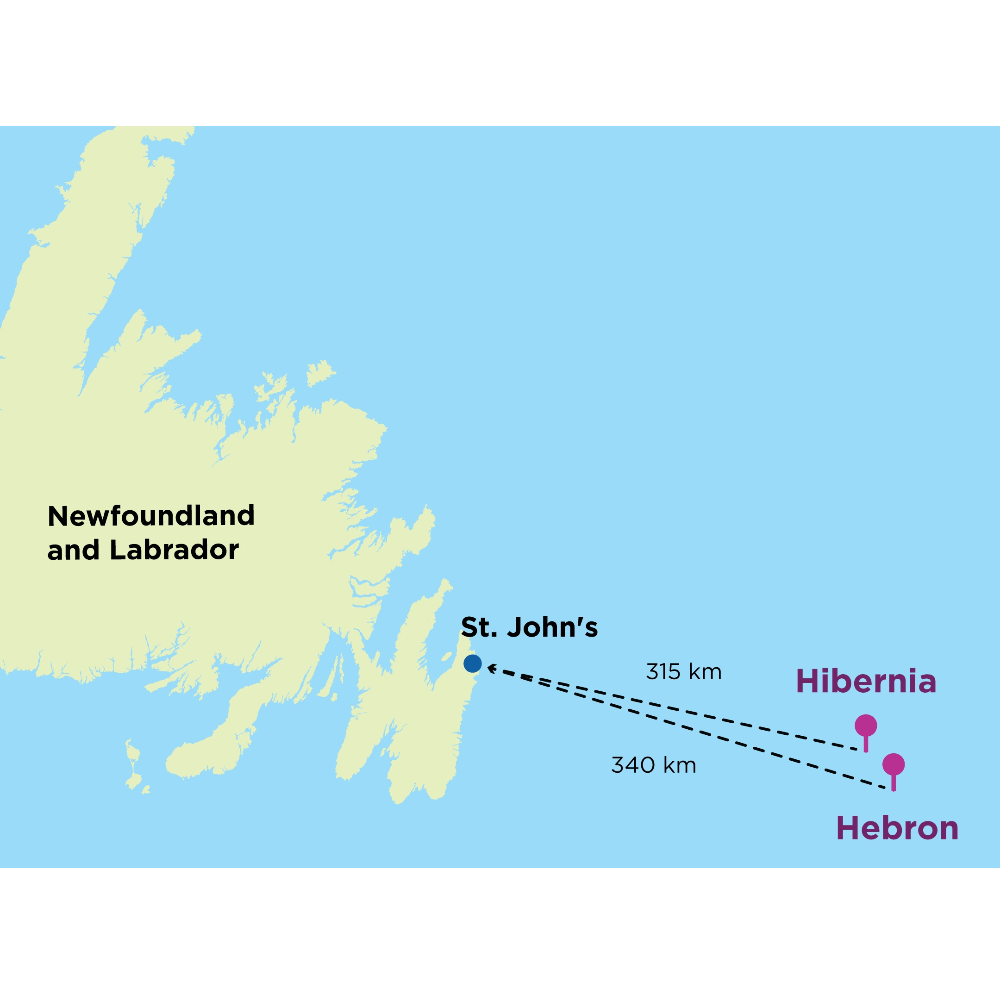
Hibernia is a fixed drilling, production, storage and accommodation platform mounted on a massive iceberg-resistant concrete gravity-based structure. It handles oil and associated gas and began production on 17 November 1997. Installed in approximately 80 metres of water, 315 kilometres east-south-east of St John’s, it stores crude inside the base and exports through a dedicated offshore loading system to ice-strengthened shuttle tankers.
Operator: Hibernia Management and Development Company
Status: Operational
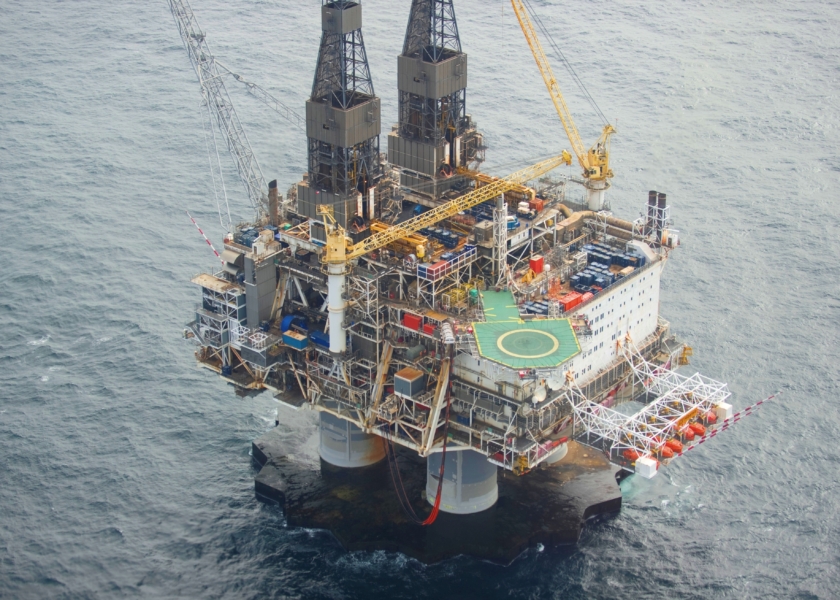
Image Source: https://worldoil.com/news/2022/11/18/hibernia-offshore-project-marks-25-years-of-oil-production/. (All rights belong to the original owner.)
Production: Oil & Gas
Operations start: 1997
Water depth: 80 m
Country: Canada
Block: PL 1001, PL 1005, PL 1011
Type: Gravity-based concrete
Field
The Hibernia field lies in the north-western Jeanne d’Arc Basin on the Grand Banks offshore Newfoundland. The primary reservoir is the Lower Cretaceous Hibernia Formation, comprising fluvial-deltaic sandstone within a faulted anticline. Secondary production comes from shallower Ben Nevis–Avalon shallow-marine sandstones. This giant, highly faulted oil accumulation is developed mainly by directional and extended-reach wells drilled from the central gravity-based platform.
Facilities
Hibernia’s concrete base contains two drilling shafts with 32 well slots each, providing 64 platform slots for production, water-injection and gas-injection wells. Two platform drilling rigs support directional, horizontal and extended-reach drilling, allowing reservoir targets several kilometres from the structure to be reached. The integrated topsides comprise major processing, wellhead, drilling-mud, utilities and accommodation modules. Well fluids pass through multistage separation to divide crude oil, gas and produced water. Stabilised crude is routed to storage cells inside the gravity base. Produced water is treated for discharge or reinjection, while treated seawater supports waterflooding. Associated gas is compressed; most is reinjected for conservation and pressure support, with part retained as platform fuel. Installed systems include test separation, oil and gas metering, chemical injection, flare and relief equipment, electrical generation and power management, heating and ventilation, drilling controls, process control, fire-and-gas detection, emergency shutdown and marine and accommodation services. The gravity-based structure has serrated outer walls designed to resist iceberg impact and carries substantial solid ballast. Its internal cells store approximately 1.3 million barrels of crude. Oil export is independent of any shore pipeline. Two subsea pipelines connect the platform to the Hibernia Offshore Loading System, which incorporates submerged loading buoys and flexible hoses. Ice-strengthened shuttle tankers recover a buoy, connect the loading hose and transfer crude, principally for delivery to the Newfoundland Transshipment Terminal at Whiffen Head before onward shipment.
Similar Assets
News