Cidade de Itagua
Cidade de Itaguaí FPSO is a converted very large crude carrier serving the Iracema Norte area of Brazil’s Lula field. First oil was achieved on 31 July 2015. The vessel is spread-moored in approximately 2,240 metres of water, processes oil and associated gas from subsea wells, stores stabilised crude for shuttle-tanker export and sends treated gas ashore through the Santos Basin pipeline network.
Operator: Petrobras / MODEC
Status: Operational
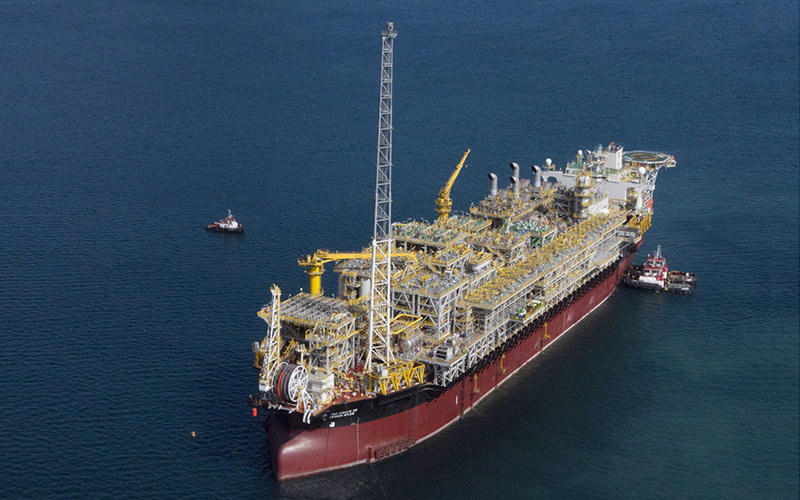
Image Source: https://www.modec.com/project/detail/iracemanorte.html. (All rights belong to the original owner.)
Production: Oil & Gas
Operations start: 2015
Water depth: 2240 m
Country: Brazil
Block: BM-S-11
Type: FPSO
Field
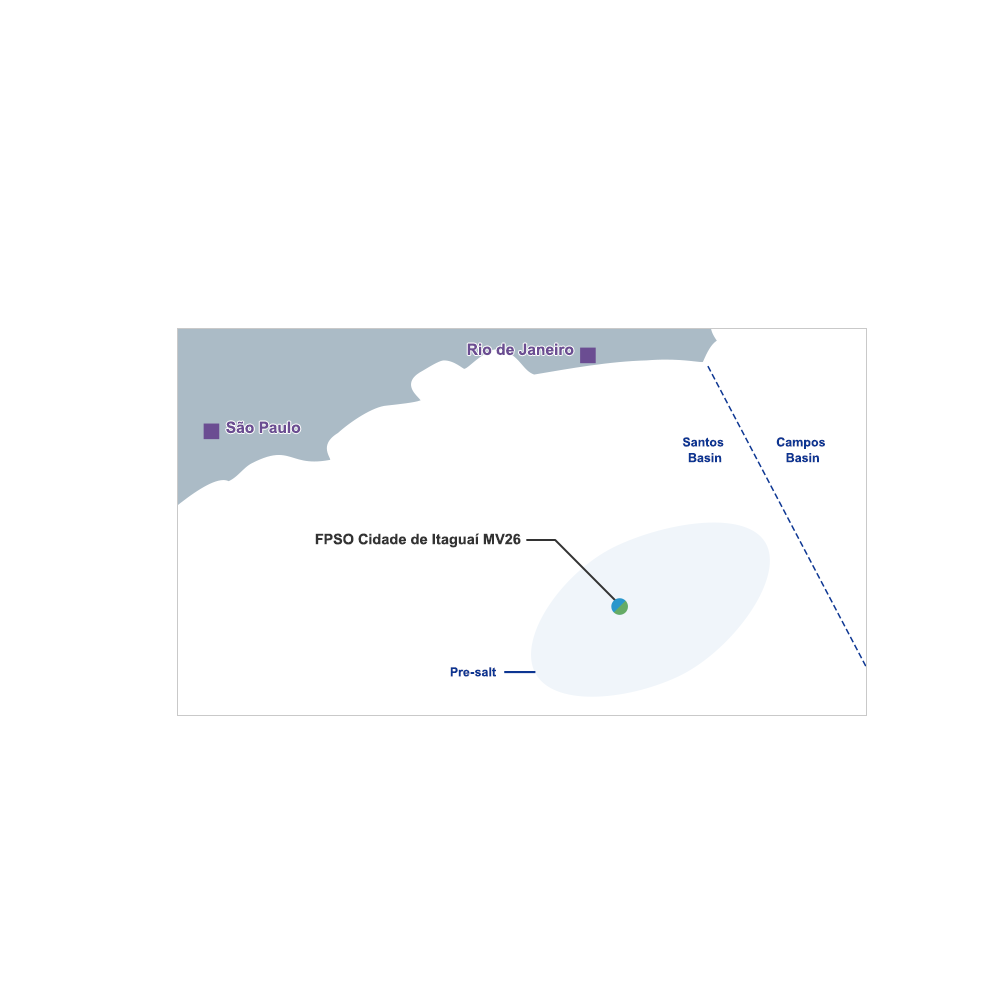
Iracema Norte lies approximately 240 kilometres offshore Rio de Janeiro in the Santos Basin’s BM-S-11 area and forms part of the giant Lula pre-salt development. Hydrocarbons occur beneath a thick regional salt sequence in Lower Cretaceous lacustrine carbonate reservoirs associated principally with the Barra Velha Formation and related Guaratiba Group units. Development uses subsea producers and injection wells connected to a permanently moored FPSO.
Facilities
The original Iracema Norte development connected Cidade de Itaguaí to eight subsea production wells and nine injection wells. Production and injection infrastructure comprises subsea trees, manifolds, flexible flowlines, risers and control umbilicals distributed between the field’s drill centres and the FPSO. The process plant separates oil, gas and produced water, stabilises the crude, compresses and treats associated gas, and conditions seawater for high-pressure reservoir injection. Gas is used for process fuel, gas-lift or injection duties where required by the field system, with export-quality gas routed to shore through the permanent Santos Basin subsea gas-pipeline network. Produced water is treated onboard before disposal or further handling. The FPSO was converted from the VLCC Alga and has approximately 1.6 million barrels of storage capacity. It is held on station by an ABS-classed SOFEC spread-mooring system, rather than a weathervaning turret. The riser arrangement was designed to accommodate up to 55 flexible risers and umbilicals, with provision for steel risers on selected production and gas-injection services. Stabilised crude is stored in the converted tanker hull and periodically transferred to shuttle tankers through the vessel’s tandem-offloading system. Supporting facilities include onboard electrical generation, gas compression, seawater lift, water injection, chemical injection, fiscal metering, flare and pressure-relief systems, firewater, emergency shutdown, fire-and-gas detection, marine utilities, cargo handling and living quarters. The vessel’s permanent subsea gas export connection distinguishes gas disposal from its tanker-based crude export route.
Similar Assets
News