Armada Olombendo FPSO
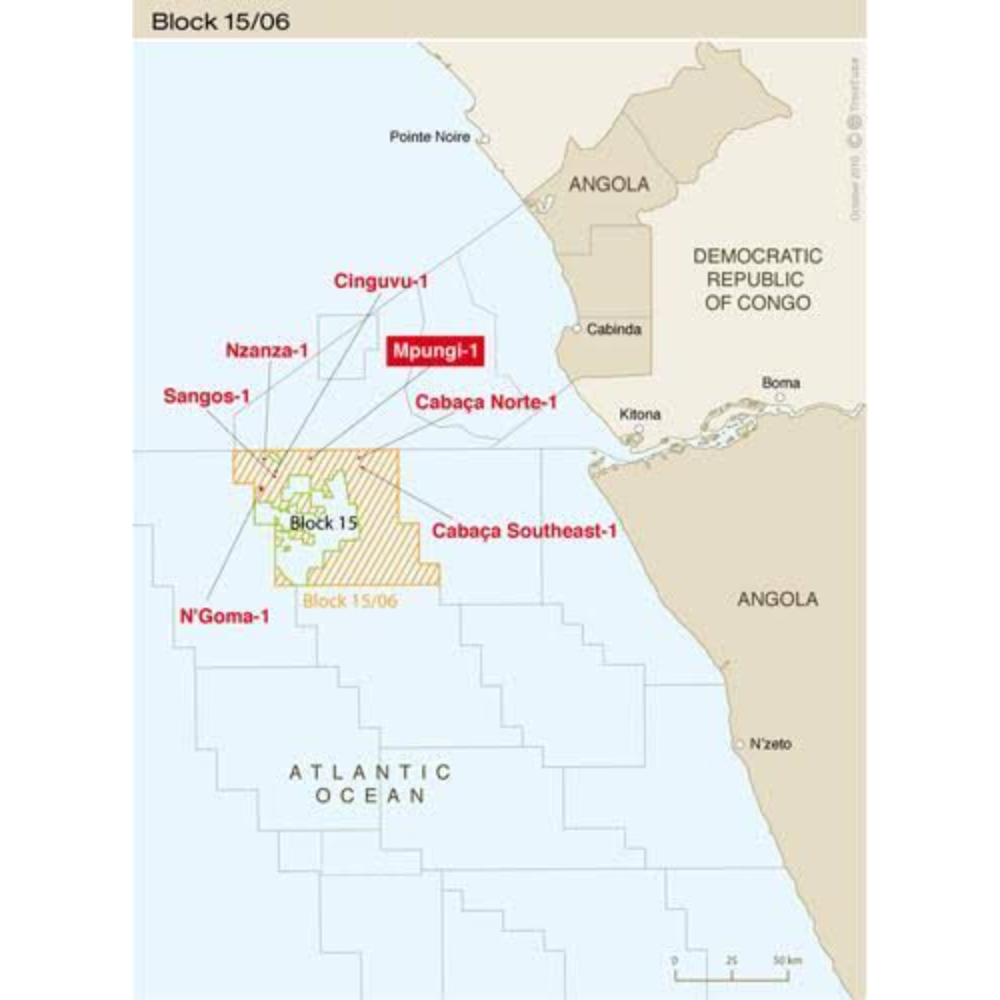
A converted double-hull tanker FPSO serving the East Hub development in Angola’s Block 15/06. First oil was achieved in February 2017. Installed in approximately 450 metres of water between the Cabaça North and Cabaça South-East areas, it receives subsea production, processes and stores crude, treats water and gas for reservoir injection, and offloads oil to shuttle tankers through a permanent external-turret installation.
Operator: Eni
Status: Operational
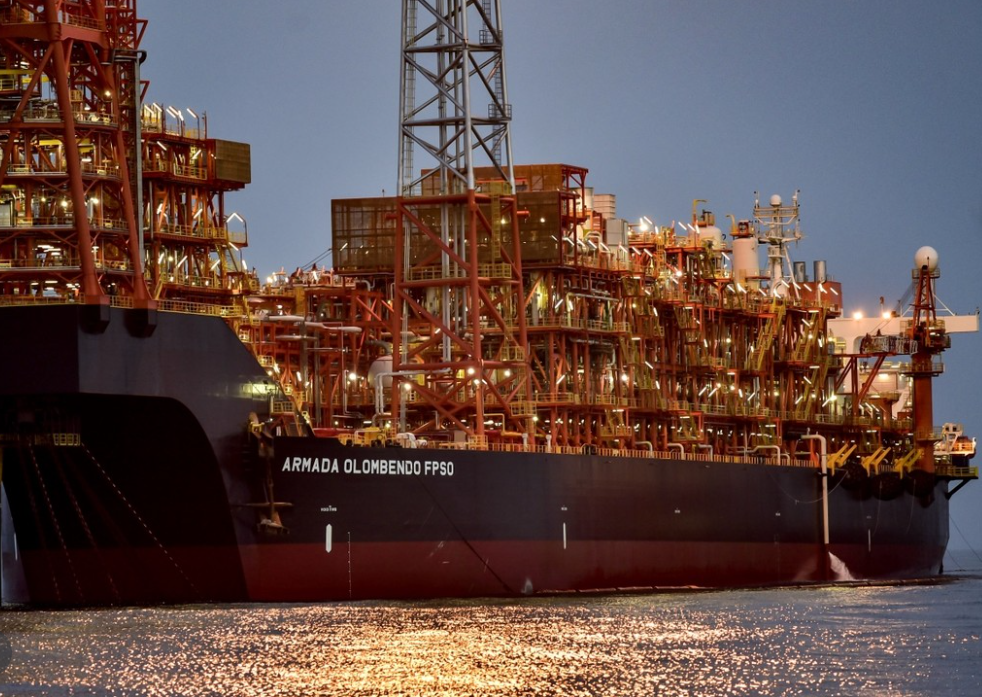
Image Source: Instagram: oilandgas.world. (All rights belong to the original owner.)
Production: Oil
Operations start: 2017
Water depth: 450 m
Country: Angola
Block: Block 15/06
Type: FPSO
Field
The East Hub is a large multi-accumulation oil development in the Lower Congo Basin offshore Angola, incorporating Cabaça South-East and subsea tie-backs including Cabaça North, Cuica and UM8. The relevant Lower Miocene section is characterised by deepwater turbidite-channel sandstones within a salt-influenced margin. Development concentrates production from several seabed well clusters and manifolds at one floating processing, injection, storage and export hub.
Facilities
The initial East Hub scheme comprised nine subsea wells - five producers and four water injectors - in water depths of about 450–550 metres. Production and injection trees connect through manifolds, pipeline systems, risers and umbilicals to the FPSO. Subsequent documented tie-backs expanded the connected system: Cuica added one producer and one water injector through the Cabaça North subsea system, while a 2021 project description recorded twelve wells and five manifolds feeding Olombendo before Cabaça North start-up. The external turret accommodates eighteen risers and umbilicals and transfers produced fluids, injection services, utilities and controls. Installed topsides modules include an inlet manifold, production separation, oil stabilisation, produced-water treatment, injection-water facilities, medium- and high-pressure gas-reinjection compression, scrubber and cooler equipment, methanol injection, utilities, flare tower and flare knockout drum. The plant can treat and inject produced water or seawater for pressure maintenance and condition associated gas for reinjection. Main electrical power is supplied by three 21-megawatt dual-fuel turbine generators; essential diesel generation is separately installed. The converted 302,000-deadweight-tonne hull is approximately 382 metres long and 58 metres wide, with about 1.7 million barrels of oil storage. Supporting systems include a central control room, upgraded instrumentation and controls, deck cranes, helideck and accommodation. Treated crude is stored onboard and transferred to shuttle tankers.
Similar Assets
News