Skjold A
Skjold A is the original wellhead platform in the Skjold oil field in the Danish North Sea, installed in 1982. It produces crude oil and associated gas from chalk reservoirs and is bridge-linked to Skjold B and C for expanded production capacity and accommodation.
Operator: Total EP Danmark
Status: Operational
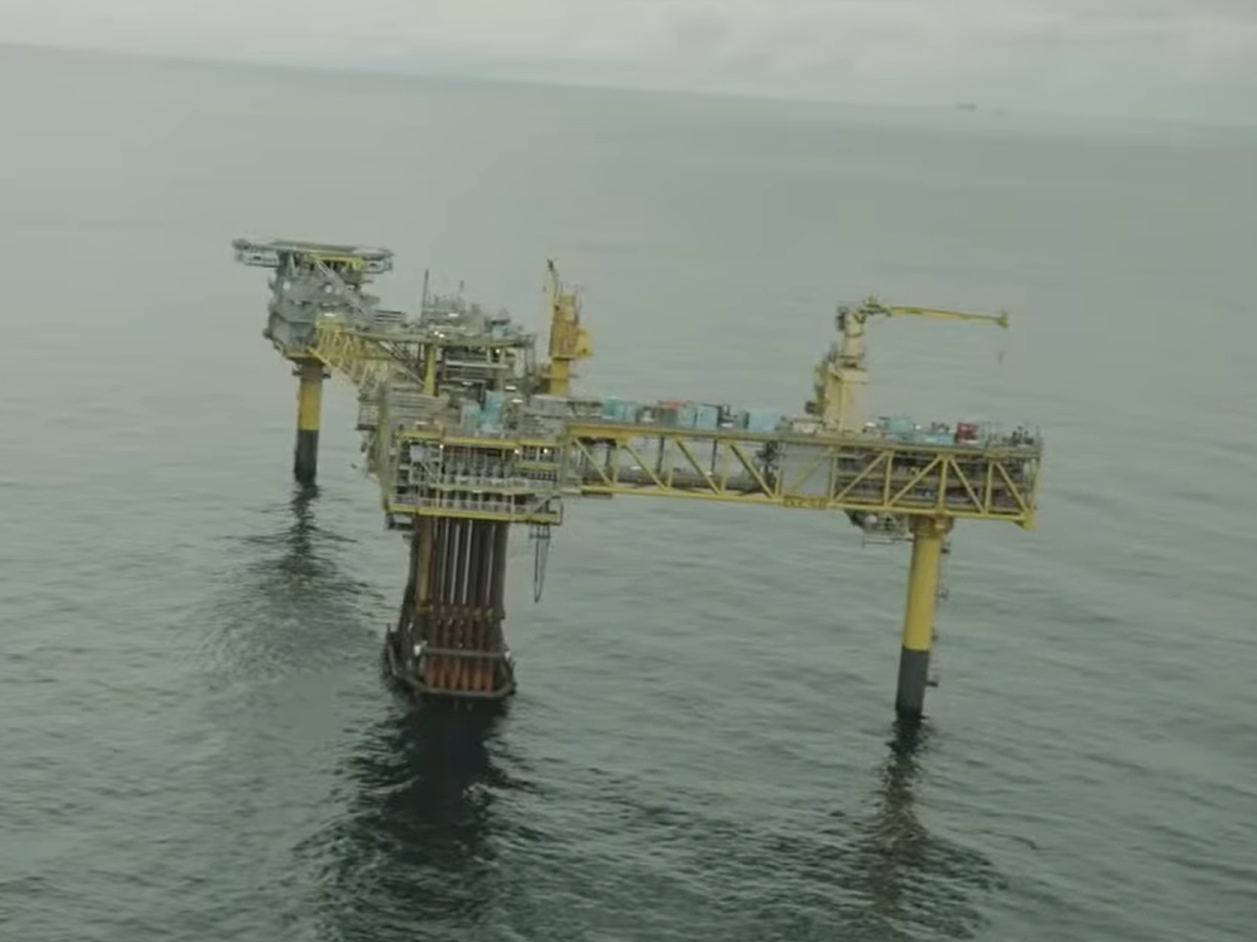
Image Source: Total EP Danmark. (All rights belong to the original owner.)
Production: Oil
Operations start: 1982
Water depth: 40 m
Country: Denmark
Block: 5504/16
Type: Fixed steel jacket
Field
The Skjold field lies in Block 5504/16 and produces oil with associated gas from Danian and Upper Cretaceous chalk reservoirs. Discovered in 1977, it has been in production since 1982 with ongoing life extension.
Facilities
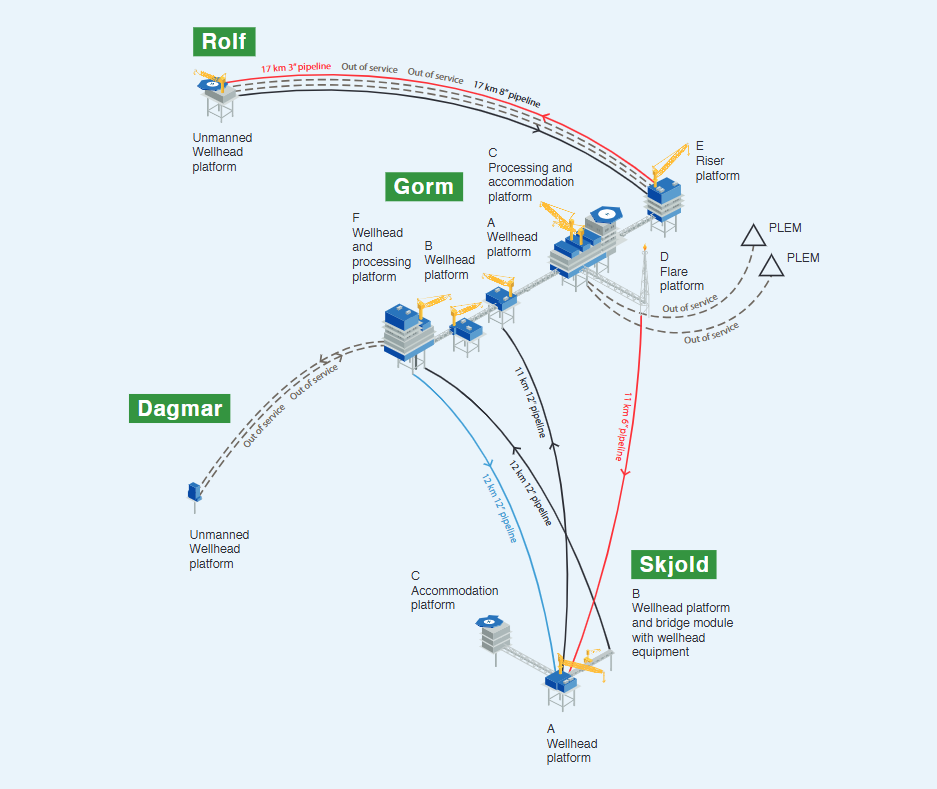
The Skjold complex comprises Skjold A (wellhead), Skjold B (additional wellhead with bridge link), and Skjold C (accommodation). Skjold A supports multiple horizontal and vertical wells addressing key reservoir areas; production fluids are routed via pipeline to the Gorm complex for processing. The platforms are structurally linked by short bridges, enabling shared utilities, control rooms, and accommodation via Skjold C. Processing on Skjold is limited; three-phase separation and initial conditioning may be present, but full separation and export functions occur at Gorm. Utility systems include power generation, water handling, fire and gas systems, and communications. Helicopter access and safety systems support periodic crew visits, with unmanned operation possible between campaigns.
Similar Assets
News