Ceiba FPSO
A converted 275,000-deadweight-tonne tanker FPSO installed as the permanent production, storage and export hub for the Ceiba oil field. Ceiba first produced through the temporary Sendje Berge in November 2000; Sendje Ceiba took over in early 2002. Moored over the deepwater field, it receives subsea production, supports water injection and gas lift, stores treated crude and offloads to export tankers.
Operator: Trident Energy
Status: Operational
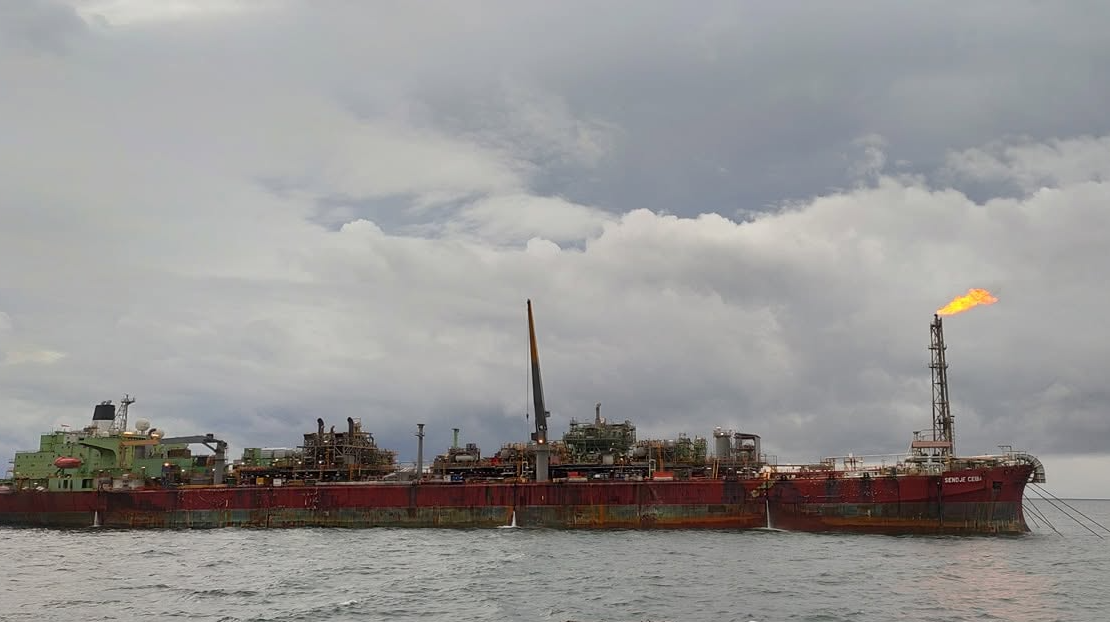
Image Source: Facebook: Seafarers of T&T. (All rights belong to the original owner.)
Production: Oil
Operations start: 2002
Water depth: 600 m
Country: Equatorial Guinea
Block: Block G
Type: FPSO
Field
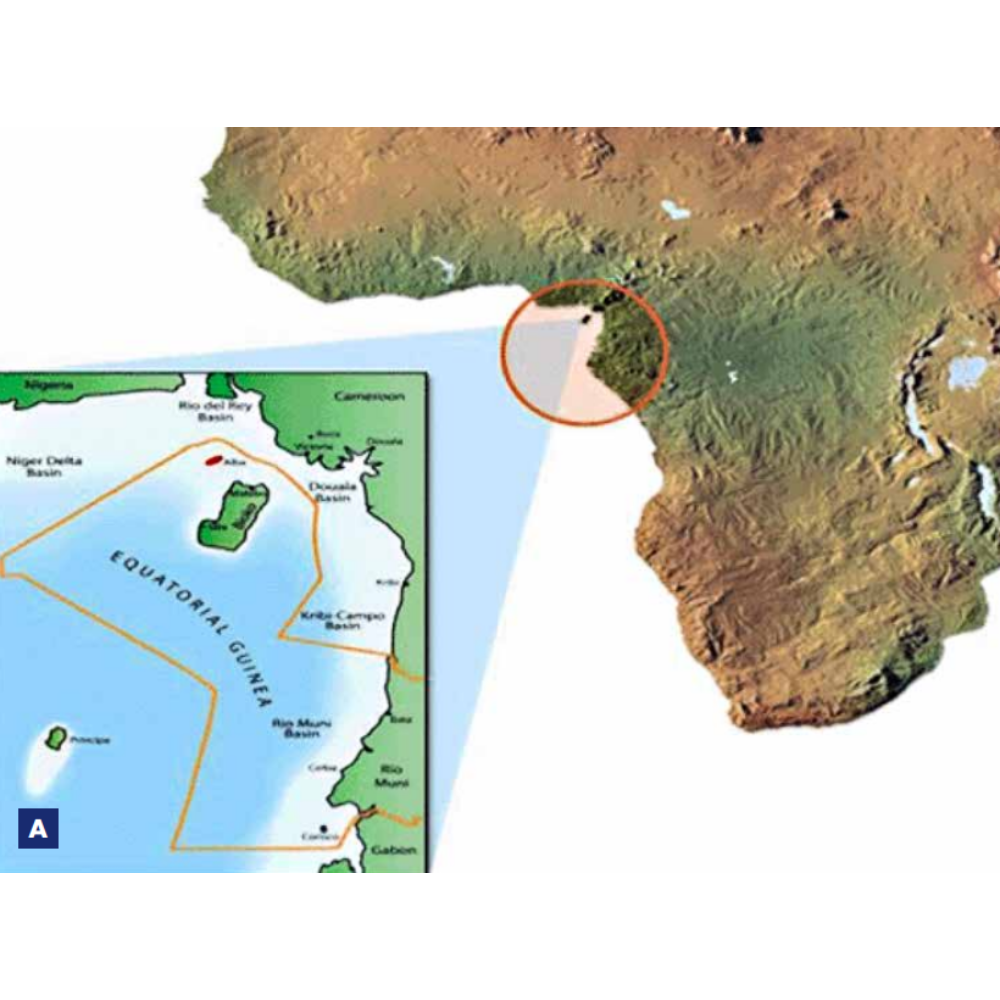
Ceiba lies off mainland Equatorial Guinea on the slope of the southern Rio Muni Basin, in approximately 600–800 metres of water. The mature oil field contains stacked Campanian deepwater turbidite-channel and overbank sandstone reservoirs at roughly 2,000–3,000 metres depth. These deposits onlap and drape a north–south faulted anticline with a salt core. Development uses subsea well clusters, manifolds, water injection and a central FPSO.
Facilities
Ceiba production is gathered through six subsea manifolds or well clusters, each incorporating water-injection support. Subsea trees connect to the clusters and FPSO through flowlines, flexible risers and control umbilicals. Multiphase booster pumps and gas lift assist flow from the seabed system, while treated injection water is pumped from the vessel back to the well clusters. When Sendje Ceiba replaced the temporary FPSO, the immediate hookup programme covered five existing producers plus three completed producers and two completed water injectors, with the subsea system designed for continued expansion. Its topsides contain an oil-and-gas process plant and dedicated water-injection facilities; processed liquids are conditioned for storage in the hull. The FPSO also serves as the export terminal for the Okume Complex: oil processed at the Elon central production facility travels approximately 25 kilometres through a 12-inch pipeline to Sendje Ceiba for storage and tanker lifting. Converted from the 275,000-deadweight-tonne Berge Hus, the vessel is approximately 350 metres long and 52 metres wide and has about two million barrels of crude-storage capacity. Installed electrical and control systems include topsides process control and shutdown, ship automation, emergency shutdown, fire-and-gas detection, high- and low-voltage distribution, motor-control centres, power management, a new generator and medium-voltage soft starting. Marine and process operations are coordinated from the vessel while permanent moorings retain it on station. Stabilised crude is periodically transferred from the cargo tanks to export tankers.
Similar Assets
News