Bonga FPSO
Bonga FPSO is a purpose-built, ship-shaped floating production, storage and offloading vessel handling oil and associated gas from Nigeria’s OML 118. First production began in November 2005. Permanently moored about 120 kilometres offshore in approximately 1,000–1,125 metres of water, it receives subsea production, processes and stores crude, exports gas by pipeline and transfers oil through a remote loading buoy.
Operator: Shell
Status: Operational
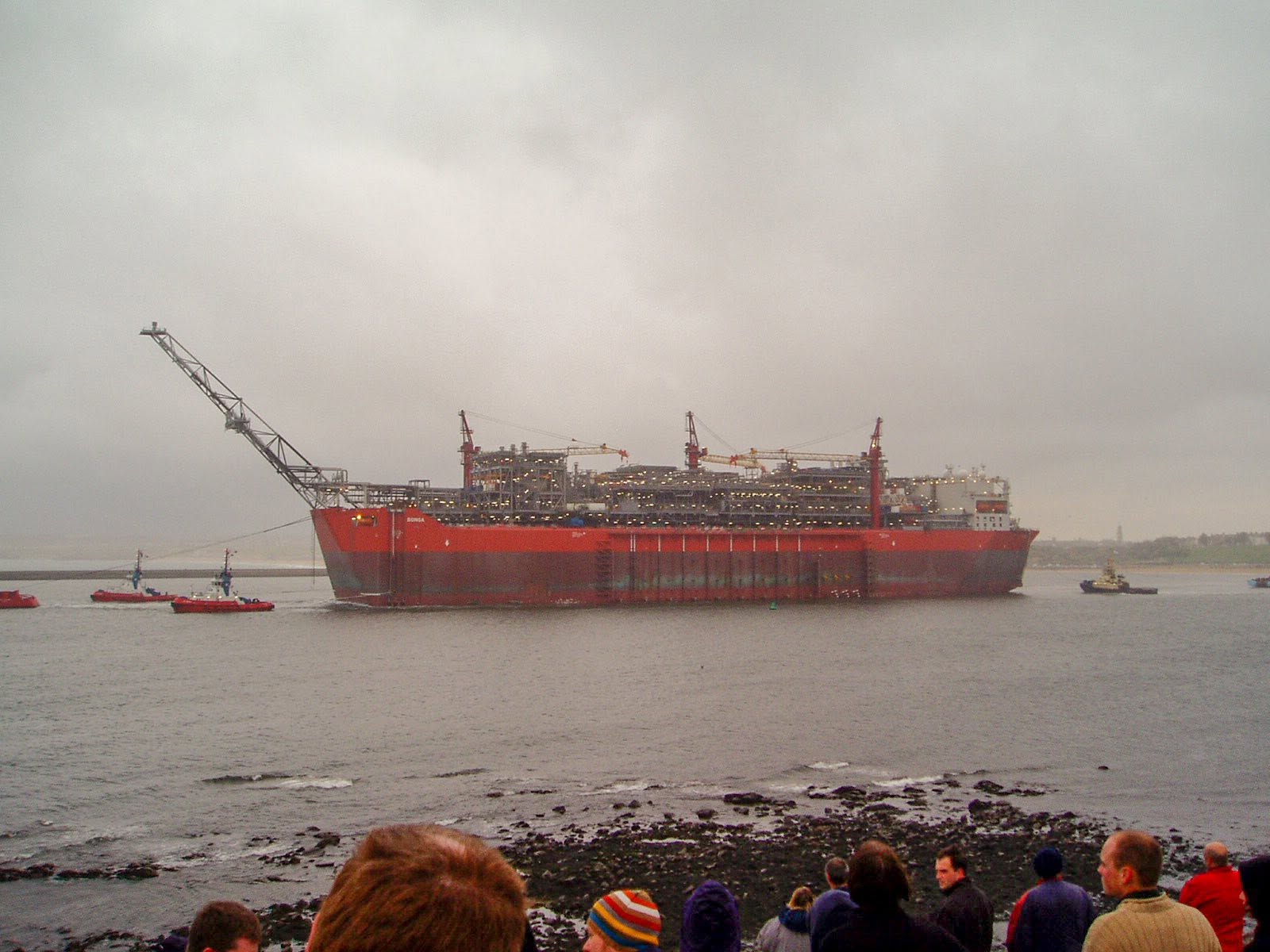
Image Source: Sellafield Energy. (All rights belong to the original owner.)
Production: Oil & Gas
Operations start: 2005
Water depth: 1000 m
Country: Nigeria
Block: OML 118
Type: FPSO
Field
The Bonga field lies in the deep-water Niger Delta Basin and covers roughly 60 square kilometres. Its reservoirs are Middle- to Late-Miocene unconsolidated turbidite sandstones deposited in submarine channels and associated fan systems. The large field is developed entirely through subsea wells tied to the FPSO, with the established Bonga North West satellite connected to the same host.
Facilities
The original Bonga development comprised nine subsea oil producers and seven water-injection wells. The Bonga North West tie-back added four production wells and two water injectors connected to the Bonga Main FPSO through subsea flowlines and existing field infrastructure. Subsea trees, manifolds, production and injection lines, risers and electro-hydraulic umbilicals gather, control and deliver the wellstreams. The topsides provide multiphase separation, crude stabilisation, associated-gas compression, produced-water treatment, seawater treatment and high-pressure water injection. Gas is conditioned for fuel and export, while production and export metering, chemical injection and subsea-control equipment support routine operation. Permanent utilities include onboard electrical generation, flare and pressure-relief systems, firewater, fire-and-gas detection, emergency shutdown, telecommunications, marine systems and living quarters for offshore operations. The purpose-built vessel is approximately 300 metres long and stores about two million barrels of crude. Its permanent mooring system holds it at a fixed heading. Stabilised oil is pumped through dedicated offloading lines to a separate deep-water single-point loading buoy, where export tankers moor and receive cargo. Associated gas leaves through the 12-inch, approximately 88-kilometre Bonga–Bonny Offshore Gas Gathering System, which connects the offshore development to Bonny Island and the Nigeria LNG supply network. The FPSO has no fixed oil-export pipeline to shore.
Similar Assets
News