Berkut
Berkut is an ice-resistant fixed drilling and production platform on a concrete gravity-based structure at the Arkutun-Dagi field. First oil was produced in January 2015 after offshore commissioning in 2014. Located 25 kilometres off north-eastern Sakhalin in 35 metres of water, it sends wellstream by pipeline to the Chayvo Onshore Processing Facility rather than storing or offloading crude offshore.
Operator: Exxon Neftegas / Rosneft
Status: Operational
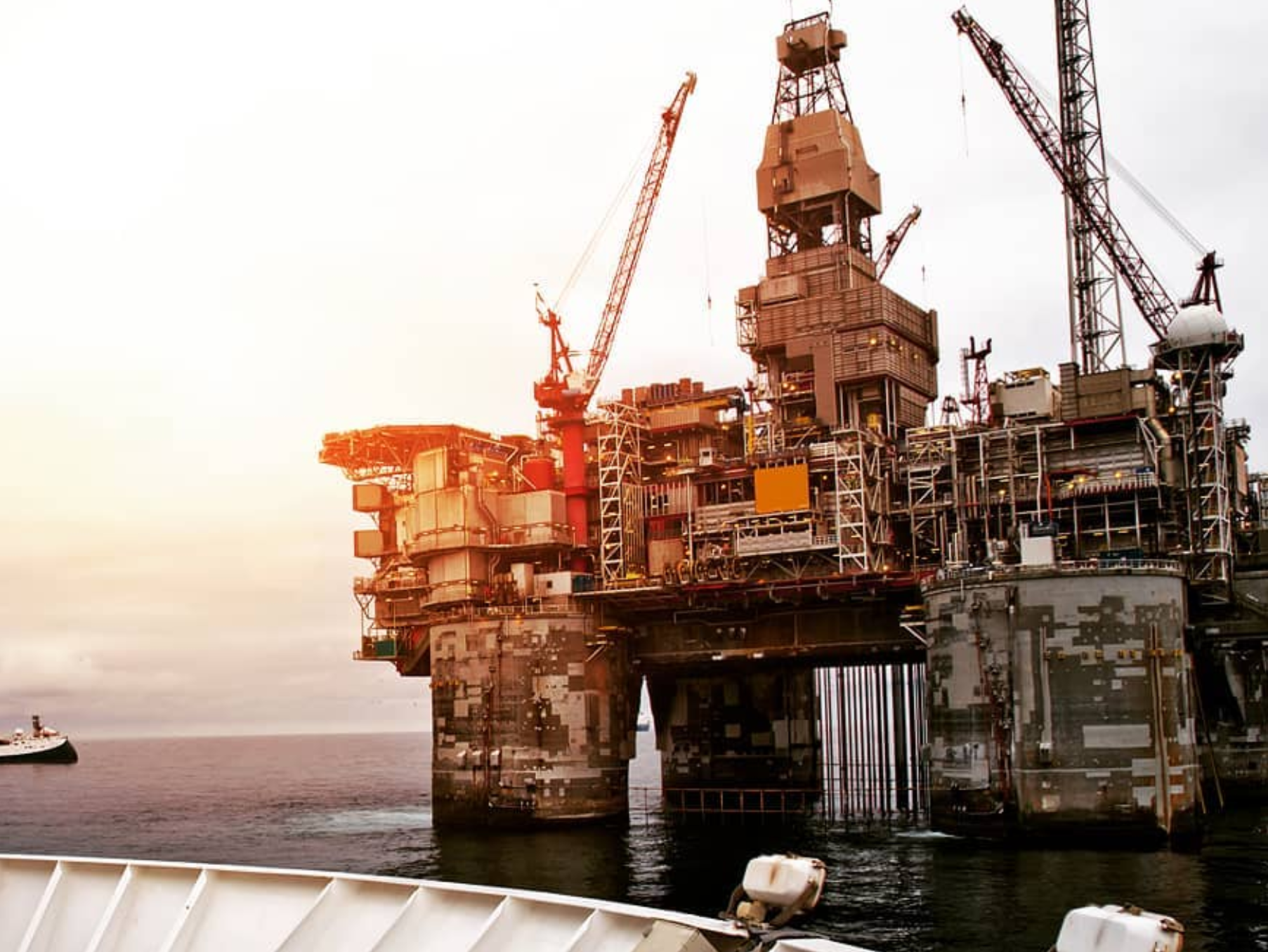
Image Source: Instagram: avalon.og. (All rights belong to the original owner.)
Production: Oil
Operations start: 2015
Water depth: 35 m
Country: Russia
Block: Arkutun-Dagi Field
Type: Gravity-based concrete
Field
Arkutun-Dagi lies in the Sea of Okhotsk and forms the northernmost development within the Sakhalin-1 project. The oil-and-gas accumulation belongs to the North Sakhalin Basin’s Neogene clastic petroleum system, whose reservoirs are predominantly Miocene–Pliocene sandstones. Development relies on long-reach wells drilled from one large platform, allowing broad reservoir coverage from a single ice-resistant surface location.
Facilities
Berkut was designed with 45 platform wells: 28 oil producers, 16 water injectors and one dedicated drill-cuttings reinjection well. The integrated topsides contain drilling, wellhead, production-processing, water-injection, utility, accommodation and helideck facilities. Long extended-reach trajectories, with horizontal displacement of at least seven kilometres in the development design, enable access to the Arkutun-Dagi reservoirs without satellite wellhead platforms or subsea production tie-backs. The approximately 42,000-tonne topsides were installed by float-over onto a concrete gravity-based structure placed on the seabed in 2012. Friction-pendulum bearings between the topsides and substructure provide seismic isolation. The platform was engineered for magnitude-nine earthquakes, temperatures down to approximately −44°C, waves up to 18 metres and sea ice about two metres thick. Its autonomous electrical system includes four 60-megawatt gas-turbine generators and a separate emergency source. Permanent systems also support drilling control, production monitoring, injection, metering, emergency shutdown and crew accommodation. Produced wellstream leaves Berkut through an approximately 25-kilometre subsea connection to the Chayvo Onshore Processing Facility, where full oil and gas treatment is performed. Stabilised oil then joins the Sakhalin-1 export system and travels through the 24-inch, approximately 226-kilometre pipeline across Sakhalin and the Tatar Strait to the De-Kastri terminal. Crude is stored onshore and loaded to ice-class tankers through the terminal’s single-point mooring; gas is routed to domestic supply.
Similar Assets
News