Barracouta
Barracouta is a fixed, eight-leg steel-jacket production platform handling gas, condensate and oil in Australia’s Bass Strait. Gas first flowed ashore in March 1969, making Barracouta the first producing offshore platform in the region. Located approximately 23 kilometres off Victoria in 46 metres of water, it also hosts the single-well Seahorse and Tarwhine subsea tie-backs.
Operator: ExxonMobil / Woodside
Status: Operational
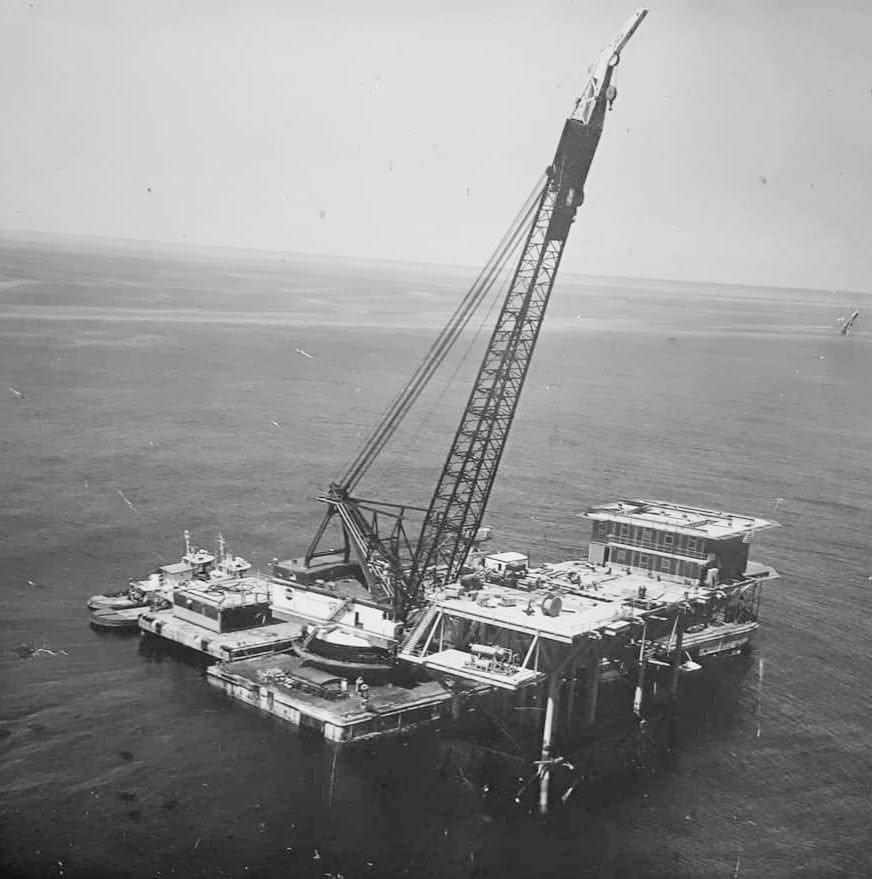
Image Source: Facebook: History of Welshpool & Port Welshpool districts . (All rights belong to the original owner.)
Production: Oil
Operations start: 1969
Water depth: 46 m
Country: Australia
Block: VIC/L02
Type: Fixed steel jacket
Field
The Barracouta field lies in the offshore Gippsland Basin and was Australia’s first commercial offshore petroleum discovery. Its principal gas accumulation occurs in Eocene shallow-marine sandstone at the top of the Latrobe Group; additional hydrocarbons occur in intra-Latrobe intervals. The mature field is developed through platform wells and later satellite subsea wells connected to the original Barracouta installation.
Facilities
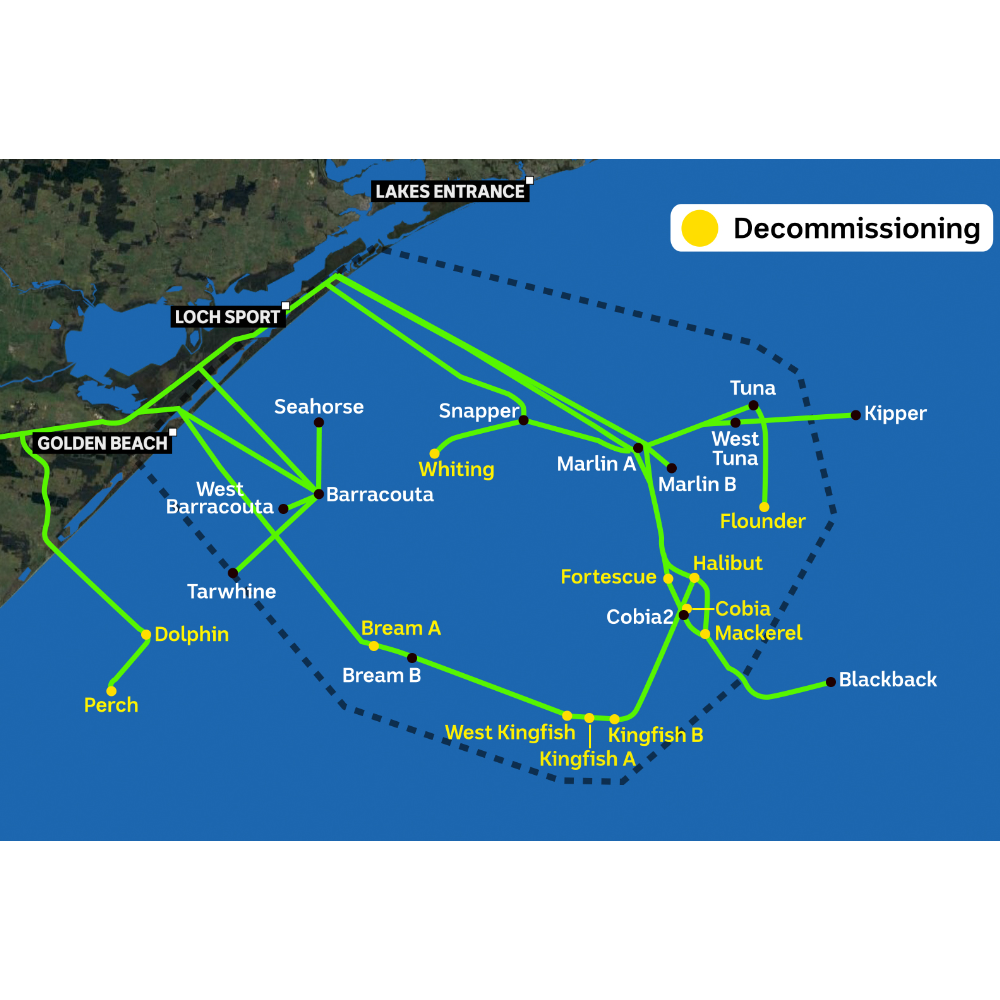
Barracouta is a fixed eight-leg, steel-piled jacket platform supporting wellheads, production manifolds, gas separation, liquids handling and export equipment. Platform gas wells flow into a common gas header and gas separators. Separated condensate and water enter an intermediate vessel; condensate can be routed to the oil separator or combined with the gas-export stream. Gas leaves through the BTA–Shore450 pipeline to the Longford processing plants. The installation is the named host for two single-well subsea facilities. Seahorse, approximately 11 kilometres north of Barracouta, sends produced liquids through the SHA–BTA150 pipeline; the BTA–SHA65 line supplies gas lift. Tarwhine, approximately 17 kilometres south-west, connects through the TWA–BTA200 production pipeline and BTA–TWA65 gas-lift line. Each subsea tree is controlled and monitored from Barracouta through an electro-hydraulic multiplexed umbilical. Seahorse and Tarwhine fluids enter the platform oil separator, and separated oil and water are pumped ashore through the BTA–Shore150 pipeline. Permanent supporting systems include gas and liquids metering, production chemicals, open and closed drains, a skimmer pile, operational and emergency flare equipment, firewater, process control, emergency shutdown, fire-and-gas detection, cranes, reverse-osmosis freshwater production and helicopter and vessel-access facilities. Hydrocarbons are exported entirely by pipeline to Longford; Barracouta has no offshore storage or tanker-loading system.
Similar Assets
News