Lobster
Lobster is a subsea tie-back development in the Gulf of Mexico, producing oil and gas through an existing host facility. First production began in the mid-2000s. It consists primarily of subsea wells tied back to a nearby processing platform, with no standalone surface installation, relying on shared infrastructure for processing and export.
Operator: Talos Energy
Status: Online
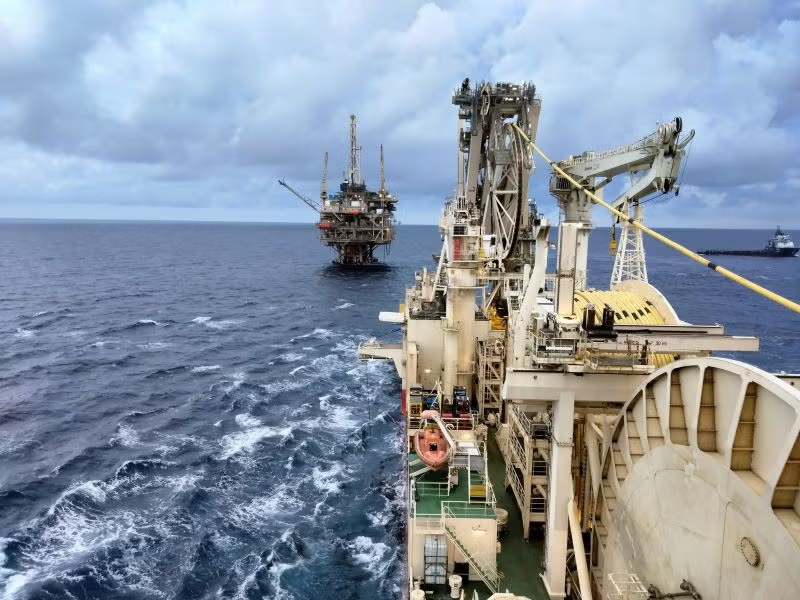
Image Source: Talos Energy (All rights belong to the original owner.)
Production: Oil
Operations start: 1994
Water depth: 236 m
Country: USA - Houma District
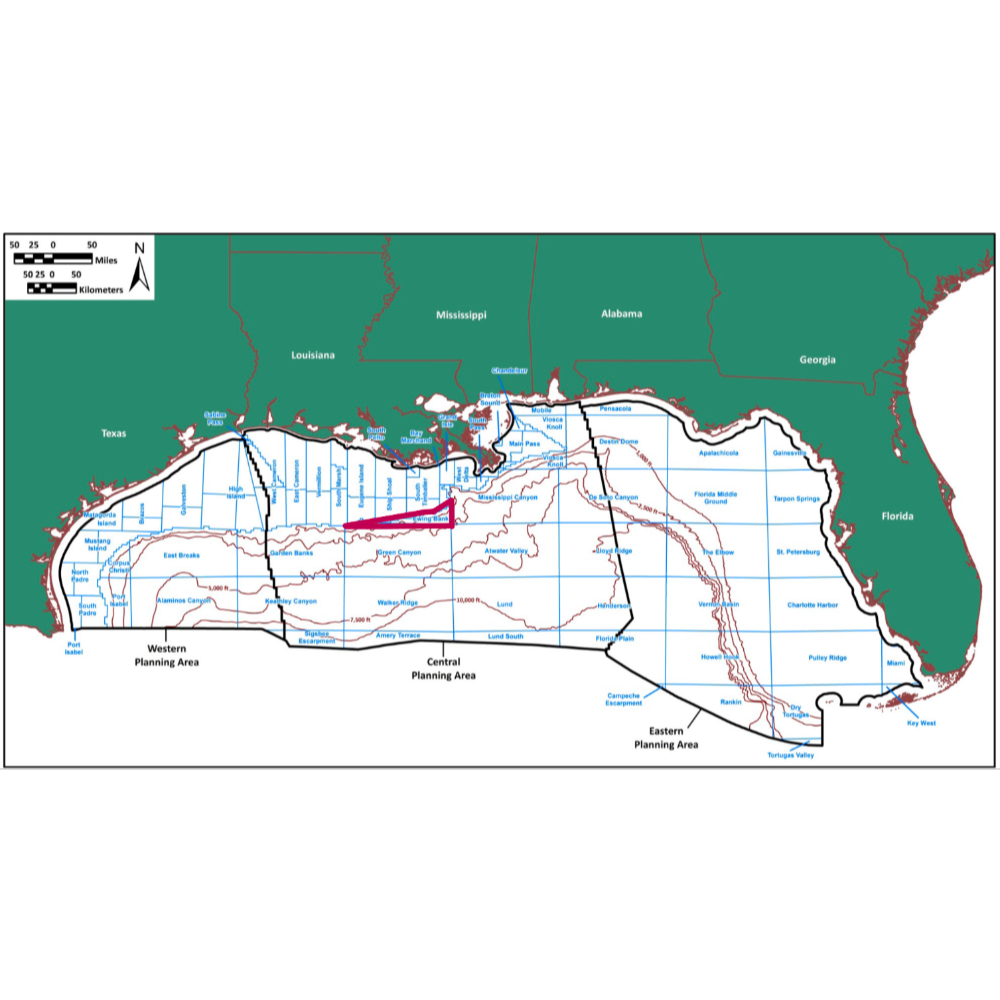
Block: EWING BANK 60. Block 873
Type: Fixed steel jacket
Field
The Lobster Field lies in the Gulf of Mexico, within deepwater turbidite systems. Reservoirs are Miocene-age sandstones typical of the region. The field is relatively small and was developed as a subsea tie-back to maximize economic recovery by utilizing nearby host infrastructure rather than installing a dedicated platform.
Facilities
The Lobster development consists of subsea production wells connected via flowlines and umbilicals to a host platform. The wells are completed with subsea trees and controlled remotely. Production fluids are transported to the host facility, where separation, stabilization, and processing occur. No standalone processing equipment exists on Lobster itself. The subsea system includes manifolds to gather production from multiple wells and direct flow through a single export line. Control systems use electro-hydraulic umbilicals for well operation and monitoring. Injection wells may be included for reservoir pressure support. Export of oil and gas is handled through the host platform's pipeline infrastructure. The development leverages existing compression, separation, and utility systems, minimizing capital expenditure. The subsea architecture is designed for reliability and long-term operation in deepwater conditions, with provisions for intervention and maintenance via remotely operated vehicles.
Similar Assets
News