



Type:
Oil
Facility:
Production
Water Depth:
145
Installed:
1986
meters
Block:
33/9
Design:
Floating steel
Sub Structure:
0
Topsides Wgt:
0
tonnes
tonnes
Intro
Statfjord A-OLS refers to the offshore loading system associated with the Statfjord A platform in the Statfjord oil field. The system uses a submerged mooring and hose arrangement to transfer stabilized crude oil from storage cells to shuttle tankers offshore. It was installed to replace traditional surface buoys for safe oil export in deep North Sea waters.
Field
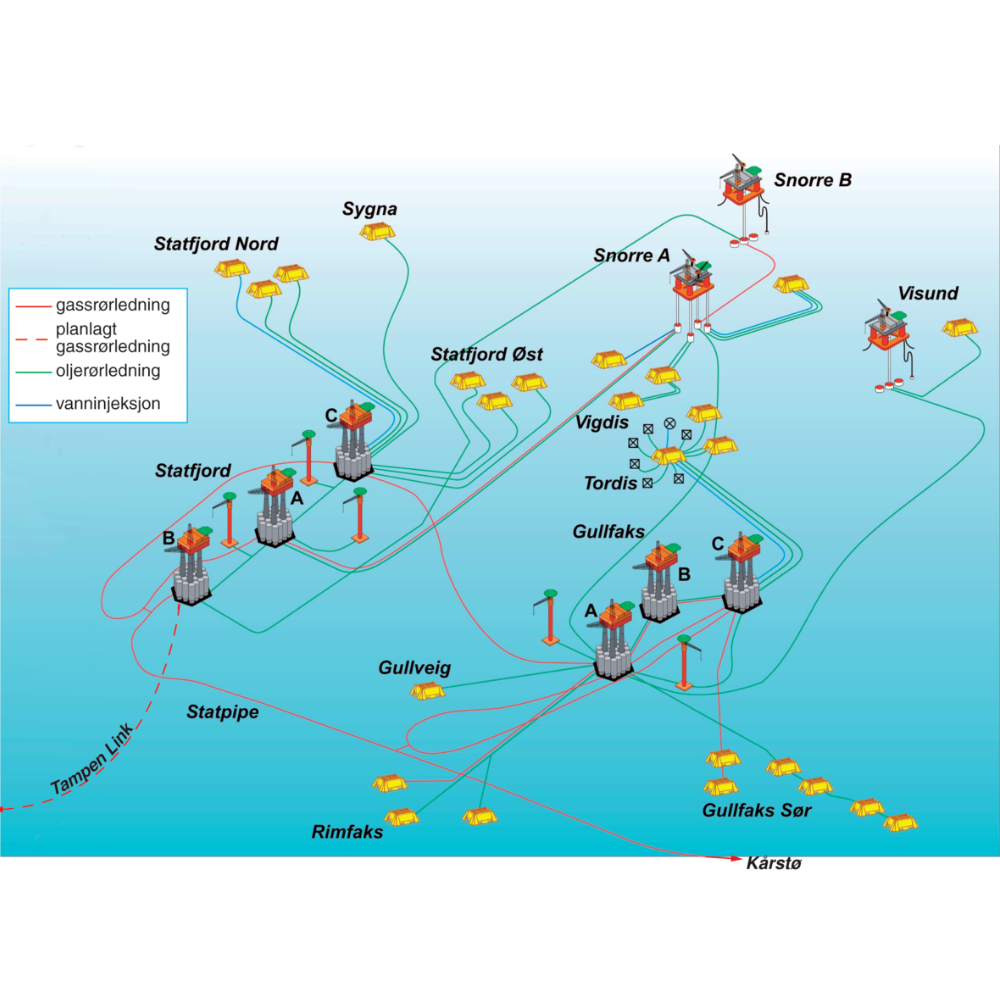
The Statfjord field is one of the largest North Sea oil and gas provinces, located on the UK–Norwegian boundary in ~145-m water depth. Discovered in 1974 and producing since 1979, the field has been developed with three concrete gravity platforms (A, B, C) with integrated storage cells and multiple subsea templates for production and injection.
Facilities
Statfjord A-OLS comprises subsea structural foundations, flexible hoses with swivel connections, and mooring systems enabling shuttle tankers to weathervane while loading oil. It interfaces with Statfjord A’s storage cells within its concrete gravity base structure, transferring crude via subsea piping, risers and export hoses to the tanker. The system includes emergency shutdowns, metering, remote control via the platform’s process control network, and subsea valves for flow assurance. Being submerged minimizes surface collision risk and provides robust, weather-independent export operations. OLS systems on Statfjord are designated OLS-A and OLS-B, enhancing export reliability historically compared to floating buoys.
Similar Platforms




SUBMIT YOUR STORIES AND PHOTOS
RigOil is built on the stories of the people who lived and worked offshore. If you have photos or memories from life on a North Sea platform, we’d love to include them in the archive.
Upload your photos and help preserve this shared history.*
*By submitting content, you confirm you have the right to share it and grant RigOil a non-exclusive, royalty-free licence to use the material for editorial, promotional, and commercial purposes. Copyright remains with the contributor.