


Type:
Oil
Facility:
Production
Water Depth:
33
Installed:
1996
meters
Block:
110/13
Design:
Floating steel
Sub Structure:
0
Topsides Wgt:
116500
tonnes
tonnes
Intro
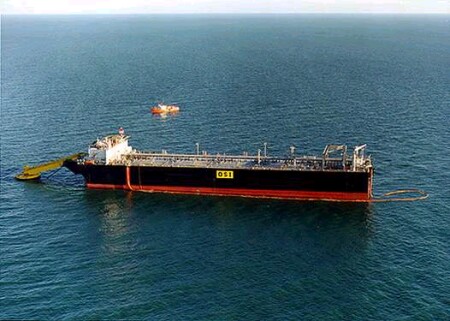
The Douglas FPSO is a floating production, storage and offloading vessel that served the Douglas oil field in the UK Central North Sea, Block 16/21. Installed in 1996, it processed and stored oil before export via shuttle tankers using the Douglas CALM buoy. The vessel operated as the central production facility for the field.
Field
The Douglas oil field lies in the Central North Sea and produces from Paleocene sandstone reservoirs. Discovered in 1974, the field was developed using floating production facilities due to water depth and distance from shore, with tanker export rather than pipeline infrastructure.
Facilities
The Douglas FPSO processed production from subsea wells through three-phase separation, oil stabilization, and produced water treatment. Stabilized crude was stored in the vessel’s cargo tanks and exported via the CALM buoy system. Produced water was treated to environmental discharge standards. Associated gas was used for onboard fuel, with surplus managed through controlled disposal systems. Utilities included power generation, seawater lift, firewater and deluge systems, chemical injection, inert gas systems, and integrated control and safety systems. The FPSO was permanently moored and designed for long-term offshore service. Its layout emphasized safe tanker export, compact processing, and reliable operation in Central North Sea conditions during the field’s productive life.
Similar Platforms




SUBMIT YOUR STORIES AND PHOTOS
RigOil is built on the stories of the people who lived and worked offshore. If you have photos or memories from life on a North Sea platform, we’d love to include them in the archive.
Upload your photos and help preserve this shared history.*
*By submitting content, you confirm you have the right to share it and grant RigOil a non-exclusive, royalty-free licence to use the material for editorial, promotional, and commercial purposes. Copyright remains with the contributor.