


Type:
Gas
Facility:
Production
Water Depth:
83
Installed:
1950
meters
Block:
46280
Design:
Fixed steel
Sub Structure:
6478
Topsides Wgt:
21804
tonnes
tonnes
Intro
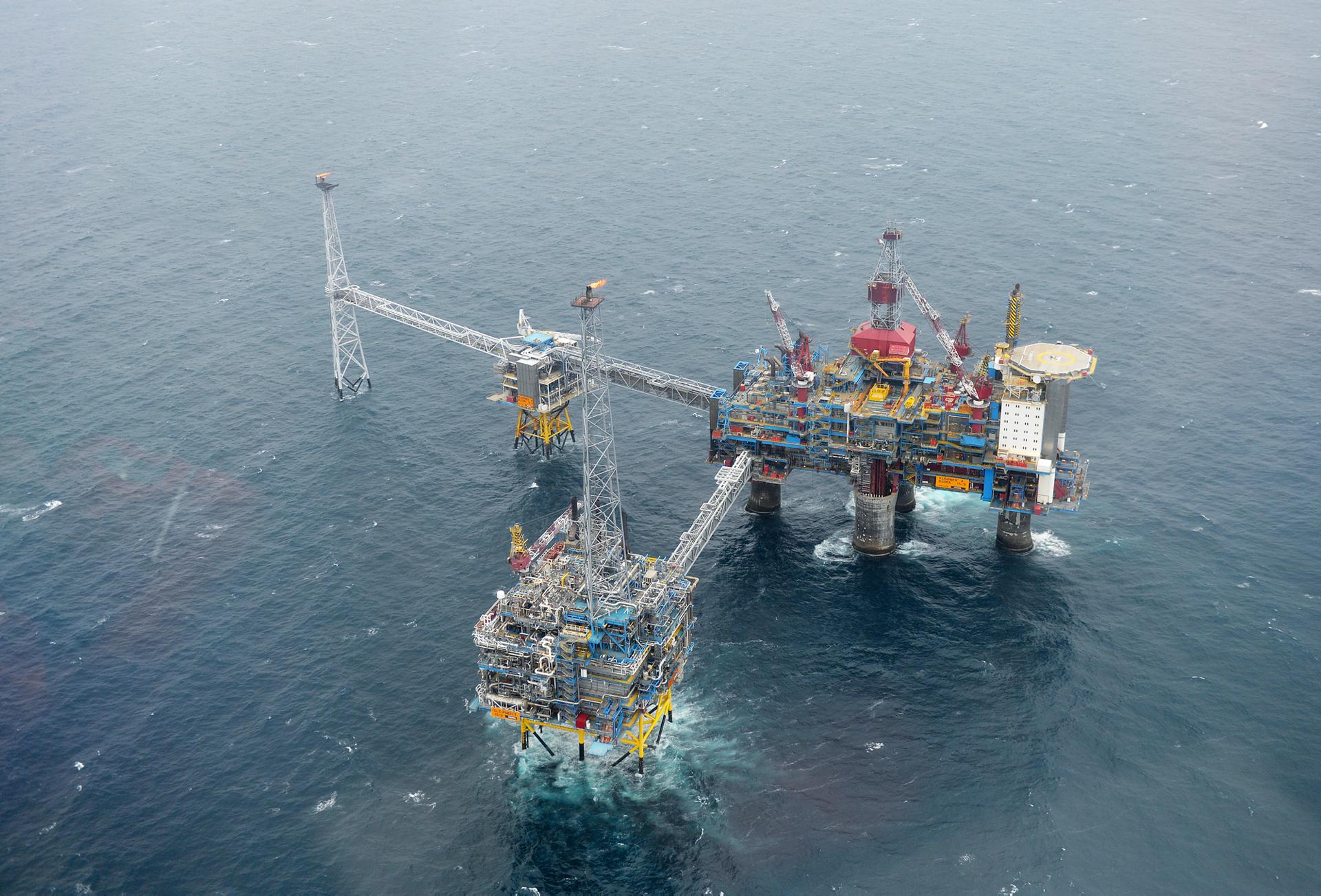
Sleipner T is an offshore gas processing and CO- removal platform in the Sleipner area of the Norwegian North Sea, commissioned in 1996. Physically connected by bridge to the Sleipner A platform, it treats wellstreams and separates CO- prior to export and storage operations.
Field
The Sleipner gas field comprises the Sleipner Øst and Vest accumulations producing gas and condensate from sandstone reservoirs in the North Sea. Discovered in the 1970s and 1980s, it produces hydrocarbon fluids for export and involves CO- capture/injection to meet specifications.
Facilities
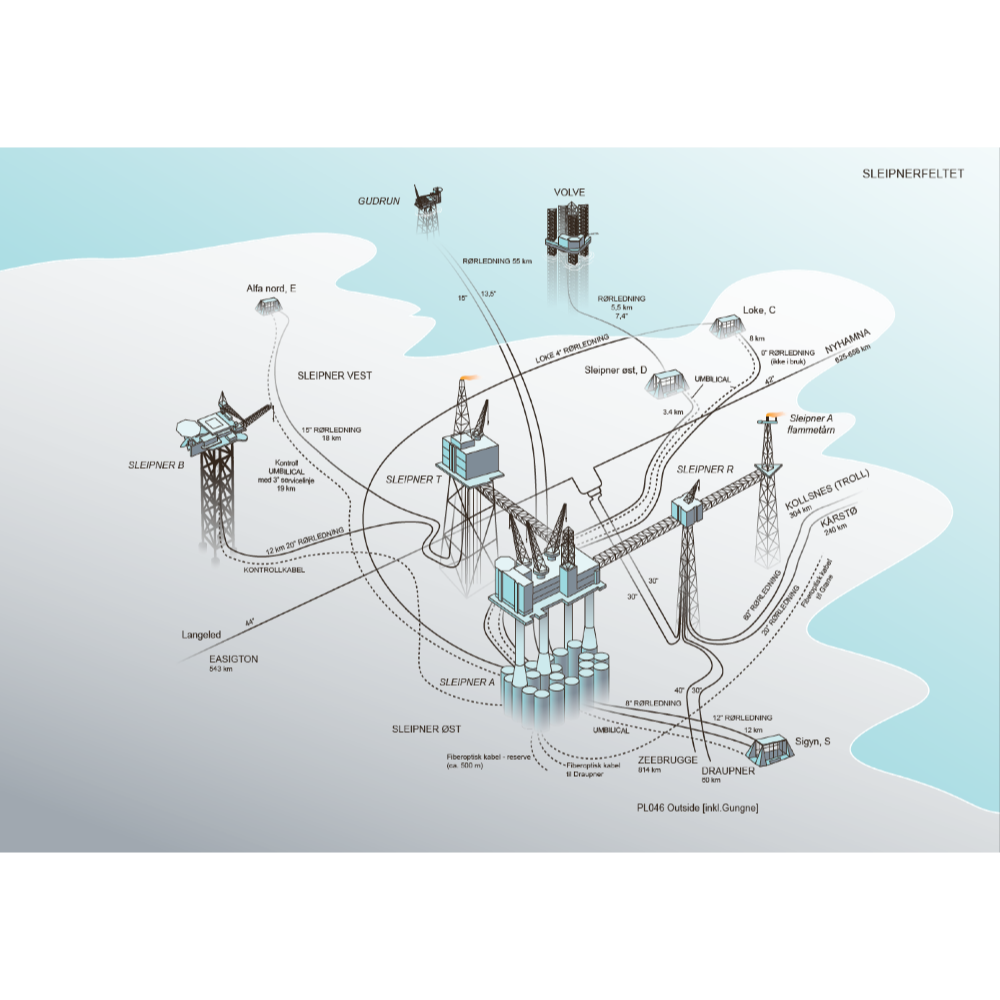
Sleipner T receives wellstreams via subsea flowlines, notably from the nearby Sleipner B unmanned platform (Sleipner Vest) and other connected fields. Its primary function is gas processing with CO- removal using amine absorption systems; separated CO- is routed to Sleipner A for injection into the Utsira Formation for geological storage. Process trains include inlet separation, dehydration and CO- scrubbing modules. Gas and stabilized condensate streams are forwarded to export systems: sales gas enters the Gassled pipeline network and unstable condensate is piped to the Kårstø terminal. Utilities include power distribution (via Sleipner A), process water handling, flare and safety systems, and integrated control systems. The platform’s role in offshore carbon capture and storage (CCS) and gas quality conditioning has been sustained over decades, leveraging stable separation and treatment infrastructure.
Similar Platforms




SUBMIT YOUR STORIES AND PHOTOS
RigOil is built on the stories of the people who lived and worked offshore. If you have photos or memories from life on a North Sea platform, we’d love to include them in the archive.
Upload your photos and help preserve this shared history.*
*By submitting content, you confirm you have the right to share it and grant RigOil a non-exclusive, royalty-free licence to use the material for editorial, promotional, and commercial purposes. Copyright remains with the contributor.