



Type:
NA
Facility:
Others
Water Depth:
0
Installed:
1900
meters
Block:
NA
Design:
Others
Sub Structure:
0
Topsides Wgt:
0
tonnes
tonnes
Intro
The Sture terminal is a major onshore crude oil receipt, storage and export facility near Øygarden, Norway, commissioned in 1988. It handles stabilized and unstable crude from multiple North Sea fields and exports oil by tanker. Sture includes large rock cavern storage and fractionation for LPG and crude stabilization.
Field
The associated area comprises oil production from the Oseberg, Veslefrikk, Brage, Tune and Huldra fields in the Norwegian North Sea. These fields produce light to medium crude in sandstone and other reservoirs, transported via the Oseberg Transport System (OTS) and the Grane oil pipeline to the terminal. The collective geology reflects multiple reservoir formations in the Central North Sea.
Facilities
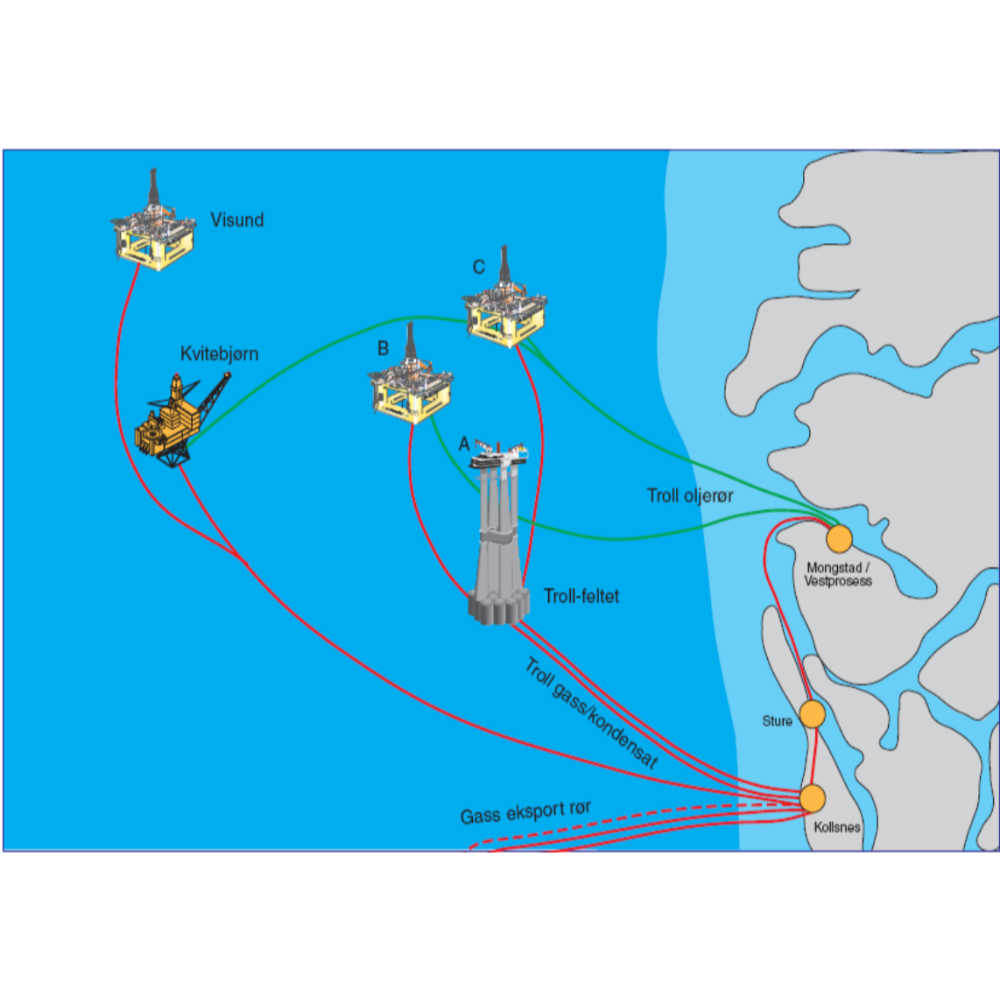
Sture receives multi-field crude through pipelines (e.g., OTS and Grane pipelines) for stabilization and LPG/naphtha recovery. Oil and condensate are separated, stabilized to sales quality, LPG is fractionated, and volatile organic compounds (VOC) are recovered. The site has multiple caverns (-1 million-m³ for crude, plus LPG and ballast storage) and dual jetty facilities accommodating large tankers. Utilities include power supply, process water handling, vapour recovery, and environmental control systems. Export operations rely on tanker loading, crude and LPG storage, and marine support systems. Stable over decades, the design integrates robust separation trains, product storage, and export logistics for North Sea crude and associated liquids.
Similar Platforms




SUBMIT YOUR STORIES AND PHOTOS
RigOil is built on the stories of the people who lived and worked offshore. If you have photos or memories from life on a North Sea platform, we’d love to include them in the archive.
Upload your photos and help preserve this shared history.*
*By submitting content, you confirm you have the right to share it and grant RigOil a non-exclusive, royalty-free licence to use the material for editorial, promotional, and commercial purposes. Copyright remains with the contributor.