


Type:
Oil
Facility:
Production
Water Depth:
371
Installed:
2013
meters
Block:
7122/7
Design:
Floating steel
Sub Structure:
33166
Topsides Wgt:
20000
tonnes
tonnes
Intro
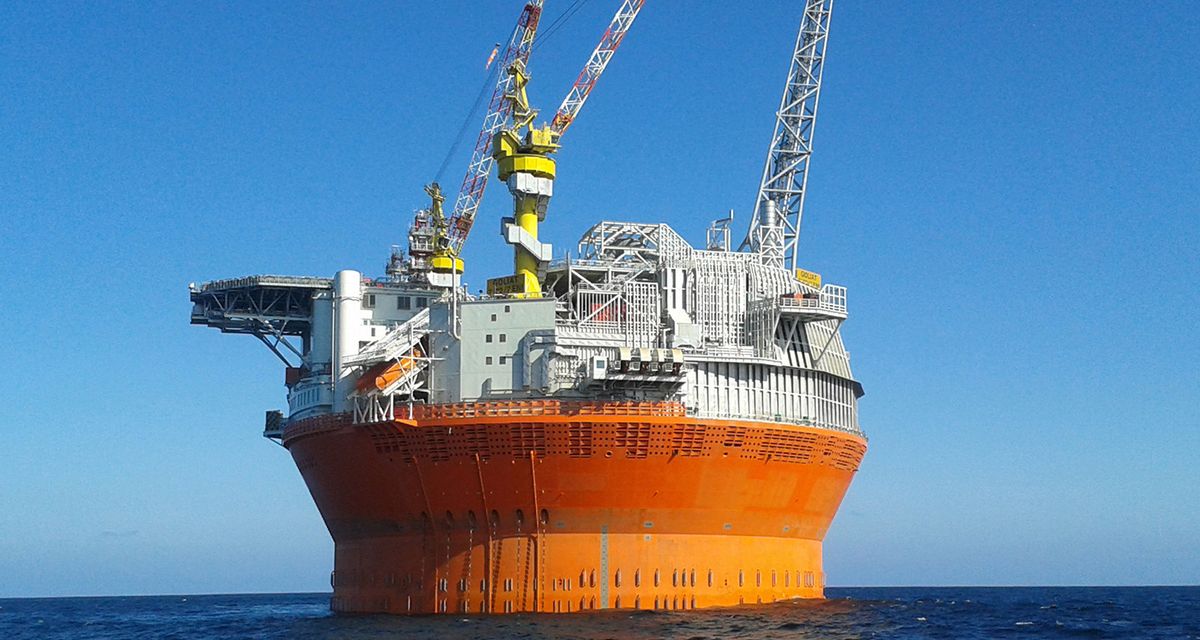
The Goliat FPSO is a cylindrical floating production, storage and offloading unit installed on the Goliat field in the Barents Sea, offshore Norway. Designed for oil production with associated gas handling, it entered service in 2016 as one of the world’s northernmost offshore production units. It stores crude onboard and offloads to shuttle tankers while tied to subsea templates.
Field
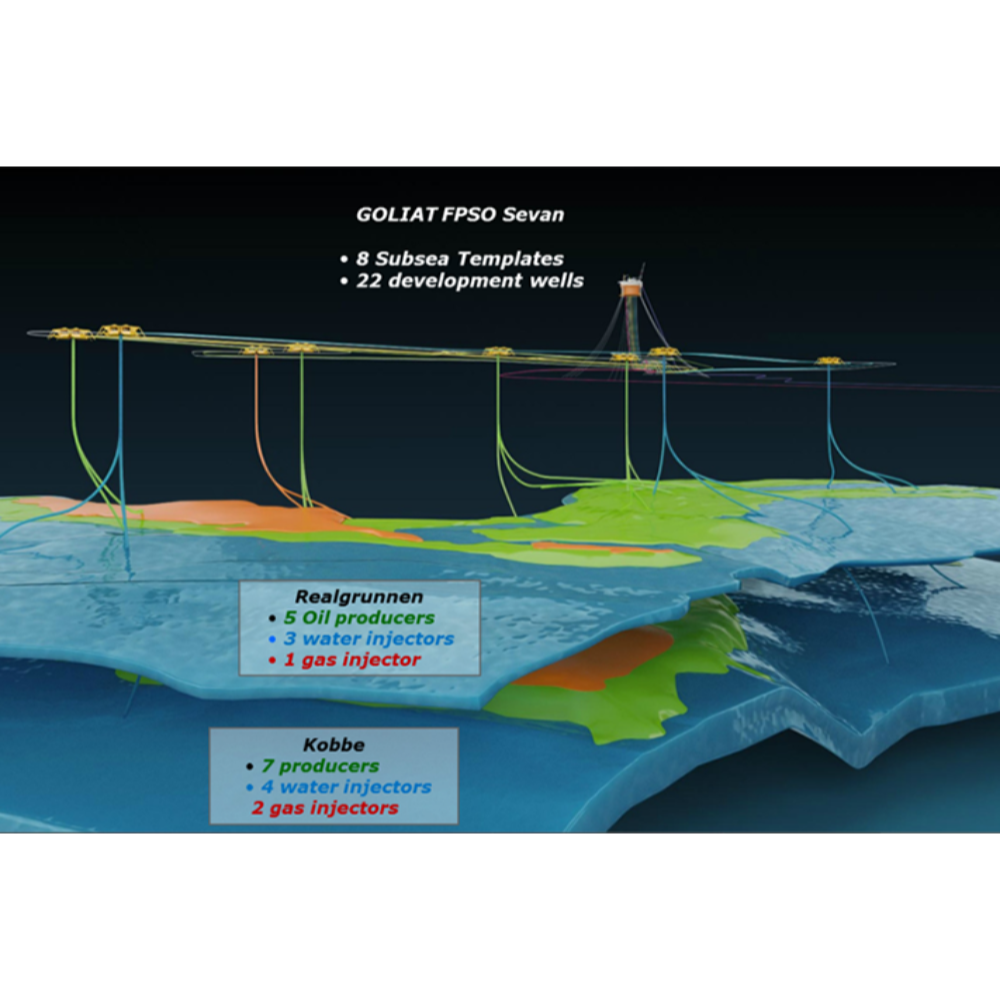
The Goliat field, located ~85-km northwest of Hammerfest in the Barents Sea, was discovered in 2000 and is developed with a Sevan 1000 FPSO. Reservoirs occur in the Kobbe and Realgrunnen formations, containing oil with associated gas. The development ties back multiple subsea templates to the FPSO, forming the core production system in harsh Arctic conditions.
Facilities
Goliat’s FPSO integrates production processing, storage, and export functions in one vessel. Subsea wells tied to eight templates deliver multiphase fluids to topside processing trains that separate oil, gas, and water. Oil is stabilised and stored in hull tanks with ~950,000-bbl capacity; periodic shuttle tanker offloading is conducted via dedicated offloading systems. Gas may be reinjected for reservoir management or exported depending on infrastructure at the time of operation. The hull’s circular design and winterisation features accommodate harsh Barents Sea conditions. Mooring uses a multi-point spread anchor system, while utility systems include power generation (supplemented by shore-supplied electricity), flare and safety systems, water treatment and injection facilities, and control/monitoring suites. Helideck and accommodation modules support offshore personnel. The FPSO’s electrical and process suites are designed for continuous operation with redundancy and compliance with Arctic operational standards.
Similar Platforms




SUBMIT YOUR STORIES AND PHOTOS
RigOil is built on the stories of the people who lived and worked offshore. If you have photos or memories from life on a North Sea platform, we’d love to include them in the archive.
Upload your photos and help preserve this shared history.*
*By submitting content, you confirm you have the right to share it and grant RigOil a non-exclusive, royalty-free licence to use the material for editorial, promotional, and commercial purposes. Copyright remains with the contributor.