


Type:
Gas
Facility:
Production
Water Depth:
40
Installed:
1983
meters
Block:
L-Block
Design:
Fixed steel
Sub Structure:
1042
Topsides Wgt:
2050
tonnes
tonnes
Intro
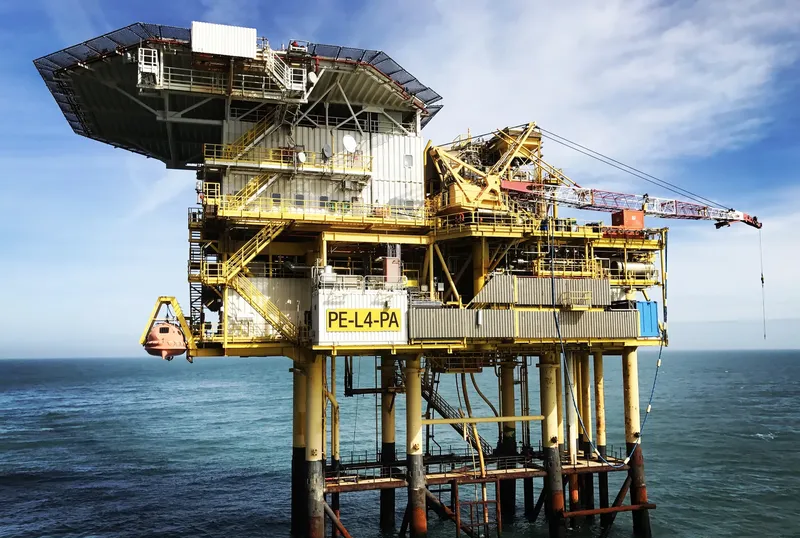
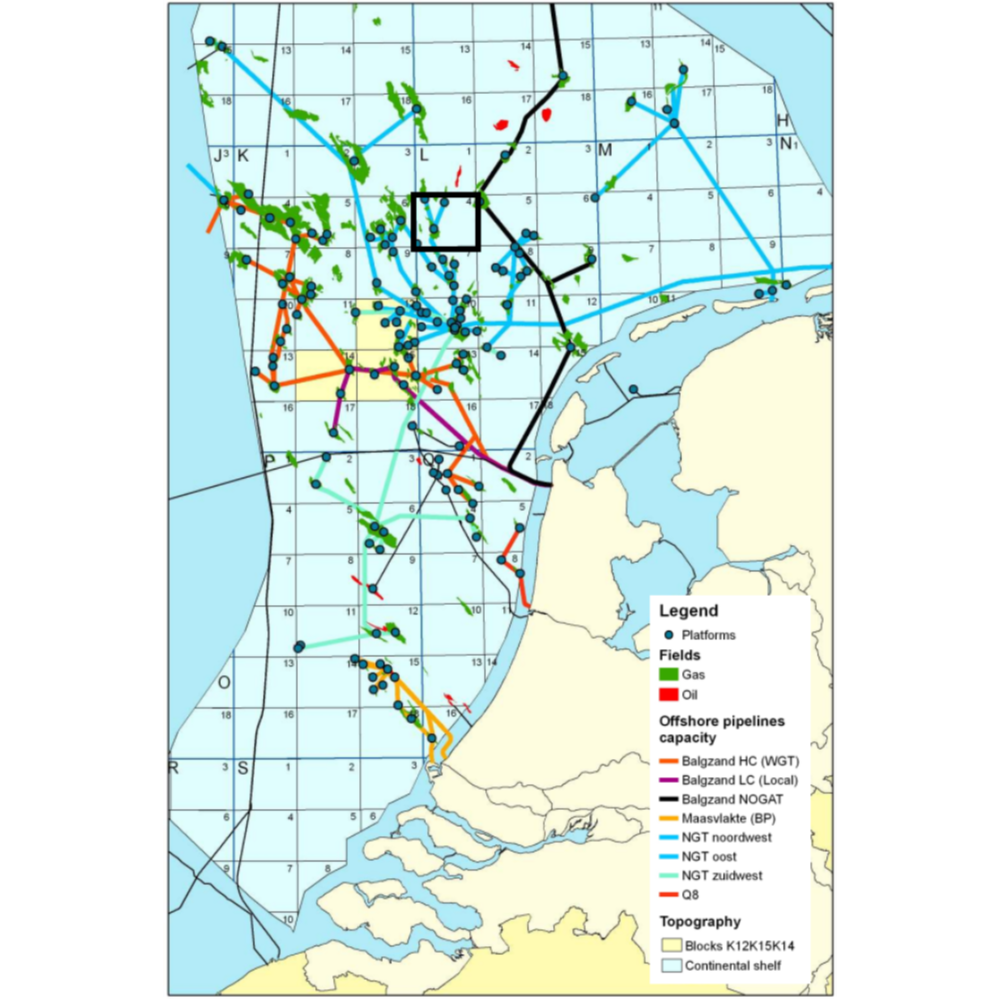
L4A is a fixed production platform in the L4 portion of the L4-L7 gas field complex on the Dutch Continental Shelf. Installed in the early 1980s, it functions as a production and export hub for gas from multiple subsea and adjacent platforms. It is normally unmanned and tied into nearby hubs such as the K6 complex.
Field
The L4 segment of the L4-L7 gas fields is an established natural gas accumulation in the Netherlands sector of the North Sea, discovered in the 1970s and developed with multiple platforms. Reservoir rocks are Upper Rotliegend sandstones typical of the area. L4A has been a core producing platform for L4 developments since the early 1980s.
Facilities
L4A receives gas from its own production wells and subsea completions (e.g. L4G) and routes fluids to processing at central facilities in the area. It serves as a collection and export point; final gas conditioning (drying, compression) is typically done at central complexes such as K6-CC2 or L7/L10 hubs. The platform is equipped with wellheads, risers, basic manifolding and flow control valves. Utility systems on L4A include power for instrumentation and safety systems, with main power and processing handling at larger hubs. Export pipelines link L4A to regional trunklines and offshore treatment centers, feeding gas into onshore grids. Because L4A operates unmanned, remote control and monitoring systems are critical for safe operations.




SUBMIT YOUR STORIES AND PHOTOS
RigOil is built on the stories of the people who lived and worked offshore. If you have photos or memories from life on a North Sea platform, we’d love to include them in the archive.
Upload your photos and help preserve this shared history.*
*By submitting content, you confirm you have the right to share it and grant RigOil a non-exclusive, royalty-free licence to use the material for editorial, promotional, and commercial purposes. Copyright remains with the contributor.