


Type:
Oil
Facility:
Production
Water Depth:
77
Installed:
1999
meters
Block:
46205
Design:
Fixed steel
Sub Structure:
3583
Topsides Wgt:
6617
tonnes
tonnes
Intro
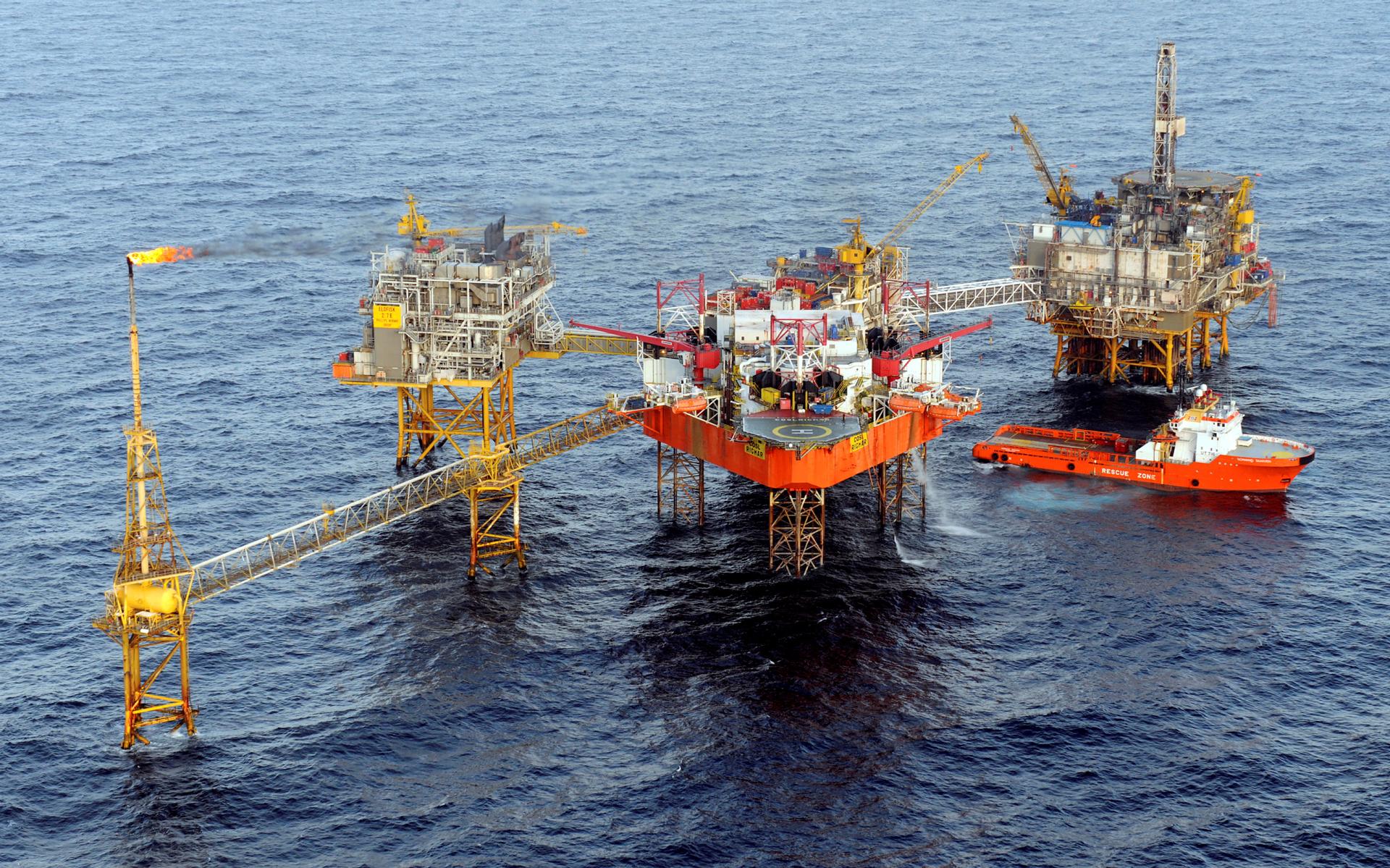
Eldfisk FTP (Field Terminal Platform) is a fixed steel jacket processing platform in the Eldfisk area of the Norwegian North Sea. Installed in 1976 and on stream from 1979, FTP originally processed production from Eldfisk A and Embla, routing hydrocarbons to Ekofisk infrastructure. The platform was later repurposed as a bridge-support facility.
Field
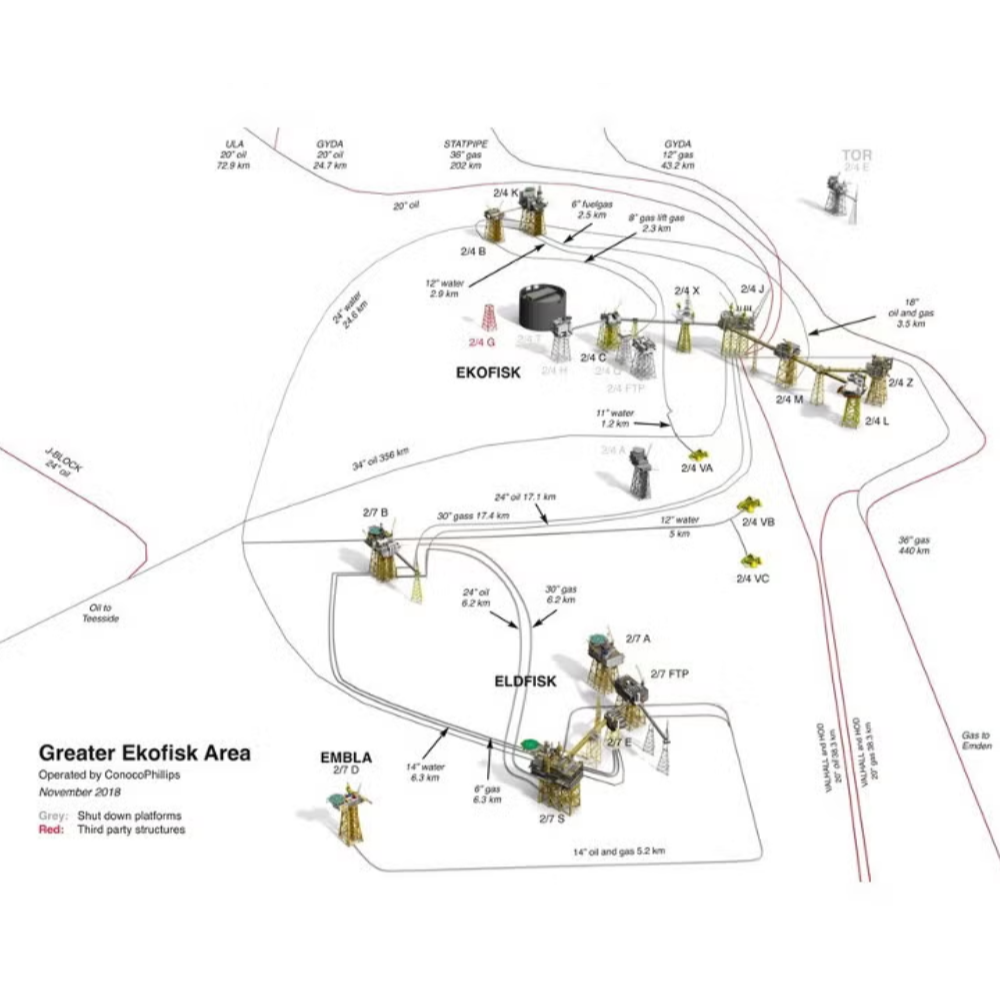
The Eldfisk field, adjacent to the Ekofisk complex, was discovered in 1970 and produces oil and gas from chalk reservoirs of the Hod, Tor and Ekofisk Formations. Initial development comprised bridge-linked installations; production began in 1979 and continues with expanded facilities.
Facilities
Eldfisk FTP was designed as a central process hub receiving wellstreams from Eldfisk A via bridge connection. It provided primary separation of oil/gas, compression for gas export, dehydration, and routing to the Ekofisk complex via pipelines. Subsea production wells and wellheads on Eldfisk A and B were tied back into the FTP process train. Water injection support evolved with Eldfisk E and later Eldfisk S taking over main process duties. Following 2015 upgrades, FTP’s original processing role was supplanted and the structure converted to support bridge connections within the field complex. Its steel jacket and topside remain part of the integrated installation, with utility systems serving structural support, piping manifolds and access bridges.




SUBMIT YOUR STORIES AND PHOTOS
RigOil is built on the stories of the people who lived and worked offshore. If you have photos or memories from life on a North Sea platform, we’d love to include them in the archive.
Upload your photos and help preserve this shared history.*
*By submitting content, you confirm you have the right to share it and grant RigOil a non-exclusive, royalty-free licence to use the material for editorial, promotional, and commercial purposes. Copyright remains with the contributor.